
5 Photogenic Buildings & Streetscapes in Aomori
Aomori is dotted with historic structures and beautiful streetscapes that make you want to point your camera. From retro Western-style mansions to a grand castle, here is a careful selection of photogenic spots known to those in the know.
① Hirosaki Castle (Hirosaki City)
Hirosaki Castle is renowned as Tohoku's only surviving castle keep and is a photogenic spot that offers beautiful scenes in every season. The keep has been moved to a temporary base within the main enclosure since 2015 for stone wall repair work, and restoration work to pull it back onto the original stone wall has been under way from July through approximately mid-November 2026.
Photography highlight In spring, approximately 2,600 cherry trees and the vermilion bridge overlap to create a world like a painting. However, because the inner moat has been filled in as part of the stone wall repair work, the famous "inverted cherry blossoms" reflected in the inner moat are currently not visible.
Best time Early morning from around 6:00 a.m. in late April through early May. There are few people, and the soft morning light reflecting off the moat creates a dreamlike atmosphere.
Shooting angle Including cherry blossom branches in the foreground as a soft blur creates depth. Note: as the restoration work progresses, the position of the keep and accessible areas will change, so check the latest visitor information on the Hirosaki Park official website before your visit.
Access About 15 minutes by bus from Hirosaki Station; alight at "Shiyakusho-mae" and walk 5 minutes. Admission to the main enclosure and north enclosure: adults ¥320, children ¥100 (free from November 24 through March 31). Interior access to the keep was suspended on November 23, 2025, and will remain closed until the completion of construction work in fiscal year 2032.
② Former Hirosaki City Library (Hirosaki City)
This elegant white Western-style building, built in Meiji 39 (1906), evokes the atmosphere of a European palace. Its contrast against a blue sky is breathtaking.
Photography highlight The octagonal twin towers placed symmetrically on each side and the dome roofline are highly distinctive. The richly detailed brickwork base is also rewarding to photograph up close.
Best time A sunny morning. In direct front lighting, the white walls gleam and the entire building comes out bright.
Shooting angle Step back slightly and use a vertical frame to capture the whole building. Including the stone pavement at the entrance as a foreground element adds depth.
Access About 15 minutes by bus from Hirosaki Station; alight at "Shiyakusho-mae." The building stands within Otemon Square, in front of the Otemon gate of Hirosaki Park. Check the Hirosaki City official website for opening hours and closed days.
③ Nebuta no Ie Wa-Rasse (Aomori City)
A cultural tourism facility located right next to JR Aomori Station, with a striking exterior that looks as though it is wrapped in ribbons of red steel. Here you can experience the spectacle of the Nebuta Festival year-round. Note: the nearby Aomori Prefectural Museum is closed for an extended period due to insufficient seismic performance, with no confirmed date for reopening.
Photography highlight The vertically arranged ribbon-like red exterior walls create a play of light and shadow, and the building's expression changes with every angle — highly Instagram-worthy.
Best time The magic hour at dusk. The red exterior wall is dyed by the setting sun, and with Aomori Harbor as a backdrop, dramatic photographs are possible.
Shooting angle Shooting the building from a 45-degree angle creates depth and a three-dimensional effect.
Access About 1 minute on foot from JR Aomori Station. The exhibition hall is open 9:00–18:00 (9:00–19:00 from May through August; last admission 30 minutes before closing). Check the official website for admission fees.
④ Nakamachi Komise Street, Kuroishi (Kuroishi City)
A historic streetscape rare even in Tohoku, where "komise" — wooden arcades that have continued since the Edo period — still remain. Walking here feels like taking a trip back in time.
Photography highlight The tunnel-like passage of wooden pillars and latticed doors creates a rhythm of light and shadow that is beautiful, and it pairs wonderfully with a film-style photo filter.
Best time The morning hours, when angled light filters through. The light creates lines extending down the passage, adding depth.
Shooting angle Stand at one end of the street and compose the shot using single-point perspective with a vanishing point. Including a person in the foreground communicates the sense of scale.
Access About 10 minutes on foot from Konan Railway Konan Line "Kuroishi Station." The komise pass through the private property of individual merchant houses, so please be considerate and do not photograph storefronts or residents without permission.
⑤ Tappi Cape — Staircase National Route 339 (Sotogahama Town)
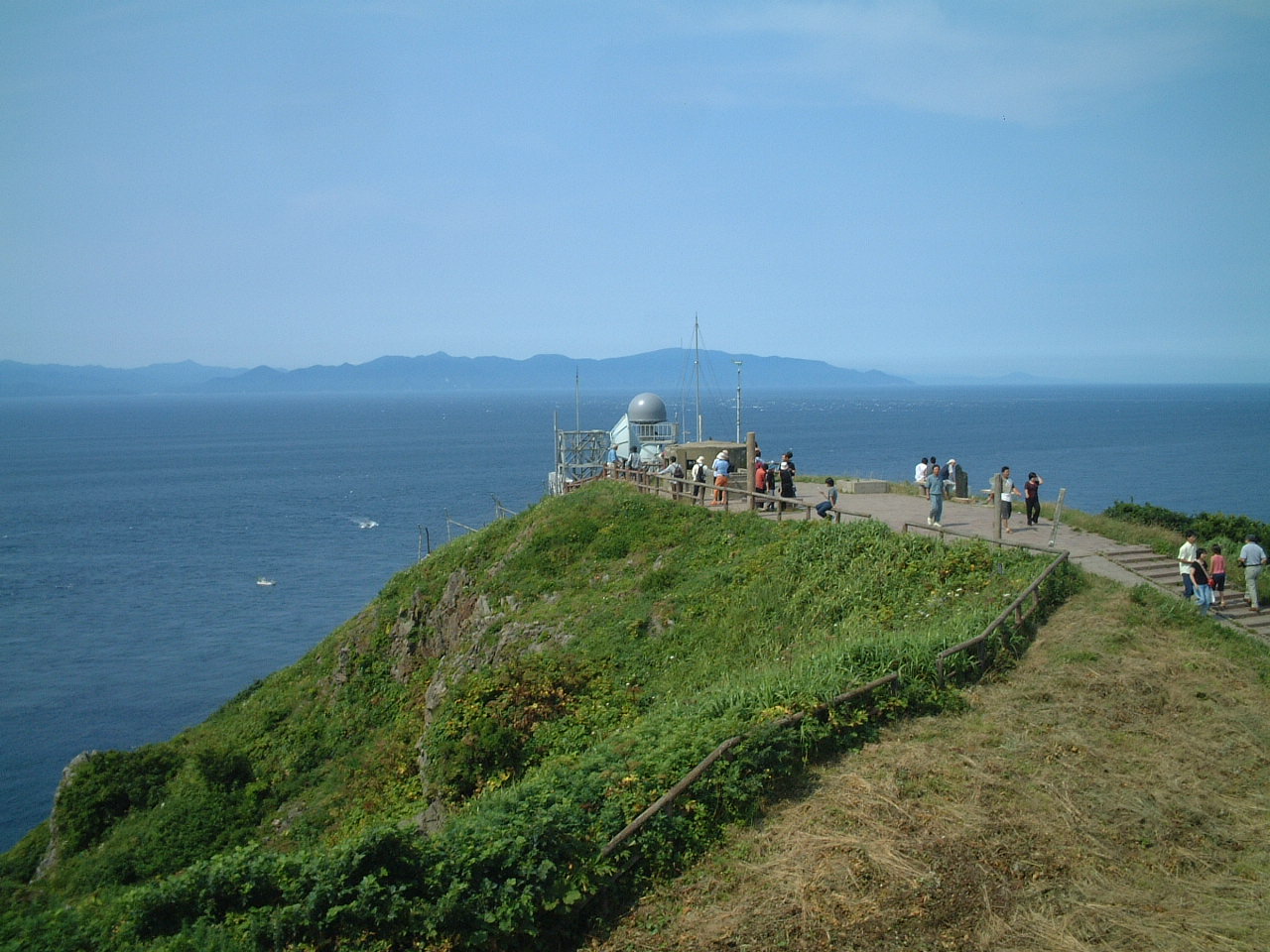
At Tappi Cape at the northernmost tip of the Tsugaru Peninsula lies the only stretch of road in Japan where a "staircase" is officially designated as a national highway. The 362-step staircase with a total length of approximately 388 meters, combined with the rugged coastline, makes this a uniquely photogenic spot.
Photography highlight The contrast between the sapphire-blue Sea of Japan beyond the steps and the fishing village clinging to the hillside is overwhelming. A shot that includes both the national highway road sign and the staircase together is a memento that can only be captured here.
Best time The golden hour before sunset. However, since Staircase National Route 339 is closed for winter from mid-November through late April, visiting between May and early November is the reliable window.
Shooting angle Either a vertical composition looking down toward the sea from the top of the stairs, or a composition looking up from below with a wide expanse of sky, is popular.
Access About 2 hours by car from Aomori Station. The JR Tsugaru Line between Kanita and Minmaya has been suspended for an extended period following storm damage in August 2022 (planned for discontinuation in spring 2027), so it is not possible to reach Tappi Cape by train. If using public transport, check in advance on the status of replacement bus services and Sotogahama Town's shared transportation.
Aomori's "Instagram-worthy" scenery, born from history and nature, carries a certain nostalgic warmth. Consider making Aomori your next travel destination.
Practical Information for Your Visit
- Best season and time of day: The cherry blossoms in Hirosaki Park are usually at their best from late April to early May. National Route 339, the "staircase highway," is closed for the winter from mid-November to late April, so May to early November is the sure bet for Cape Tappi.
- Opening hours / operating periods: The paid area of Hirosaki Park (the Honmaru and Kita-no-Kuruwa) = 9:00-17:00 (9:00-21:00 during the Cherry Blossom Festival), with free entry from November 24 to March 31. The exhibition hall of Nebuta Museum Wa Rasse = 9:00-18:00 (9:00-19:00 from May to August, with last entry 30 minutes before closing).
- Admission: Admission to the Honmaru and Kita-no-Kuruwa of Hirosaki Park is 320 yen for adults and 100 yen for children (250 yen for adults and 80 yen for children for groups of 10 or more). Strolling along Komise-dori in Kuroishi and National Route 339, the staircase highway, is free of charge. Please check the official websites for the admission fee at Wa Rasse and for the conditions for visiting the former Hirosaki City Library.
- Access: Hirosaki Castle and the former Hirosaki City Library = about 15 minutes by bus from Hirosaki Station, getting off at "Shiyakusho-mae." Nebuta Museum Wa Rasse = about a 1-minute walk from JR Aomori Station. Kuroishi Nakamachi Komise-dori = about a 10-minute walk from "Kuroishi Station" on the Konan Railway Konan Line. Cape Tappi = about 2 hours by car from Aomori Station. The section of the JR Tsugaru Line between Kanita and Minmaya has been suspended long-term (with abolition planned for spring 2027), so you cannot reach Cape Tappi by rail.
- Parking: There is parking both around Hirosaki Park and at Cape Tappi, but Hirosaki gets extremely crowded during the Cherry Blossom Festival.
- Photography rules: Hirosaki Castle has restricted-access areas because of the stone wall repairs and the work to move the keep back, and photography is not allowed in the work zones or in places where it would obstruct heavy machinery. Visits to the interior of the keep are suspended until the work is completed in fiscal 2032. The komise in Kuroishi are structured so that you pass through the private property of each merchant house, so do not photograph shopfronts or residents without permission. Drone flights are prohibited or require permission at each site.
- Safety notes: National Route 339, the staircase highway, is a steep flight of 362 steps running about 388 meters in total, so use the handrail and wear non-slip shoes. The winds at Cape Tappi are extremely strong, and going near the cliffs is dangerous. In winter it is closed due to snow and ice.
* The progress of the construction work and the fees are subject to change. Please check the official websites of Hirosaki Park and each facility for the latest information before visiting.
(Sources: Hirosaki Park General Information (Hirosaki City), "Hirosaki Castle Stone Wall Repair Project: Hirosaki Castle on the Move," "About visiting the interior of the Hirosaki Castle keep," "Paid areas and fees"; Aomori Prefecture tourism website Amazing AOMORI, "National Route 339, the Staircase Highway"; Aomori Prefectural Museum, "Notice of closure"; Nebuta Museum Wa Rasse official website)

Share this article




✍️ About this article
This article is compiled by the Tabitabi JAPAN editorial team from official and primary sources, including facility and shrine/temple websites, tourism information published by municipalities and tourism associations, and cultural-property records released by national and local governments. Prices, opening hours and event dates may change, so please also check the official information of each facility or local government before you visit.