
5 Photogenic Spectacular Spots in Kyoto
When you think of Kyoto, the image of temples and shrines is strong, but in fact it's also packed with breathtaking natural spectacles! This time, we have carefully selected 5 natural spots with outstanding Instagram appeal that will make you want to click the shutter.
1. Miyama Kayabuki no Sato (Nantan City)
A scene unfolds in which thatched-roof traditional houses stand quietly in a mountain village, just like wandering into a picture book. The early morning hours, when morning mist envelops the hamlet, are especially fantastical, letting you aim for a shot full of extraordinary atmosphere.
Best Shooting Time: Early morning in autumn to winter (October to November, when mist tends to occur, is especially recommended) Recommended Composition: A reflection shot of the thatched roofs mirrored on the water surface of the rice paddies Access: About 30 minutes by Nantan City municipal bus from JR Hiyoshi Station
2. Amanohashidate (Miyazu City)
One of Japan's Three Scenic Views, a spectacular spot where a pine grove about 3.6 km long extends as if crossing the sea. From Kasamatsu Park, famous for the "matanozoki" (looking through one's legs), you can take in a spectacular view that looks just like a dragon ascending to heaven.
Best Shooting Time: A sunny morning / a day with the clear air of autumn Recommended Composition: A wide shot from the observation deck, pulling back slightly with a telephoto feel to capture the entire pine grove Access: About 4 minutes by cable car from "Amanohashidate Station" on the Kyoto Tango Railway
3. Mt. Kasagi, Koiji no Kei (Kasagi Town, Soraku District)
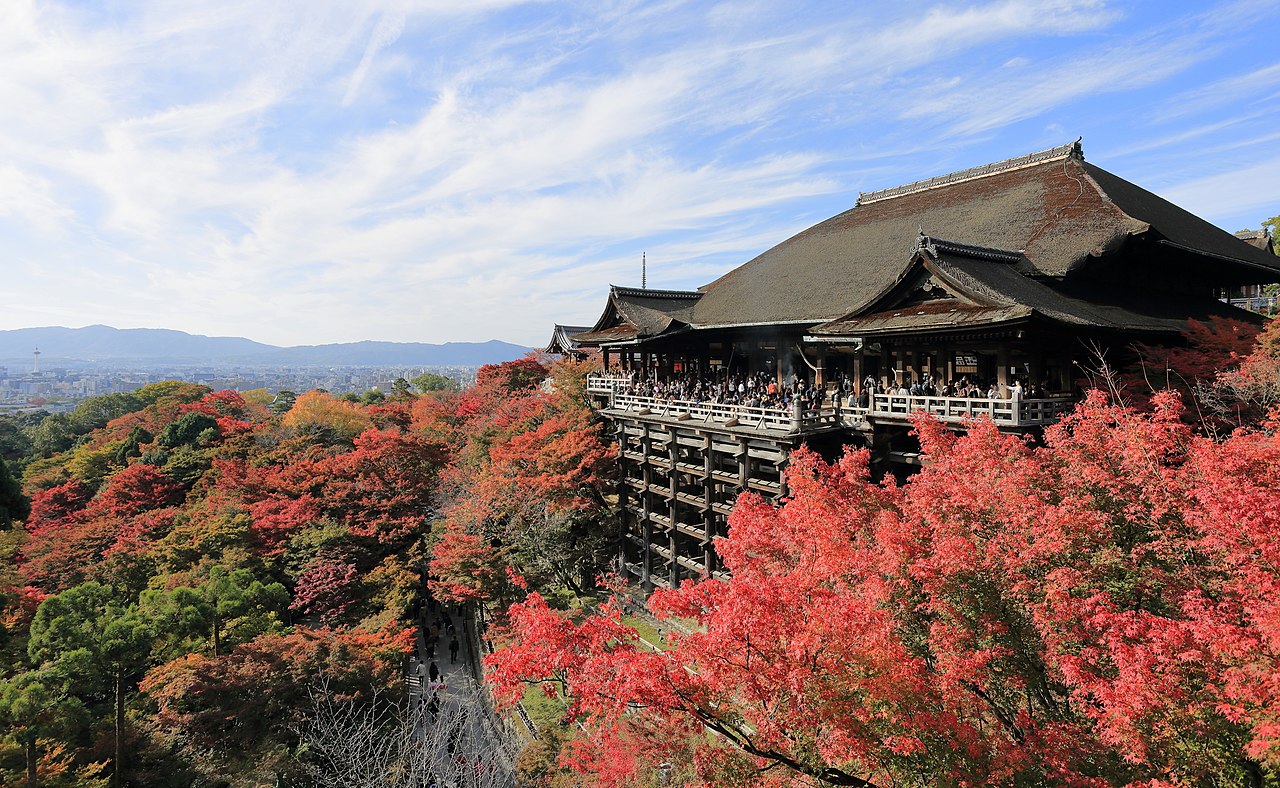
A spot where you can enjoy the natural ravine beauty spreading along the Kizu River. Especially during the autumn foliage season, the entire mountain is dyed red, orange, and yellow, and the contrast of the colors reflected on the river surface is spectacular.
Best Shooting Time: The golden afternoon hours of mid- to late November (around 4 p.m. in the evening) Recommended Composition: From the riverside promenade, capture the river and autumn foliage together from a low angle Access: About a 15-minute walk from JR Kasagi Station
4. The Yura River Estuary (Miyazu City)
The estuary area of the Yura River, beautiful with its gradation of blue and green. Its charm is the distinctive contrast unique to a place where sea and river meet, and the way the blue of the sky overlaps with the color of the water is just like a painting.
Best Shooting Time: Dusk (the sky and water surface dyed orange make for a spectacular view) Recommended Composition: Capture the river stretching straight toward the estuary in a vertical composition with depth Access: About a 20-minute walk from "Tango-Yura Station" on the Kyoto Tango Railway
5. The Ravine Around Daihizan Bujoji (Hanase, Sakyo Ward)
A ravine with so much secluded-realm feel that you'd never think it's within Kyoto City. In the fresh-greenery season, the contrast of the clear stream and moss-covered rocks is mystical, letting you take photos as if you've wandered into another world.
Best Shooting Time: The fresh-greenery season of May to June, on a cloudy day (the soft light beautifully renders the moss) Recommended Composition: Dynamically, with an S-shaped composition incorporating the mountain stream diagonally Access: About a 30-minute walk from the "Hanase" Kyoto Bus stop
The thrill is that every spot's expression changes completely depending on the season and time of day. Please visit again and again to find your own "special shot"!
Practical Information for Your Visit
- Best season and time of day: Miyama Kayabuki no Sato is best in the early morning from autumn to winter, when mist forms easily; Amanohashidate on a clear morning; Mount Kasagi for the autumn colors from mid to late November; and the valleys around Bujoji for the fresh green of May and June.
- Operating hours / periods: the Kasamatsu cable car and chairlift run 9:00-18:00 from March to November, 9:00-17:00 from December to January, and 9:00-17:30 in February. Bujoji cannot be entered in rainy weather or during the winter (visitors may go only as far as the main hall; the mountain beyond is off limits).
- Fees: the Kasamatsu cable car and chairlift cost 800 yen return and 400 yen one way for adults, and 400 yen return and 200 yen one way for children. Strolling the village of Miyama Kayabuki no Sato itself is free, but parking and the individual facilities are charged separately. For the entry fee at Kasagidera, please check on site or with the Kasagi Town Tourism Association.
- Access: Miyama Kayabuki no Sato is reached by Nantan municipal bus from JR Hiyoshi Station. Kasamatsu Park is on the north side (Fuchu) of Amanohashidate; from Amanohashidate Station take the sightseeing boat for 12 minutes plus about 5 minutes on foot, or a local bus for about 25 minutes, to the Kasamatsu Cable-shita stop (you cannot board the cable car directly from in front of Amanohashidate Station). For Kasagiyama Natural Park, get off at JR Kasagi Station. For Bujoji, get off the Kyoto Bus at Daihizanguchi and walk about 30 minutes; buses are extremely infrequent, so checking the times in both directions is essential.
- Parking: there are paid car parks at Miyama Kayabuki no Sato, Amanohashidate and Kasagi. Please check the fees and operating hours in the information provided by each operator.
- Photography rules: at Bujoji, cameras and mobile phones may not be carried beyond the Nio gate. Miyama Kayabuki no Sato is a village where people still live. Never enter the grounds of private houses or the fields without permission, and never point a lens at the residents or into their homes. Use a tripod only where it will not obstruct the way.
- Safety notes: the trail up Mount Kasagi is a succession of steep stone steps and rocky stretches, so shoes that are easy to walk in are essential. The area around Bujoji is deep in the mountains and there are places where mobile phones do not work; the sun sets early, so leave yourself plenty of time. The current at the mouth of the Yura River is fast, and the water's edge is extremely dangerous when the river is high or the waves are large. In Miyama the road surface freezes in the early morning during winter.
* Whether you can visit, and operating hours, change with the weather and the season. Always check each official website or tourism association before you visit.
(Sources: Amanohashidate Tourism Association official website "Kasamatsu Park"; Kyoto City official Kyoto Kanko Navi "Bujoji"; Kasagi Town Tourism Association official website)

Share this article




✍️ About this article
This article is compiled by the Tabitabi JAPAN editorial team from official and primary sources, including facility and shrine/temple websites, tourism information published by municipalities and tourism associations, and cultural-property records released by national and local governments. Prices, opening hours and event dates may change, so please also check the official information of each facility or local government before you visit.