
Hiyoshi Taisha — The Head Shrine of 3,800 Hie Shrines at the Foot of Mt. Hiei
Nestled at the eastern foot of sacred Mount Hiei in Sakamoto, Otsu City, Hiyoshi Taisha is one of Japan's most ancient and venerable shrines. As the head shrine of more than 3,800 Hie, Hiyoshi, and Sanno shrines across Japan, its spiritual influence extends far beyond its woodland setting. Long revered as a guardian of the Enryakuji temple complex on Mount Hiei, it preserves a distinctive Sanno torii gate and a history of Shinto and Buddhist fusion. Where Taga Taisha enshrines the creator deities Izanagi and Izanami, this shrine stands as the head of the Sanno faith tied to Mount Hiei.
Highlights
The Sanno torii, with a triangular gable set above the crossbar, is a distinctive form that symbolizes the fusion of Buddhism and Shinto and serves as the shrine's emblem.
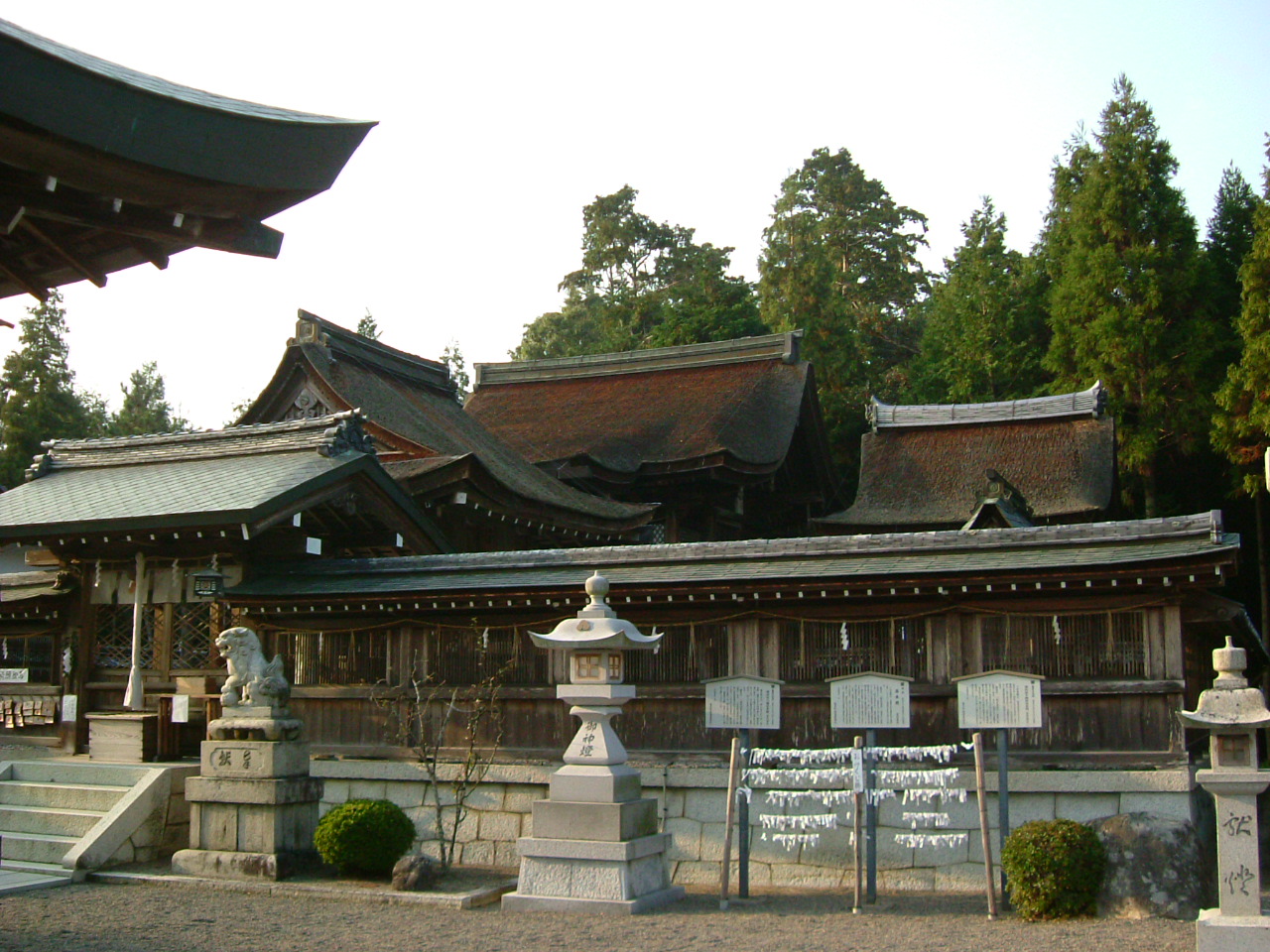
The shrine centers on two sanctuaries, the East Main Shrine and the West Main Shrine, enshrining Oyamakui no Kami and Onamuchi no Kami. The main halls of both are built in a distinctive style called Hiyoshi zukuri and are designated National Treasures, while the tower gate of the West Main Shrine is an Important Cultural Property.
The monkey is sacred to Hiyoshi Taisha, regarded as a divine messenger. Monkey designs appear throughout the precincts, and because the word evokes the ideas of driving away evil and prevailing, they are believed to bring protection and victory.

Enjoying the Seasons
Spring brings the Sanno Festival, counted among the three great festivals of the lake country, with rites held over several dates from March into April featuring splendid portable shrines. Autumn makes the shrine one of the finest foliage spots in the Kansai region, with a reported three thousand maples turning the approach a vivid red, usually at its peak from mid to late November, along with evening illuminations. Year round, Sakamoto serves as the gateway to Mount Hiei, and a combined visit with Enryakuji is popular.

Access and Basic Information
- Nearest station: about 10 minutes on foot from Sakamoto Hieizanguchi Station on the Keihan Ishiyama Sakamoto Line, or about 20 minutes from Hieizan Sakamoto Station on the JR Kosei Line.
- Reception hours: 9:00 to 16:00 for the garden entry desk.
- Garden support fee: 500 yen for adults, 300 yen for junior and senior high students, free for elementary age and younger.
- Time needed: about 30 minutes for one loop of the grounds, or about 60 minutes to tour the highlights during the foliage season.
- Nearby: the stone walled townscape of the Sakamoto satobo, the residences of Enryakuji priests, is also a must see.
Practical Travel Notes
- Best time of day: To avoid crowds, the morning right after opening is comfortable. The desk closes at 16:00, so arrive with time to spare.
- Avoiding crowds: Autumn weekends are very busy. For an unhurried visit, weekdays or mornings are recommended.
- Nearby real spots: Within walking distance are the former Chikurin in and the satobo gardens, and the base of the Sakamoto Cable line up Mount Hiei, allowing a full day combined with Enryakuji.
- Budget sense: Beyond the garden support fee, a visit with a shrine stamp and a nearby meal runs to a few thousand yen. Continuing on to Enryakuji requires a separate admission.
A Quick Tip
The grounds are wide and uneven, so wear comfortable shoes. Autumn weekends are extremely crowded, so a weekday visit is recommended. Strolling together with the Sakamoto satobo lets you enjoy the historical atmosphere more deeply. Shrine stamps can be received at both the East and West Main Shrines.
📚 Sources
This article was edited mainly with reference to guidance from Hiyoshi Taisha in Sakamoto, Otsu City, the head shrine of the Hiyoshi, Hie, and Sanno shrines nationwide. Explanations from the shrine and local Sakamoto guidance were consulted for the national-treasure main halls of the East and West Hongu, the sacred monkey masarubelief, and the Sanno Festival, one of the three great festivals of the lake province. Reception hours, the garden contribution fee, and the dates of the Sanno Festival and autumn illuminations may change, so please check the shrine official information before you set out.
Visitor Checklist
- Estimated time: A circuit of the grounds takes about 30 minutes, or around 60 minutes to see the highlights during the autumn foliage season.
- Reception hours: Garden reception is roughly from 9:00 to 16:00, so arrive with time to spare before it closes.
- Suggested route: Take in the Sanno torii, the East and West Hongu, and the sacred monkey motifs, and add a stroll through the Sakamoto priest-lodging townscape.
- What to wear: The grounds are broad and hilly, so visit in comfortable shoes.
- Budget: Beyond the garden contribution, allow for a shrine seal and meals nearby.
- Best time of day: To avoid crowds, mornings just after opening are comfortable, and autumn-foliage weekends are especially busy.
📍 Location & Access


Share this article





✍️ About this article
This article is compiled by the Tabitabi JAPAN editorial team from official and primary sources, including facility and shrine/temple websites, tourism information published by municipalities and tourism associations, and cultural-property records released by national and local governments. Prices, opening hours and event dates may change, so please also check the official information of each facility or local government before you visit.