
Higashi Chayagai: Kanazawa's Premier Edo-Period Geisha District
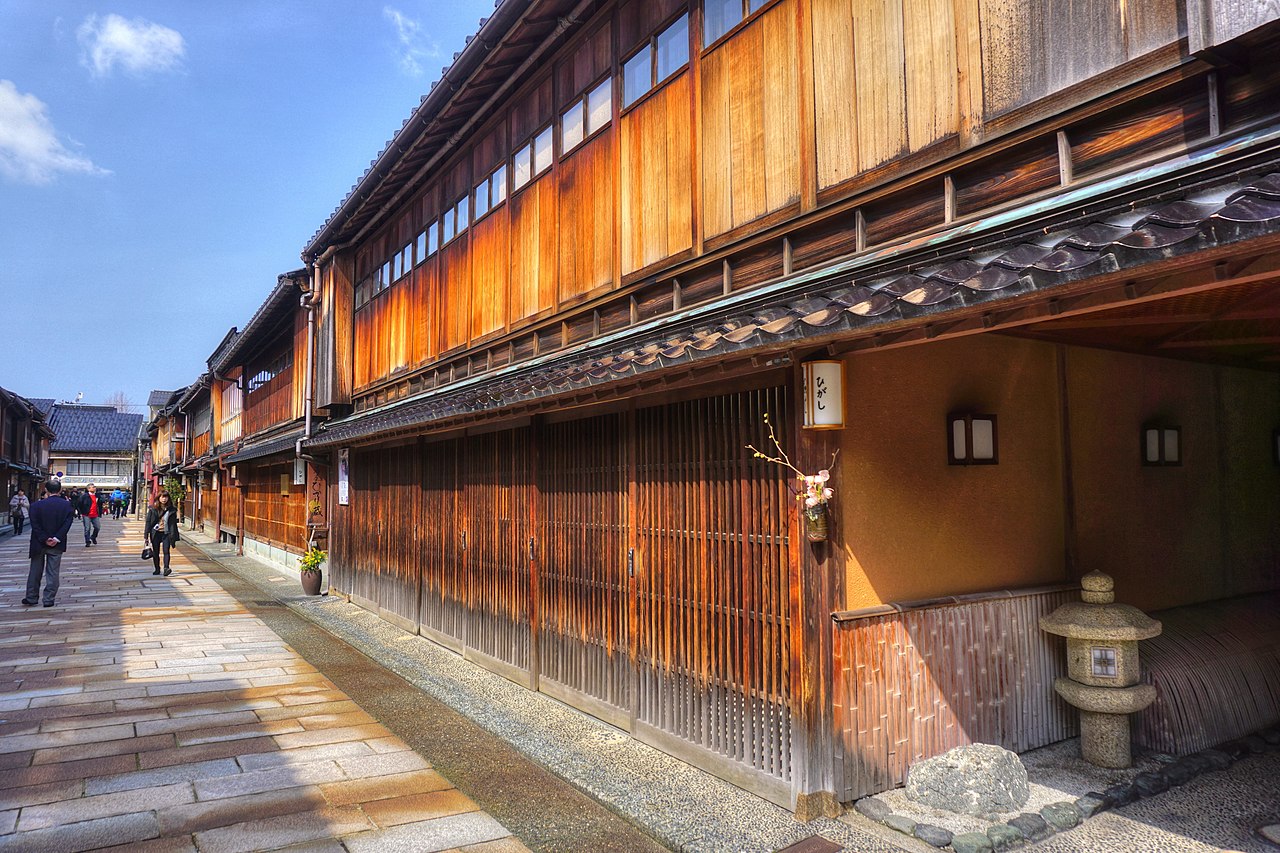
Rows of machiya townhouses fronted by fine red lattice, the click of geta sandals on stone paving — Higashi Chayagai in Kanazawa City, Ishikawa, is one of Japan's best-preserved geisha quarters, an area that seems to hold the elegance of the Edo period intact. Shimmering gold-leaf sweets, the sound of the shamisen, and quiet hours in townhouse cafes make it a highlight of any Kanazawa visit.
Highlights
Higashi Chayagai was opened in 1820 (Bunsei 3) with the permission of the Kaga domain. It was a refined venue where geisha entertained guests with dance and shamisen, and the surviving townhouses are designated an Important Preservation District for Groups of Traditional Buildings. It ranks alongside Kyoto's Gion as one of Japan's leading geisha districts.
- Shima Teahouse: Designated a National Important Cultural Property in 2003 and open to the public. Visitors can view the intimate rooms where guests were entertained and the instruments and effects used by geisha, offering a rare glimpse into Edo-period elegance.
- Red-lattice machiya: The two-story townhouses lining the street are known for their delicate latticed facades, whose fine craftsmanship reflects the skill of Edo-period artisans.
- Gold leaf and crafts: Kanazawa produces the vast majority of Japan's gold leaf. Soft-serve ice cream topped with gold leaf, wagashi sweets, and gold-flecked tea are among the local treats on offer.
- Machiya cafes: Stylish cafes converted from old townhouses, along with Kaga Yuzen and Kutani ware craft shops, invite relaxed browsing amid traditional surroundings.

Seasonal Enjoyment
The district is atmospheric year-round, but dusk, when the lanterns are lit, is especially romantic. Soft light filtering through the lattice creates a dreamlike mood quite different from daytime. Spring pairs beautifully with cherry blossoms along the nearby Asano River, and the snow-dusted townhouses in winter are exceptional.
Access and Basic Information
- Location: Higashiyama, Kanazawa City, Ishikawa
- Access: From Kanazawa Station, take the Kanazawa Loop Bus to Hashiba-cho, then about 5 minutes on foot
- Viewing the streetscape: Free (interior visits to some facilities such as Shima are paid)
- Suggested time: About 1 to 2 hours
Practical Travel Notes
- The stone paving can be slippery in rain or snow, so comfortable walking shoes are recommended.
- Weekends and midday are busy, so early morning or weekday mornings are best for quiet photography.
- Across the Asano River lies the smaller Kazuemachi geisha district, easy to combine on the same walk.
- Shop hours vary and many close by evening, so shopping and street snacking are safest earlier in the day.
A Word of Advice
Combine your visit with Omicho Market, Kenroku-en, and the 21st Century Museum. Comparing the three geisha districts of Kanazawa — Higashi, Nishi, and Kazuemachi — on foot is a favorite of seasoned travelers.
📚 Sources
This article is based on public information from Kanazawa City and the Kanazawa City Tourism Association, guidance on the area as an Important Preservation District for Groups of Traditional Buildings, and official information for the teahouse Shima, a nationally designated Important Cultural Property open to the public. Shop hours and viewing fees for some facilities such as Shima may change. Hours, fees, and access may change, so please check the official information of each facility and the Kanazawa City Tourism Association before setting out.
Visitor Checklist
- Time needed: Allow about one to two hours to combine a stroll through the streets with viewing a few facilities.
- What to bring: The stone pavement is slippery in rain or snow, so wear comfortable shoes. Viewing some facilities such as Shima carries a fee, so small change is handy.
- Suggested route: Walk the streets lined with red-lattice townhouses and view the teahouse Shima, then continue across the Asano River to the Kazuemachi teahouse district.
- Shopping tip: Shop hours vary and many close in the evening, so browse and snack earlier in the day for peace of mind.
Practical Information for Your Visit
- Opening hours: "Shima," a nationally designated Important Cultural Property, is open 9:30-17:30 (9:30-17:00 in winter, from December to February)
- Closed days: Shima is open every day
- Admission: Strolling the streets is free of charge. Admission to Shima is 500 yen for adults and 300 yen for junior high school students and younger (matcha at the "Kansonan" tea room costs extra)
- Guide to time required: About 60 minutes to stroll the Higashi Chaya District, and about 15 minutes to look around Shima
- Parking: Shima has no dedicated parking. Nearby Kanazawa municipal parking lots are the Higashiyama Sightseeing Parking Lot (15 ordinary cars / 7:00-22:00), the Higashiyama Kahan Sightseeing Parking Lot (11 ordinary cars / 7:00-22:00) and the Higashiyama-kita Sightseeing Parking Lot (7 ordinary cars / 9:00-18:00). All charge 350 yen for 60 minutes and 150 yen for each additional 30 minutes (the Higashiyama and Higashiyama Kahan lots charge 830 yen for overnight parking from 22:00 to 7:00 the next morning; overnight parking is not allowed at Higashiyama-kita)
- Access: About a 5-minute walk from the "Hashiba-cho" bus stop served by the Kanazawa Castle Town Loop Bus, Hokuriku Railroad local buses and West JR buses. About a 5-minute walk from the "Asanogawa Ohashi" bus stop on the Zaimoku route of the Kanazawa Flat Bus. By car, about 10 minutes from Kanazawa Station, about 10 minutes from the Kanazawa-higashi IC or Kanazawa-Morimoto IC, and about 25 minutes from the Kanazawa-nishi IC
- Telephone: 076-252-5675 (Shima)
- Address: 1-13-21 Higashiyama, Kanazawa City, Ishikawa Prefecture (Shima)
Note: The streets of the Higashi Chaya District themselves have no set opening hours or closing days, and the opening hours of individual shops differ from shop to shop.
(Sources: Kanazawa City Tourism Association "Kanazawa Travel Story" official website, "Higashi Chaya District," "Nationally Designated Important Cultural Property Shima" and "Guide to Public Parking around the Higashi Chaya District and Kazuemachi Chaya District")
📍 Location & Access


Share this article




✍️ About this article
This article is compiled by the Tabitabi JAPAN editorial team from official and primary sources, including facility and shrine/temple websites, tourism information published by municipalities and tourism associations, and cultural-property records released by national and local governments. Prices, opening hours and event dates may change, so please also check the official information of each facility or local government before you visit.