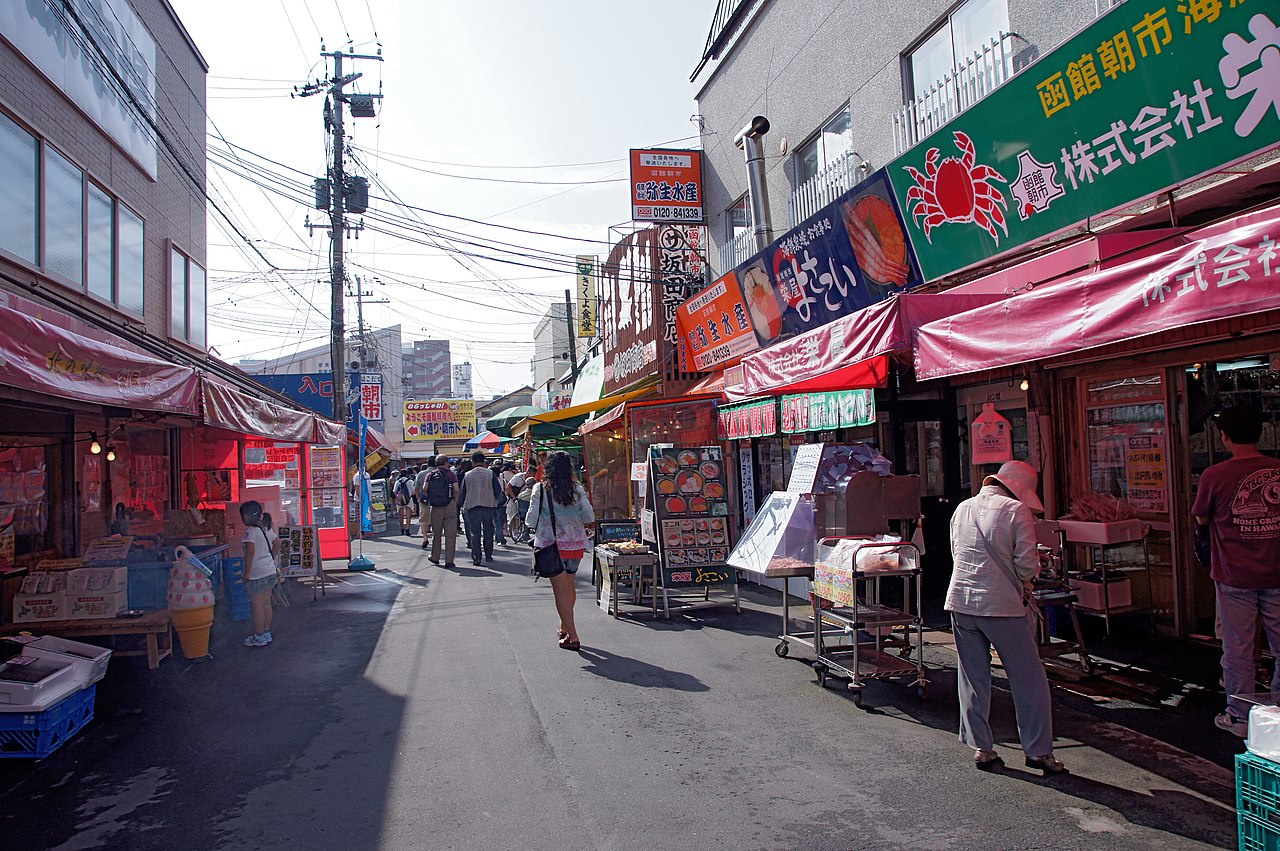
Hakodate Morning Market and Night View: Harbor City of Seafood and Starlit Views
Hakodate, at the southern tip of Hokkaido, is a popular sightseeing city known for one of Japan's three great night views from Mt. Hakodate, an exotic townscape lined with Meiji-era Western-style buildings, and the fresh seafood of its morning market. Concentrating the history and food culture unique to a port town, it is an essential stop on any Hokkaido trip, drawing travelers from Japan and abroad.
History of the Port Town
Hakodate was one of the first ports opened to foreign trade in 1859, at the end of the Edo period, alongside Yokohama and Nagasaki. Consulates and churches from many countries were built, and a distinctive blend of Japanese and Western culture took root in this hillside town. The clusters of churches in the Motomachi district, the former Hakodate Ward Public Hall, and stone-paved slopes preserve the atmosphere of the opening era, inviting strollers into a world of exotic charm.

The Morning Market and Mt. Hakodate Night View
The Hakodate Morning Market, right beside Hakodate Station, is a lively market lined with many shops. It began after the war when vegetables were sold in front of the station, later moving to its current location and growing from there. Fresh sea urchin, salmon roe, and hairy crab are on display, and a signature attraction lets you catch your own squid and have it prepared on the spot. A breakfast of a seafood rice bowl heaped with the freshest catch is one of the great pleasures of a Hakodate trip. The market also includes a food court where seafood-bowl shops gather.
At night, take the Mt. Hakodate Ropeway to the summit. The view of lights sparkling across the narrow, pinched terrain flanked by sea on both sides is praised as a "million-dollar night view" and counted among Japan's three great night views.

Access and Essentials
- Hakodate Morning Market: About a 1-minute walk from JR Hakodate Station. It opens early, with many shops operating mainly through the morning (closing days such as Wednesday and business hours vary by shop)
- Mt. Hakodate Ropeway: Reachable on foot from streetcar stops such as Jujigai. It takes about 20 minutes in total by streetcar and walking. Service may be suspended depending on the weather
- Motomachi district and Kanemori Red Brick Warehouse: The bay area and hillside streets can be explored on foot
- From the airport: About 20 minutes by car or bus from Hakodate Airport to the city center
- From the Shinkansen: Transfer from Shin-Hakodate-Hokuto Station via JR lines such as the Hakodate Main Line to Hakodate Station
Practical Travel Notes
- The market is best first thing: Many shops operate mainly in the morning, and the earliest hours are the liveliest. If you are after a seafood-bowl breakfast, aim for right after opening when selection is widest. Because closing days (such as Wednesday) and hours differ by shop, check in advance if you have a particular place in mind.
- The night view depends on the weather: Mt. Hakodate is prone to fog, and the ropeway may halt in strong winds. Confirm the day's operating status and weather before heading up. The dusk "magic hour," when city lights begin to glow, is especially popular and crowded.
- Hakodate cuisine: Hakodate is considered one of the birthplaces of salt ramen, characterized by a light, clear broth. It pairs well with the market's seafood bowls and fresh squid sashimi.
- The streetcar is handy: Hakodate Station, the morning market, Motomachi, and Yunokawa Onsen are connected by streetcar, and a one-day pass makes city sightseeing efficient.
One Piece of Advice
To enjoy both the market and the night view in one day, a smooth flow is to have breakfast at the market, stroll Motomachi and the bay area during the day, and head to Mt. Hakodate in the evening. The night view is most beautiful in the clear air of autumn and winter, but it also gets cold, so dress warmly. The summit is windier than the city below and feels colder, so bringing an extra layer is wise. Spring, when the cherry blossoms bloom at Goryokaku, is also a fine season for walking the town.
📚 Sources
The information in this article is organized from the public tourism information of the city of Hakodate, along with information published by operating bodies such as the Hakodate Morning Market cooperative. Market hours and details of individual shops can be checked through the operators' official information. Fees, hours, and access may change, so please always confirm with official sources before you set out.
Visitor Checklist
- Estimated time: About 1 to 2 hours to stroll the market and eat, or half a day combined with nearby sightseeing.
- What to bring: Having cash on hand is handy for food and souvenirs.
- Getting around: The market sits right by JR Hakodate Station, so access by train is convenient; note that business centers on the morning.
- Suggested route: After a seafood breakfast at the market, extend to Hakodate's Motomachi area and the highlights around the port.
- A note on use: Early morning is the liveliest, so work it into your morning plan.
Practical Information for Your Visit
- Hakodate Morning Market hours: From January to April, 6:00 to a little after 14:00; from May to December, 5:00 to a little after 14:00 (hours vary by shop). Open all year round (varies by shop)
- Getting to Hakodate Morning Market: About 1 minute on foot from JR Hakodate Station, or about 2 minutes on foot from the Hakodate Ekimae tram stop. About 20 minutes by shuttle bus from Hakodate Airport (to the Hakodate Ekimae bus terminal), or about 30 minutes by shuttle bus from the Tsugaru Kaikyo Ferry Terminal
- Parking at Hakodate Morning Market: Use the Hakodate Morning Market Ekimae Car Park or the Hakodate Morning Market Car Park. The basic rate is 100 yen per 20 minutes. At the Ekimae car park it is 100 yen per hour from 16:00 to 21:00 and a maximum of 500 yen from 21:00 to 6:00 the next morning, while the Morning Market car park charges a maximum of 800 yen from 16:00 to 21:00. Spend 2,200 yen or more at a single participating shop and you get 60 minutes free
- "Ganso Ika Tsuribori" squid fishing pool (Ekini Ichiba, Hakodate Morning Market): Prices are at market rate, and each day's supply depends on the previous day's catch. The squid handled are spear squid from January to May and Japanese common squid (surume-ika) from June to December
- Mount Hakodate Ropeway hours (fiscal 2026): From April 20 to September 30, 10:00-22:00 (last ascent 21:30); from October 1, 10:00-21:00 (last ascent 20:30)
- Mount Hakodate Ropeway fares: Adults (junior high school age and above) 1,800 yen return / 1,200 yen one way, children 900 yen return. On presentation of a disability certificate, adults pay 1,000 yen return / 700 yen one way and children 500 yen return / 350 yen one way. For groups of 15 or more, adults pay 1,650 yen return and children 850 yen return
- Suspension in autumn 2026: The ropeway will be out of service from Tuesday October 20 to Sunday November 8, 2026 for statutory inspections
- Evening private-car restrictions on the Mount Hakodate road (2026): From Friday April 17 to Wednesday September 30, general vehicles are banned from 17:00 to 22:00, and from Thursday October 1 to Sunday November 8 from 16:00 to 21:00. The summit car park cannot be used during the restricted hours either, and cars that drove up before the restriction begins must come back down within the restricted period
- Winter closure of the mountain road: From 11:00 on the second Monday of November until 11:00 on the second Monday of the following April (for fiscal 2025, from 11:00 on November 10, 2025 to 11:00 on April 13, 2026)
- Mountain bus: Hakodate Ekimae to Mount Hakodate costs 700 yen for adults and 350 yen for children. It does not run while the mountain road is closed in winter
Note: The one-way child fare for the Mount Hakodate Ropeway is given differently on the facility's official website (600 yen) and on Hakodate City's official tourism site "Hakobura" (550 yen). Note: The opening hours and prices of "Ganso Ika Tsuribori" are not published officially (prices are stated as being at market rate). (Sources: Hakodate Morning Market Cooperative official website, Ekini Hakodate Morning Market official website, Mount Hakodate Ropeway official website, Hakodate City official website, Hakodate City official tourism information site "Hakobura")
📍 Location & Access


Share this article


✍️ About this article
This article is compiled by the Tabitabi JAPAN editorial team from official and primary sources, including facility and shrine/temple websites, tourism information published by municipalities and tourism associations, and cultural-property records released by national and local governments. Prices, opening hours and event dates may change, so please also check the official information of each facility or local government before you visit.