
Nagasaki Local Gourmet Guide: Champon
Champon
The moment you slurp a mouthful, the rich, milky-white broth of pork and chicken bones overflows in your mouth—that is the unforgettable, finest encounter with Nagasaki champon.
Champon is said to have been created in the Meiji era by Chen Pingshun, a cook from Fujian Province in China, inspired by the flavors of his hometown. Its visual, loaded with more than ten kinds of ingredients such as pork, shrimp, squid, kamaboko, and vegetables, truly embodies the word "hearty." Both the richness of the broth and the chewiness of the noodles are utterly different from champon eaten in other regions. Once you taste it in its home, you can no longer be satisfied elsewhere—Nagasaki holds that frighteningly delicious quality.
Characteristics
The lifeblood of Nagasaki champon is, above all, the slow-simmered milky-white broth. The base, simmered for many hours from pork and chicken bones, melds with the umami released when the ingredients are stir-fried, finishing as a bowl of deep flavor. The noodles use the special "champon noodles." The slightly thick, straight noodles cling well to the broth, giving a satisfaction that makes you want to drink down to the last drop.
If you want to visit a long-established shop, "Shikairo" (Matsugae-machi, Nagasaki City), said to be the place of origin, is not to be missed. A long-established shop founded in 1894, the spectacular champon eaten while overlooking Nagasaki Port is exceptional in a word. The contrast between the blue of the port spreading below and the white steam rising from the bowl is itself enough to make a picture. On the other hand, what locals truly love are the small renowned shops around the Shinchi Chinatown. It's precisely in the back alleys where tourists rarely set foot that hidden gems stubbornly preserving the old flavors quietly live on. Exploring the alleys with a map in hand—that little adventure is one of the joys of a Nagasaki trip.
Best Season & Recommended Times: In the cold season (November to February), the piping-hot broth soaks into the core of a chilled body, making champon's deliciousness stand out all the more. Even in periods crowded with tourists, aiming for just after opening around 11 a.m. or the idle time after 2 p.m. lets you be guided to a seat relatively smoothly. Many shops are bound to have lines at weekend lunchtime, so a weekday visit is recommended if possible. Leaving some leeway in your itinerary brings peace of mind.
Access: Famous shops are concentrated within a 3-5 minute walk from the "Shinchi Chinatown" tram stop. Access is excellent at about 5 minutes by tram from Nagasaki Station. It's "about a 10-minute walk" too, so heading there as a stroll while enjoying the scenery along the port is also recommended. Bus access is also abundant.
Tips for Travelers: Overwhelmed by the volume of abundant ingredients, the noodles may be buried at the bottom and out of sight. The local way is to first mix well from the bottom of the bowl before starting to eat. Also, since finishing even the broth makes for quite a lot of volume, those who want to continue eating around afterward should check in advance for shops offering a "small size" or "half," leaving room in your stomach. The hungrier the trip, the more important the plan.
Sara Udon
Although it's named "udon," what's brought before you is crispy deep-fried thin noodles—sara udon, the cheerful trickster of Nagasaki's gourmet world, makes travelers seeing it for the first time blurt out "Huh?" Bewildered by its unexpected appearance, take one bite and you're captivated. This is what they call the baptism of Nagasaki.
Like champon, sara udon was born from Chinatown culture, served in a style where thick, glossy sauce (an) is generously poured over deep-fried thin noodles or thick noodles. The ingredients are nearly the same as champon, but the texture is completely different. Eating it while enjoying the drama within the dish—the crisp noodles absorbing the hot sauce and softening—is the Nagasaki style.
Tips for Eating Around
Sara udon comes in two types: thin-noodle (fried-noodle) type and thick-noodle (soft-noodle) type. Popular with tourists are the crispy thin noodles with their enjoyable change in texture. But many older locals are said to prefer the chewy thick noodles. Rather than which is "authentic," both have different charms. Be sure to try both and find your own favorite.
An absolute must in the local way to enjoy is the use of "Worcestershire sauce." Generously pouring the Worcestershire sauce that's always on the table is the Nagasaki custom. Enjoying the flavor of the sauce (an) as is at first, then adding sauce partway to enjoy a change of taste, is the connoisseur's way of eating. Be sure to experience the thrill of it being reborn like a completely different dish as sourness and umami are added.
You can casually savor it not only at Chinatown eateries but also at diners around the Hamamachi Arcade shopping street. Many shops are unpretentious and easy to drop by between sightseeing, and another charm of sara udon is being able to spend a warm time as if you've wandered into the locals' everyday dining table. Some shops open from morning, and the slightly luxurious morning experience of enjoying sara udon as part of Nagasaki's breakfast culture is also worth trying.
Best Season & Recommended Times: It can be enjoyed year-round, but in summer its refreshing eating sensation is welcomed, making it especially popular as lunch on a hot day. Visiting at 10 to 11 a.m. as an early lunch is recommended, as you can dine relatively leisurely before the crowds. Popular shops turn over quickly, but the leeway of slipping in before the peak raises the quality of the trip.
Access: Within a 5-minute walk from the "Kanko-dori" or "Shinchi Chinatown" tram stop. You can access the main areas in about 7-10 minutes by tram from Nagasaki Station. Around the Hamamachi Arcade the shopping street spreads right after you step off the tram, so a happy point is being able to eat around even on a rainy day without an umbrella.
Tips for Travelers: The thick sauce (an) may, at an unexpected moment, splatter onto a white shirt. Make good use of the napkins provided on the table, or avoid light-colored clothing on the day you eat around, for peace of mind. Also, some shops offer a "tasting comparison set" of champon and sara udon, so those who think "I can't decide which!" should choose the set menu without hesitation. Doubly delicious in one go—it's a luxurious choice unique to Nagasaki.
Castella
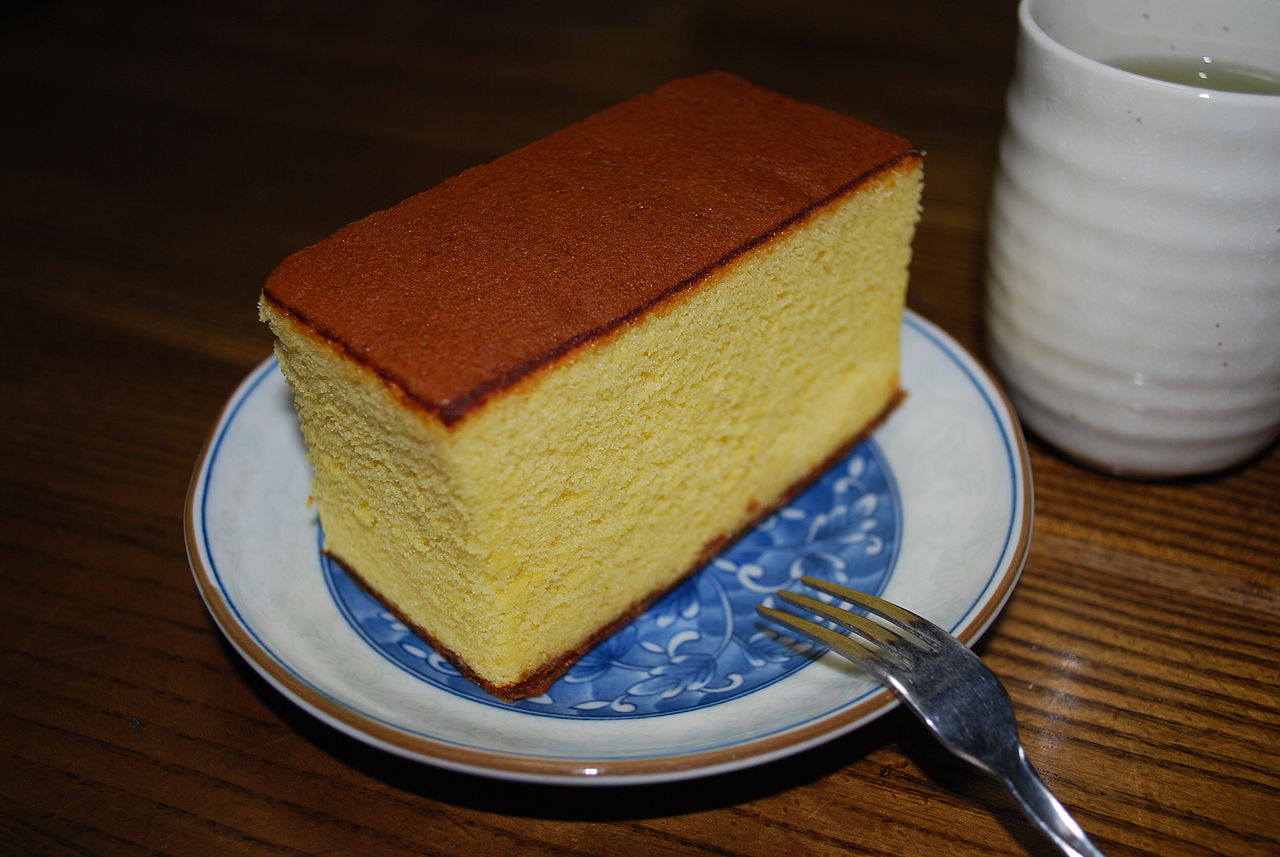
When it comes to the king of Nagasaki souvenirs, it's surely castella. Take one bite of the fluffy golden sponge, and the moist sweetness and faint scent of honey spread softly in your mouth, wrapping you in a gentle happiness as if your travel fatigue is healed in an instant. Is there any other food that accompanies travel memories this closely?
The history of castella is that a Nanban confection said to have been brought by Portuguese missionaries in the 16th century underwent its own evolution at the hands of Nagasaki's artisans. The careful production methods that long-established makers still in business today have steadfastly preserved, and the unique moistness brought by Nagasaki's humid climate, are a one-of-a-kind flavor that only Nagasaki holds, impossible to reproduce in other regions. Thinking that one slice is packed with this much history and natural environment, your heart already races before you even eat.
Long-established makers such as "Fukusaya," "Bunmeido," and "Shooken," each with its own individuality and history, make comparing them itself a great joy of travel. In addition to the standard honey castella, a varied lineup including matcha, chocolate, and zarame-included versions awaits, and just choosing is exciting. In particular, "zarame castella" is characterized by the unique texture of crunchy sugar grains remaining at the bottom, an experience unique to Nagasaki that you can't forget once you eat it. It has the magic of making you recall "What was that texture?" even after returning home.
As a local way to enjoy it, be sure to visit a workshop that sells castella fresh from the oven. Unlike those lined up at souvenir shops in tourist areas, the softness of the still-warm sponge and the sweet aroma drifting about are a special experience you can only savor at a workshop. Also, among castella specialty shops are some scattered about where you can buy by the single slice rather than a whole loaf. Make clever use of such shops and be sure to practice a "castella eating-around tour" comparing several shops. Which shop's slice resonates with your heart—being able to enjoy such a serious showdown is a privilege unique to a Nagasaki trip.
Best Season & Recommended Times: To aim for fresh-baked, early morning hours are the time to target. Some workshops have set baking times, so checking by phone or social media in advance goes smoothly. Especially in the cold season (November to February), warm castella soaks into the body, and the perception of sweetness is exceptional. On the other hand, when carrying it home as a souvenir in summer it spoils easily, so don't forget to prepare a cooling pack. Be mindful of storing it out of direct sunlight after purchase.
Access: The major long-established shops are concentrated around Nagasaki Station, the Hamamachi Arcade, and the Dejima area, in a prime location naturally built into the flow of touring sightseeing spots. Many shops have the "Nishi-hamamachi" or "Shiyakusho" (City Hall) tram stop as the nearest, letting you combine sightseeing and shopping effortlessly.
Tips for Travelers: Castella has a different best-before date for each maker (a guideline is 7-14 days from purchase). When buying as a souvenir, choosing one with a best-before date with plenty of leeway, counting back from your return day, brings peace of mind. Also, you can buy it at souvenir counters within the airport, but products exclusive to long-established makers' directly-managed shops and "off-cuts" (irregularly shaped, so a bargain you can buy reasonably) can only be obtained at local shops. In fact, the off-cuts are reputed among locals to let you fully enjoy the moistness of the sponge. Even if your travel budget has room, this is one item we really want you to seek out locally.
Access & Business Hours
Nagasaki's gourmet spots can be toured truly efficiently using the tram (Nagasaki Electric Tramway). Buying a one-day pass (600 yen for adults) makes moving to major areas much smarter. Starting from Nagasaki Station, the Shinchi Chinatown, Hamamachi, and Dejima areas are all within 10 minutes by tram—a compact distance, an ideal town structure for eating around. The very townscape of Nagasaki seen from the tram window heightens the travel mood even more.
Business hours of each shop vary, and it's not unusual, especially for popular long-established shops, to sell out or fill up at lunchtime. We strongly recommend checking business hours and regular holidays in advance on the official website or by phone before visiting. So that you, having come all the way to Nagasaki, aren't greeted by a "Closed for today" sign, taking a little extra effort greatly affects the satisfaction of your trip.
When you're lost or want the latest information, head to the "Nagasaki City Tourist Information Center" in front of Nagasaki Station (inside Nagasaki Station, open 9:00-20:00). Local staff will politely and warmly tell you the most recommended shop information right now. Since you can also obtain information on original menus using seasonal ingredients and limited-time events, be sure to stop by at the start of your trip. Just spending 10 minutes here greatly raises the density of your trip.
Finally, Tips for Travelers: To tour Nagasaki gourmet in one day, the ambitious course of "morning castella → lunch champon → sara udon for a snack" is popular among travelers. However, all are full of volume. Being mindful of the amount per meal and adjusting as you enjoy is the greatest tip for savoring Nagasaki gourmet to the very end. Consulting with your stomach, but pushing yourself just a little to eat anyway—Nagasaki is a town full of such dishes. Be sure to savor to the fullest, with all five senses, the beautiful port-town scenery and the overlapping history of food culture.
📍 Location & Access


Share this article


✍️ About this article
This article is compiled by the Tabitabi JAPAN editorial team from official and primary sources, including facility and shrine/temple websites, tourism information published by municipalities and tourism associations, and cultural-property records released by national and local governments. Prices, opening hours and event dates may change, so please also check the official information of each facility or local government before you visit.