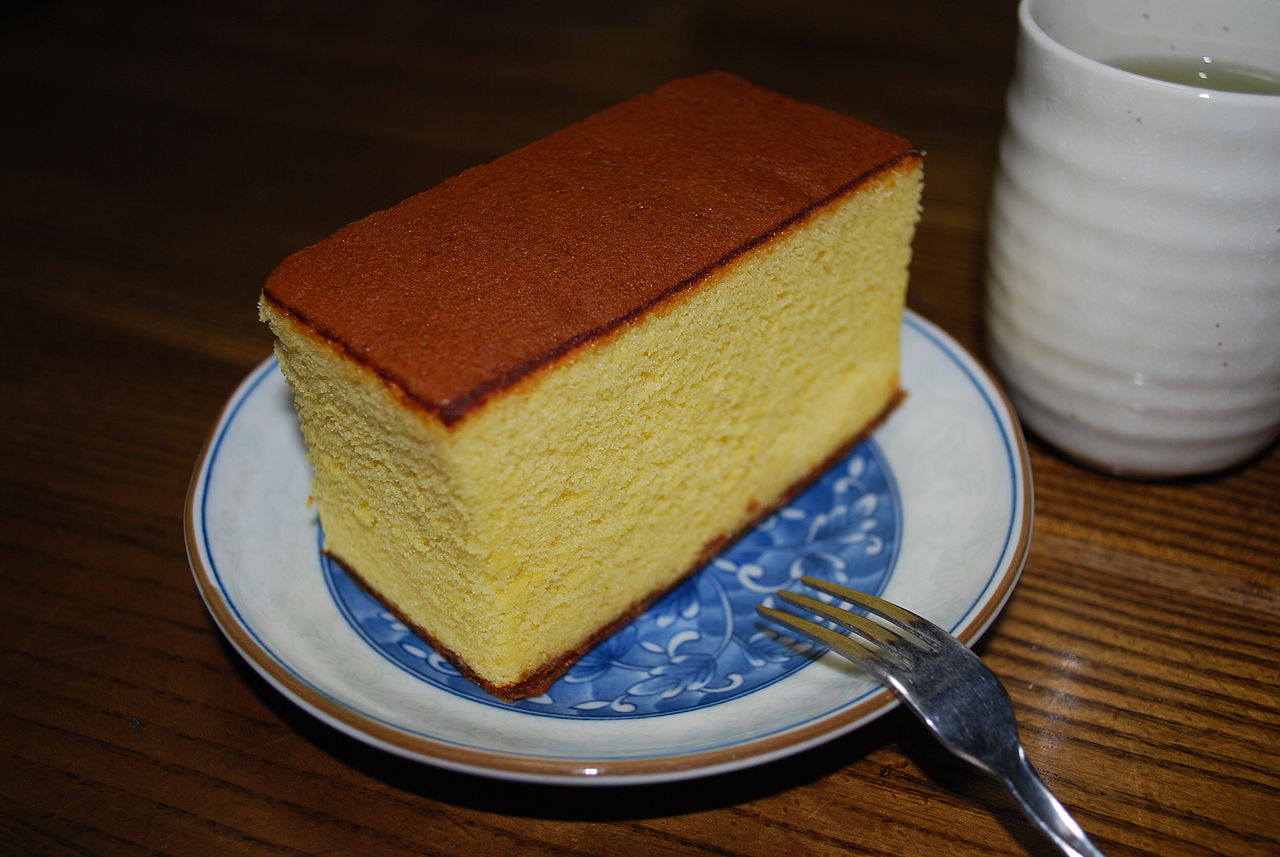
Nagasaki Nanban Sweets: Foreign Confectionery Culture Fragrant with Castella and Peach Castella
Nagasaki Castella, one of Nagasaki signature confections, traces its roots to the nanban sweets brought by the Portuguese who arrived in the 16th century, evolving over long years into a uniquely Japanese, moist confection. Simple ingredients of egg, sugar, flour, and starch syrup, carefully baked by artisans, produce a fine, moist crumb and the texture of coarse zarame sugar settled at the bottom. Long-established Castella shops line the streets of Nagasaki, and it is beloved by travelers as a souvenir for a stroll around town.
Highlights
An Exotic Taste Brought by Nanban Trade
The name Castella is said to derive from Castilla, the name of a kingdom in what is now Spain, in Portuguese. Even under national seclusion, Dejima in Nagasaki remained a precious trade window with Europe, and overseas ingredients and methods, including sugar, gathered here. Castella, which uses precious sugar generously, was a luxury item at first, but it eventually took root in the climate of Nagasaki, and as each shop competed with its own recipe and baking, the rich Castella culture of today took shape.
The Taste of Old Shops and the Pleasure of Zarame
Long-established Castella shops with centuries of history are scattered throughout Nagasaki, each offering a taste they have preserved. The moistness of the crumb, the richness of egg, and the level of sweetness differ subtly from shop to shop, and comparing them is one of the joys of travel. Castella made by the traditional method of baking with coarse zarame sugar laid at the bottom is characterized by a crunchy texture and rich sweetness on the palate. There is also great variety, such as matcha and chocolate, and gosanyaki, a rich premium Castella using plenty of egg yolk.
Strolling and Choosing Souvenirs
Old shops gather around the Shianbashi and Hamanomachi arcades, and some offer Castella sold by weight cut on the spot or freshly baked samples. From the standard single loaf to individually wrapped bite-size portions, being able to choose according to your purpose is one of the pleasures. Premium items in paulownia boxes are also popular as gifts.
Seasonal Enjoyment
Castella shops operate year-round, so you can enjoy the freshly baked taste whenever you visit. To combine with Nagasaki sightseeing, spring and autumn, when the weather is fine for touring nanban-culture landmarks such as Glover Garden, Oura Church, and Dejima, are recommended. In summer, take care with shelf life and storage; enjoying freshly cut Castella with tea in an air-conditioned cafe is also a popular way to spend the time.
Access and Essential Information
Long-established Castella shops gather around JR Nagasaki Station and around the Shianbashi and Hamanomachi arcades near the Shinchi Chukagai and Kanko-dori tram stops. Trams are well developed in the city, and a one-day pass (adult fare in the several-hundred-yen range) lets you efficiently visit the shops and attractions. As for prices, an individually wrapped bite-size portion starts from a few hundred yen, while a single loaf in a paulownia box runs from around one thousand to several thousand yen. For souvenirs, it is reassuring to check the shelf life (many products keep for roughly one to two weeks) and whether items are individually wrapped.
Practical Travel Notes
- Best time: Popular shops may sell out in the afternoon, so to be sure of freshly baked Castella, a morning visit is recommended.
- Tip for comparing: Buy individually wrapped or small sizes at several shops and compare the moistness of the crumb and the amount of zarame to clearly see each shop character.
- Real nearby spots: The Shianbashi and Hamanomachi arcades are a bustling area with restaurants and souvenir shops. Glover Garden, Oura Church, and Nagasaki Shinchi Chinatown are also within walking or tram range.
- Take-home note: Castella is basically stored at room temperature, but avoid high heat in summer. Cut-slice types should be eaten soon.
- Budget feel: From a few hundred yen for eating on the go or souvenirs, and from around one thousand to several thousand yen for a paulownia-boxed gift. Premium items such as gosanyaki are in a higher price range.
A Word of Advice
For Nagasaki Castella, first check the flavor of the crumb itself with the standard plain type. Comparing the traditional type that keeps the crunchy zarame texture at the bottom with the moist, rich gosanyaki reveals its depth. If you choose while checking shelf life and individual wrapping, it makes a distinctly Nagasaki nanban sweet you can carry home along with the memories of your trip.
📚 Sources
The information about Nagasaki castella was compiled by our editorial team from Nagasaki City tourism information, guidance from long-established castella shops, and explanations of the Nanban trade history. The account of a Nagasaki specialty rooted in the Nanban sweets brought by the Portuguese in the sixteenth century and baked with coarse sugar at the base follows these public references. Because shop hours and products vary by shop and period, please confirm the latest information from each shop or Nagasaki City before your visit.
Visitor Checklist
- Estimated time: Allow about 30 minutes to an hour to shop and compare at long-established stores.
- What to prepare: If taking some home as a gift, a bag to gather your purchases is handy.
- How to enjoy: The moistness and sweetness of the sponge differ by shop, so enjoy comparing them.
- Touring tips: Long-established shops are scattered around the city, so stop by while strolling the town.
📍 Location & Access


Share this article


✍️ About this article
This article is compiled by the Tabitabi JAPAN editorial team from official and primary sources, including facility and shrine/temple websites, tourism information published by municipalities and tourism associations, and cultural-property records released by national and local governments. Prices, opening hours and event dates may change, so please also check the official information of each facility or local government before you visit.