
Oita Autumn Foliage: Kuju Mountains, Yufuin & Yabakei
About Oita's Autumn Foliage
When autumn comes to Kyushu, the mountains of Oita are dyed into a gradation of red, orange, and yellow, as if paint had been spilled. The coloring that began in the high-altitude Kuju mountain range eventually descends to the gorges and hot-spring areas, and the whole land is wrapped in autumn scenery that seems to blaze—. Experiencing autumn foliage of such overwhelming scale is the real pleasure of an autumn trip in Oita Prefecture.
Tourism Oita, the prefectural tourism body, publishes peak-viewing windows spot by spot rather than a single prefecture-wide range: mid-October onward at Makinoto Pass, mid-October to mid-November across the Kuju range, late October to mid-November at Hitome Hakkei and the Kokonoe suspension bridge, early to mid-November at Kinrin Lake and Kyusuikei, and mid to late November at Goryo-momiji. Because the timing differs so much by altitude, a well-planned route lets you follow the colour for well over a month. Moreover, with such a variety of stages—mountains, gorges, hot-spring towns—the quality of the experience of "viewing autumn foliage" is completely different. Let's set out for Oita's autumn, full of famous spots that firmly answer to each travel style—mountain lovers, hot-spring lovers, superb-view lovers.
Yabakei
"Do not speak of autumn foliage without going to Yabakei"—locals say this much; Yabakei is a sacred ground of autumn foliage representing Oita. Against a backdrop of steep cliffs where oddly shaped rocks stand in a row, the sight of red and golden maples and ginkgoes overlapping in layer upon layer is an overwhelming beauty, as if vivid colors had been breathed into an ink-wash painting. Especially around Ao no Domon, the quiet surface of the Yamakuni River reflects the autumn foliage just as it is, and a fantastical world spreads where the boundary between reality and mirror image seems to melt away. It is understandable that photography lovers come again and again, camera in hand.
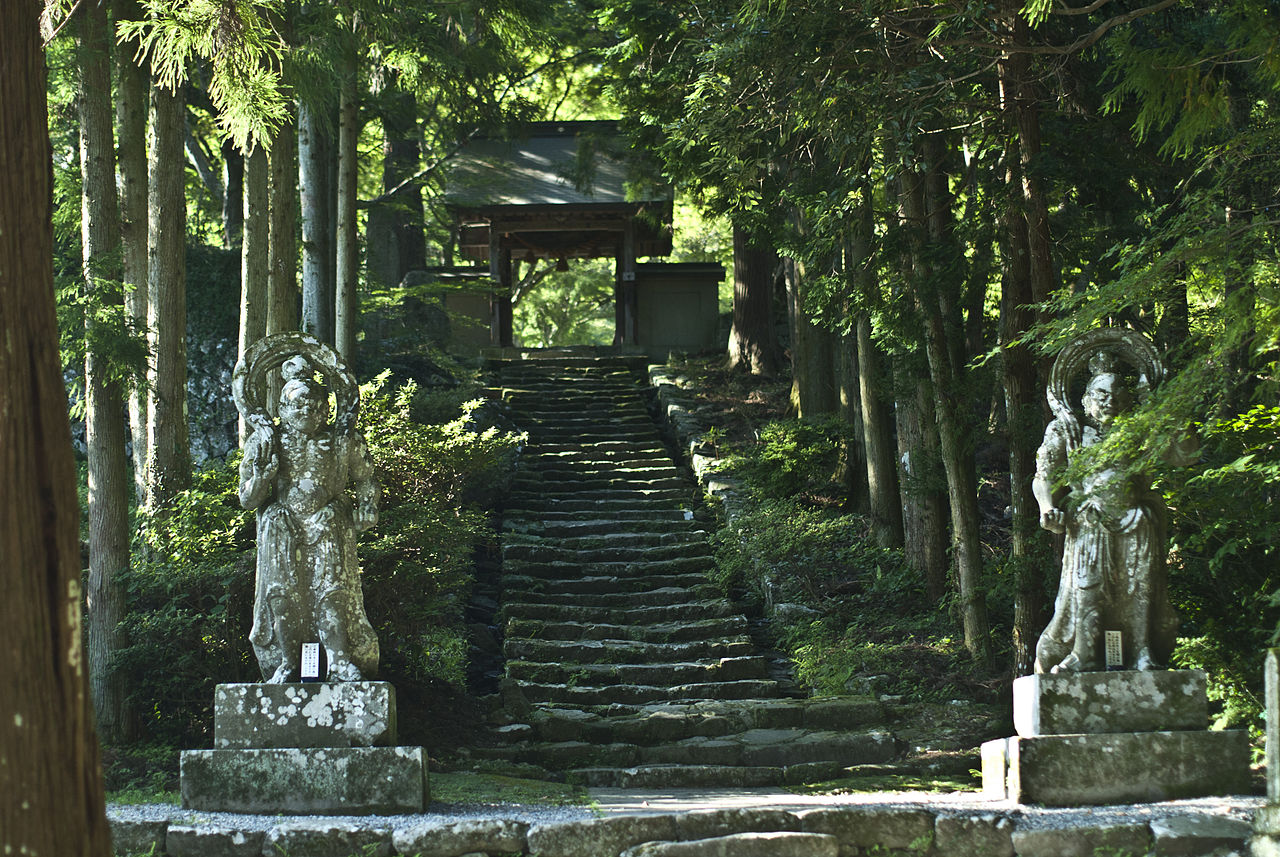
The other place worth your time here is Rakanji, a Soto Zen temple built into the cliff face, where thousands of stone buddhas sit in the rock caves and the Five Hundred Rakan of the Murokutsu are known as the oldest stone set of their kind in Japan. Please read the practical section below before going, because the visit is not a casual one: the lift has been suspended since March 2024, leaving a 20-minute walk uphill from the car park, and photography is prohibited inside the grounds. It is a place to stand among the stone figures rather than a place to take pictures of autumn leaves.
Best season / recommended time of day Here the two official sources disagree by about a month. Tourism Oita gives late October to mid-November for Hitome Hakkei, while Nakatsu City — the local authority — gives mid-November to early December. Plan with that spread in mind and call the Yabakei Branch Regional Development Division (0979-54-3111) for current colour reports. The 6–8 a.m. hours of early morning are a special time when the morning mist softly envelops the gorge, letting you enjoy a fantastical collaboration with the autumn foliage. The oddly shaped rocks and colored trees that appear as if rising from within the mist—this sight can be seen only at this time, a gift unique to Yabakei. During the day, tourists increase and it bustles, so those who want to face the scenery quietly should aim for Yabakei first thing in the morning.
How locals enjoy it / hidden-gem info Shin-Yabakei "Hitome Hakkei," a little farther from the main Ao no Domon area, is a superb-view point where you can take in eight oddly shaped rocks and the autumn foliage at a glance. True to its name, meaning "seeing eight views at a glance," the moment you stand on the observatory you lose words at the panorama spreading to fill your sight. The car park below it holds 256 ordinary vehicles and 11 buses, is free and open 24 hours, and the observation deck is about five minutes on foot (Nakatsu City). One common misunderstanding to clear up: Nakatsu City states plainly that Hitome Hakkei is not illuminated. The foliage illumination is held at Keisekien and at Hisashi-momiji, and the 2026 dates had not been announced as of September 2026. Also, since local farm direct-sales stands have local persimmons, chestnuts, and apples, by all means stop by as a companion to your foliage hike. A scene of Oita-like autumn where you can savor seasonal flavors and autumn foliage at once.
Access
- Train + bus: About 40–50 minutes on the Daiko Hokubu bus "bound for Yabakei" from "Nakatsu Station" on the JR Nippo Main Line. Get off right at the Ao no Domon bus stop. From Hakata Station it is about 1 hour 15 minutes to Nakatsu Station on the limited express "Sonic," so access is good.
- Car: About 30 minutes from the "Innai IC" on the Oita Expressway. Combined with the Yamanami Highway, you can also tour Oita sightseeing efficiently.
- During the autumn-foliage season, especially on weekend daytime, a long line can form at the parking lot. Weekday mornings are the best bet. No shuttle bus service is documented on any official site, so do not plan around one. Parking figures where they are published: Ao-no-Domon has 80 cars and 7 large buses according to Nakatsu City, or about 85 cars and 8 large vehicles according to the tourism association — the city's page has not been updated since 2019, so the association's figure may be the current one. The interior of Ao-no-Domon has a 3.6 m height limit. Saruto-bi Sentsubokyo has 36 free spaces and Marin Gorge 12. Having easy-to-walk shoes and a layer for the morning chill keeps you comfortable.
The Kuju Mountain Range
In the Kuju mountain range, exceeding 1,000 meters in altitude, the signs of autumn begin to drift earlier than anywhere in Oita. Tourism Oita gives mid-October onward for Makinoto Pass, mid-October to mid-November for the Kuju range as a whole, and mid-November for Kuro-dake. The leaves of the Miyama-kirishima azalea turn a vivid red and the grass foliage covers the highland in golden colour. The golden marshland spreading below, the peaks towering beyond it—this field, holding Kyushu's highest peak Nakadake (1,791 m), has a scale and quietness truly worthy of being called "autumn foliage of the heavens." The autumn scenery viewed while breathing in the mountain air to your heart's content is utterly different in dimension from foliage on flat land.
Of particular note is "Kokonoe 'Yume' Otsurihashi," Japan's longest pedestrian-only suspension bridge. The panorama of gorge and autumn foliage viewed from the 390-meter-long bridge is a superb view in a word. There are also sections where the floor is see-through, letting you experience heart-pounding thrill and breathtaking beauty at the same time. If you stand on the observatory beyond the bridge, the ridgeline of the Kuju mountain range spreads as if drawing an arc, and you can feel the magnificence of this land with your whole body—such a luxurious moment awaits.
Best season / recommended time of day Rather than a single peak, read the mountain by altitude: Makinoto Pass from mid-October, the Kuju range from mid-October to mid-November, the Kokonoe suspension bridge from late October to mid-November, Kyusuikei in early to mid-November, and Kuro-dake around mid-November (Tourism Oita). In the early morning a sea of clouds easily forms, and you may encounter a miraculous scene woven by autumn foliage and the sea of clouds. If you aim for that sight, said to be "one you may see only once in a lifetime," getting up early right after sunrise is an absolute recommendation. However, since it is not unusual for the morning temperature to drop below 10°C, a windbreaker and layerable warm clothing are essential.
How locals enjoy it / hidden-gem info Makinoto Pass, at an altitude of 1,330 m according to Kokonoe Town, is the main trailhead for the Kuju range and gives magnificent foliage scenery from the observation point without full mountaineering gear. Its parking capacity is not published anywhere official, so arrive early. If you would rather have a guaranteed space, Chojabaru Visitor Centre is free, has about 450 spaces and closes only from 29 December to 3 January (0973-79-2154). Do not plan on parking at Kyusuikei — the prefectural tourism body lists it as having no car park at all. And what you want to enjoy after mountaineering or strolling is the hot springs in the Chojabaru area. Warming your tired body from the core while gazing at the autumn foliage spreading outside the window is a luxury truly typical of Oita. Furthermore, the "autumn foliage + hot-spring gourmet" course of having dango-jiru and local-chicken dishes at eateries along the "Yamanami Highway" is an autumn standard plan long loved among local fans. By all means try imitating it.
Access
- Car: About 30 minutes from the "Kusu IC" on the Oita Expressway to the Kokonoe "Yume" Otsurihashi. Via the Yamanami Highway is the most straightforward, and the drive itself can be enjoyed as a superb-view route colored by autumn foliage.
- Public transport — read this before you plan. About 20 minutes by taxi from "Bungo-Nakamura Station" on the JR Kyudai Main Line. The bus option is Kamenoi Bus route 37, which in 2026 runs only on Saturdays, Sundays and public holidays from 4 April to 29 November, with two round trips a day (Yufuin Station Bus Centre 10:20 and 13:45; Makinoto Pass 12:05 and 15:28; 1,500 yen). There is no weekday service, and it stops for the season on 29 November.
- On peak-foliage weekends the car parks fill up. The suspension bridge's own free parking holds 229 cars and 37 large buses on the Nakamura side and 46 cars on the Kitagata side, and there is a ticket office on the Kitagata side too. No temporary overflow car park and no peak-season shuttle are documented on any official site, so arrive early rather than counting on one. Note too that admission closes an hour earlier from 1 November (17:00 rather than 18:00) and that entry is halted when more than 800 people are on the bridge. Also, those planning to hike should not forget to take out mountain insurance and check the weather forecast frequently. Mountain weather changes easily, and it can suddenly grow cold from the afternoon.
Yufuin
Although Yufuin is known nationwide as a hot-spring area, in fact it is also a grown-up hidden gem to visit precisely in the autumn-foliage season. To the hot-spring town where steam drifts quietly with the magnificent Mt. Yufu at its back, trees dyed red and yellow gently add color—that calm, refined autumn scenery is a kind of beauty far from showiness, one that gradually soaks into the depths of the heart. That many travelers say "coming here, for some reason I want to take a deep breath" must be unique to this town's atmosphere.
The early morning of Kinrin Lake in particular is exceptional. From the water surface, slightly warm due to the hot spring welling up from the lake bottom, white mist rises swaying. The daybreak scene where that veil of mist and the autumn foliage of the shore blend is so fantastically beautiful that repeat visitors who come to Yufuin again and again say "I come just to see this." There is a heart-striking emotion there that makes the hand holding the camera tremble. Rather than exhausting words, you want to just stand quietly on the spot—Yufuin has such mornings.
Best season / recommended time of day Tourism Oita gives early to mid-November for Kinrin Lake and late October to mid-November for Mt. Yufu. Yufu City's own page for Kinrin Lake describes the scenery but publishes no hours, admission, parking or peak-foliage information at all. The autumn that comes about 3–4 weeks later than the Kuju range, even past the height of the foliage, has plenty of atmosphere in the scenery of fallen leaves piled up in the hot-spring town, and the quietness unique to late autumn enriches the margins of your trip. Since the mist of Kinrin Lake shows its most fantastical form right after sunrise to around 8 a.m., getting up early is essential. The Yunotsubo-kaido, which bustles with tourists during the day, has hardly anyone in the early morning, letting you have the moist autumn air all to yourself.
How locals enjoy it / hidden-gem info The view from the low hills overlooking the Yufuin basin is a quiet alternative to the crowded lakeside. If you are thinking of walking up Mt. Yufu itself, read the safety note in the practical section below first — Beppu City warns that fatal accidents occur frequently above Matae. Try asking the proprietress of a local inn, "What's a recommended walking path?" You may be told of a lovely path not in guidebooks, or a superb-view point known only to regulars. The real pleasure of travel lies in such chance encounters. Also, sweets using local chestnuts enjoyed while admiring the foliage, and Yufuin's specialty hot-spring boiled tofu, are seasonal blessings you can savor only in autumn Yufuin. By all means stop by during your stroll.
Access
- Train: Get off at "Yufuin Station" on the JR Kyudai Main Line; about a 15-minute walk to Kinrin Lake. From Hakata Station, about 2 hours 10 minutes on the popular sightseeing limited express "Yufuin no Mori." Traveling while gazing at Oita's nature spreading from the train window is also nothing short of a fine start to the trip.
- Car: About 10 minutes from the "Yufuin IC" on the Oita Expressway.
- In the autumn-foliage season, reservations at hot-spring inns fill up astonishingly early. Booking accommodation 2–3 months in advance is the reassuring iron rule. Since it gets severely cold around Kinrin Lake even in the early morning, be sure to bring a down jacket or a thick stole. On misty mornings the road surface may be wet, so non-slip shoes are also recommended.
Autumn Foliage Viewing Period and How to Enjoy It
Oita's autumn foliage starts high and works downward, and Tourism Oita's published windows show the relay clearly: Makinoto Pass from mid-October, the Kuju range mid-October to mid-November, Hitome Hakkei late October to mid-November (though Nakatsu City says mid-November to early December), Ao-no-Domon and Kyoshuho early to mid-November, and Kinrin Lake early to mid-November. Thanks to this splendid baton relay, on an autumn trip touring within Oita Prefecture the chance of encountering superb foliage scenery whatever timing you visit is very high. Whether you come in October or in November, each "season's best" is prepared.
Touring all three areas at once greedily is also fine, but to slowly savor the "atmosphere" found only in each place, by all means also consider an area-focused trip of two days and one night. For example, a course enjoying Kuju mountaineering and the Chojabaru hot springs as a set in one day. Or a course starting from the early-morning misty scenery of Kinrin Lake, strolling the Yufuin hot-spring town, then moving to Yabakei in the afternoon to view the evening gorge beauty. If you set a theme and plan your trip carefully, you can encounter completely different autumn faces of even the same Oita.
Autumn Oita is a special season where this trinity welcomes travelers—blazing autumn foliage, hot springs that warm you to the core, and rich food packed with the bounty of the land. By all means come check with your own eyes and skin the scenery and emotion of this season alone, which photos and words can hardly fully convey.
Practical Information for the Autumn Foliage Season (Based on Official Announcements)
All information below is based on official announcements from individual facilities, local authorities, and transport operators (survey reference date: 6 September 2026).
Kokonoe "Yume" Otsurihashi (Kokonoe Town)
| Item | Details |
|---|---|
| Admission | Junior high school students and above ¥500 / Primary school children ¥200 / Under primary school age free (persons with disabilities and one accompanying person: half price; groups of 30 or more: 10% discount; discounts cannot be combined) |
| Opening hours | July–October: 8:30–18:00 (ticket sales until 17:30) / November–December: 8:30–17:00 (ticket sales until 16:30) |
| Closed | Never (entry may be restricted due to bad weather etc.) |
| Car park | Free. Nakamura side: 229 standard cars, 37 large buses, 6 disabled spaces / Kitagata side: 46 standard cars, 2 disabled spaces (no large buses; motorcycles permitted) |
| Pets | Not permitted |
| Entry restrictions | Sustained winds of 15 m/s or more / dense fog / rainfall/flood advisory or higher / heavy snow advisory / earthquake of intensity 4 or above (entry permitted after inspection) / more than 800 people on the bridge / etc. |
| Fare revision | Kokonoe Town has announced a revision effective 1 January 2027 (Reiwa 9). The current fare applies during the 2026 foliage season. |
| Enquiries | 0973-73-3800 |
Yabakei Area (Nakatsu City)
| Spot | Car park | Notes |
|---|---|---|
| Aonodomon | Free. Nakatsu City: 80 standard cars, 7 large buses; Tourism Association: approx. 85 standard cars, 8 large vehicles | Height restriction 3.6 m inside the tunnel. From Nakatsu Station: Daiko Hokubu Bus "Mamimionsen" service, approx. 25 min, alight at "Aonodomon" stop |
| Hitome Hakkei (Shin-Yabakei) | Shin-Yabakei public car park — free, 24 hours, 256 standard cars, 11 buses | 5-minute walk to the viewpoint. Accessible toilets available. No night illuminations |
| Rakanji Temple | No official figure for number of spaces | Lift has been suspended since March 2024. Approx. 20-minute walk from car park to main hall. Entry 8:30–15:30 (gate closes at 17:00); donation admission — junior high school age and above ¥1,000, primary school children ¥500. Photography, mobile phone use, and animals not permitted. Groups of five or more must contact the temple the day before, and non-Japanese-speaking visitors are asked to bring an interpreter. The nearest community bus stop is Rakanji, but that service does not run on Wednesdays, Saturdays or Sundays. Nakatsu City Tourism Division 0979-62-9034 |
| Sarutobichitsubo-kyo | 36 spaces, free | Nationally designated natural monument. 0979-62-3111 |
| Maringakyo | 12 spaces, free | — |
Night illuminations: Venues are Keisekien (Oaza Ojima 2286-1, Yabakei-cho, Nakatsu City) and Hisashi Momiji (Shin-Yabakei, approx. 50 m along Prefectural Road 28); admission free. The 2026 dates had not been announced as of early September 2026. The text "1 November–1 December, 17:00–21:00" remaining online is the 2025 record and should not be taken as the 2026 schedule. Enquiries: Nakatsu City Yabakei Branch Office, Regional Revitalisation Division — 0979-54-3111 (some tourism websites print 0979-54-1111, but the Nakatsu City official website uses 3111).
Kuju/Kokonoe Area
| Item | Details |
|---|---|
| Chojabaru Visitor Centre | Free admission, car park approx. 450 spaces, closed 29 December–3 January, 0973-79-2154. Approx. 50 min by bus from Bungonakamura Station |
| Kyusuikei | No car park (Tourism Oita). Kokonoe Town, Commerce, Tourism & Natural Environment Division — 0973-76-3150 |
| Makinoto Pass | Elevation 1,330 m. Number of spaces and parking fee not stated in official sources. |
| Kamenoi Bus Route 37 — Makinoto Pass Line | Saturdays, Sundays, and public holidays only, 4 April–29 November 2026; 2 round trips per day. Departs Yufuin Station Bus Centre 10:20 / 13:45; departs Makinoto Pass 12:05 / 15:28. Yufuin Station Bus Centre to Makinoto Pass: ¥1,500 |
| Kokonoe "Yume" Otsurihashi ticket | ¥7,600 (adults only). Includes express bus Yufuin–Fukuoka round trip + Route 37 round trip + bridge admission |
| Kokonoe Town Community Bus | Flat fare for all routes — adults ¥500 / primary school children ¥250 / pre-school children free (persons with disabilities: half price) |
Komatsu Jigoku (hell spring) has been reopened after completing restoration works following the July 2020 heavy rain disaster. On the other hand, Ryumon Falls suffered a rockfall in 2020 and the area near the slide zone and the rockfall site remains inaccessible (Kokonoe Town official website).
Yufuin and Beppu Area
Mt. Yufu climbing restrictions (Beppu City official website) — The main trailhead ⇔ Ainokoekoshi ⇔ Mataei section is open for climbing, but there is a cavity near the East Peak summit marker post. The Mataei ⇔ East Peak / West Peak sections, the crater-rim circuit, and the vicinity of Okuzure have "collapses, ground cracks, and fissures, with multiple fatal accidents". The East Trailhead ⇔ Hyugagoekoshi ⇔ Hyugadake section is passable but has a high rate of lost hikers. On Tsurumidake, the Ikki-tozan trail and others are open, but the Umanose ⇔ Kuragado ⇔ Funasoko route (old route) has a collapsed trail and is impassable ("absolutely do not go" is stated explicitly). The Ohira-yama (Ohgi-yama) summit ⇔ Uchiyama summit section is also impassable. This page was last updated 1 December 2025, which is before the 2026 Kumamoto earthquake, so the situation after the earthquake may not be reflected. Yufu and Tsurumidake Natural Recreation Forest Protection and Management Council (within Beppu City Agriculture, Forestry and Fisheries Division) — 0977-21-1133.
Beppu Ropeway (Tsurumidake)
| Item | Details |
|---|---|
| Operating hours | Summer season 15 Mar–14 Nov: 9:00–17:30 (last upward ride 17:00) / Winter season 15 Nov–14 Mar: 9:00–17:00 (last upward ride 16:30) |
| Frequency | Every 20–30 minutes; ride approx. 10 minutes; open year-round (every 15 minutes or extra runs during busy periods) |
| Fares | Adults (junior high school age and above): round trip ¥1,800 / one way ¥1,200 / Children (aged 4 to primary school): ¥900 / ¥600 / Seniors aged 70+: round trip ¥1,700 / one way ¥1,200 ※ Official note: "as of 1 February 2023" |
| Foliage (official description) | Colours descend from the summit to the foot of the mountain over more than a month, from mid-October to late November |
| Enquiries | 0977-22-2277 |
Lake Shidaka (RECAMP Beppu Shidaka) — Administration building 8:00–17:00; car park open 8:00–19:00 (campers may enter and exit until 21:00). Camping fee ¥660 per person per night; paddle boat (3-person) ¥1,100 per boat per 30 minutes. Shidaka Lake Management Office — 0977-25-3601. Route 34 Sakai Line from Beppu Station (west exit) is suspended, and the Route 36 Yufuin Line "Torii" stop is approximately 30 minutes on foot (fare ¥430).
Peak Foliage Times Published by Tourism Oita
| Spot | Typical peak |
|---|---|
| Makinoto Pass | mid-October onward |
| Kuju range | mid-October to mid-November |
| Kokonoe "Yume" Otsurihashi | late October to mid-November |
| Kyusuikei | early to mid-November |
| Kuro-dake | mid-November |
| Hitome Hakkei | late October to mid-November |
| Ao-no-Domon and Kyoshuho | early to mid-November |
| Mt. Yufu | late October to mid-November |
| Kinrin Lake | early to mid-November |
| Saruto-bi Sentsubokyo | late October to mid-November |
Tourism Oita adds its own caveat: "These are typical-year guides. They change daily with the weather, so please enquire." Note also that for Hitome Hakkei, Nakatsu City's own website gives a completely different window — mid-November to early December — roughly a month later than the prefectural figure.
Things We Could Not Confirm
For honesty, here is what has no official published figure: the parking capacity and fee at Makinoto Pass; the parking capacity and fee at the Mt. Yufu main trailhead; Rakanji's parking capacity; the admission fee and opening hours of the Hitome Hakkei observation deck itself (only the car park is documented as free and open 24 hours); official peak-foliage dates or parking figures for Lake Shidaka; whether the Beppu Ropeway will run any night service in 2026; the current Kokonoe community bus timetable; and the fare and frequency of the Daiko Hokubu bus between Nakatsu Station and Ao-no-Domon.
Impact of the 2026 Kumamoto Earthquake
Tourism Oita, the official Oita prefectural tourism body, announced on 4 September 2026 that: "At present no significant impact on tourism and accommodation in Oita Prefecture has been confirmed, and most accommodation and tourist facilities are operating normally." "There are no expressway closures in Oita Prefecture." "JR services within Oita Prefecture are operating normally." "Flights departing from and arriving at Oita Prefecture are also operating normally." However, individual closure information at the level of prefectural and municipal roads could not be confirmed on each site. Please check the latest information on the official websites of each transport operator, road authority, and facility before you set out.
Information Sources
Kokonoe "Yume" Otsurihashi official website, Kokonoe Town official website, Nakatsu City official website, Nakatsu Yabakei Tourism Association, Beppu City official website, Beppu Ropeway official website, Yufu City official website, Yufuin Onsen Tourism Association, Tourism Oita (Oita Prefecture Tourism Official, public interest incorporated association), Kamenoi Bus official website, Chojabaru Visitor Centre (Ministry of the Environment). Survey reference date: 6 September 2026. Fares, timetables, peak season timing, and road conditions are subject to change; please check the latest information on each official website before you set out.
*Dates and prices are subject to change. Please check the latest information on each official website before you set out.*
- Contact: Nakatsu City Tourism Division 0979-62-9034 / Nakatsu City Yabakei Branch Office, Regional Development Division 0979-54-3111 / Kokonoe Town Commerce, Tourism and Natural Environment Division 0973-76-3150 / Chojabaru Visitor Center 0973-79-2154 / Kokonoe Yume Otsurihashi 0973-73-3800 / Kamenoi Bus Yufuin Station Bus Center 0977-84-3145 / Yufuin Promotion Bureau, Regional Development Division 0977-84-3111 / Yufu-Tsurumidake Nature Recreation Forest Protection and Management Council, within Beppu City Agriculture, Forestry and Fisheries Division 0977-21-1133 / Beppu Ropeway 0977-22-2277
📍 Location & Access




Share this article


✍️ About this article
This article is compiled by the Tabitabi JAPAN editorial team from official and primary sources, including facility and shrine/temple websites, tourism information published by municipalities and tourism associations, and cultural-property records released by national and local governments. Prices, opening hours and event dates may change, so please also check the official information of each facility or local government before you visit.