
Nishisowata Shrine — A Tranquil Shrine in the Green Forest of Oita City
To the southwest of Oita city, surrounded by a dense guardian forest, Nishisowata Shrine occupies a tranquil space that feels removed from the urban surroundings. Revered as the first shrine of the old Bungo province, it is a historic sanctuary that draws many worshippers, especially for the New Year visit, yet retains an understated, community-rooted atmosphere rarely found in busy tourist spots.
Highlights
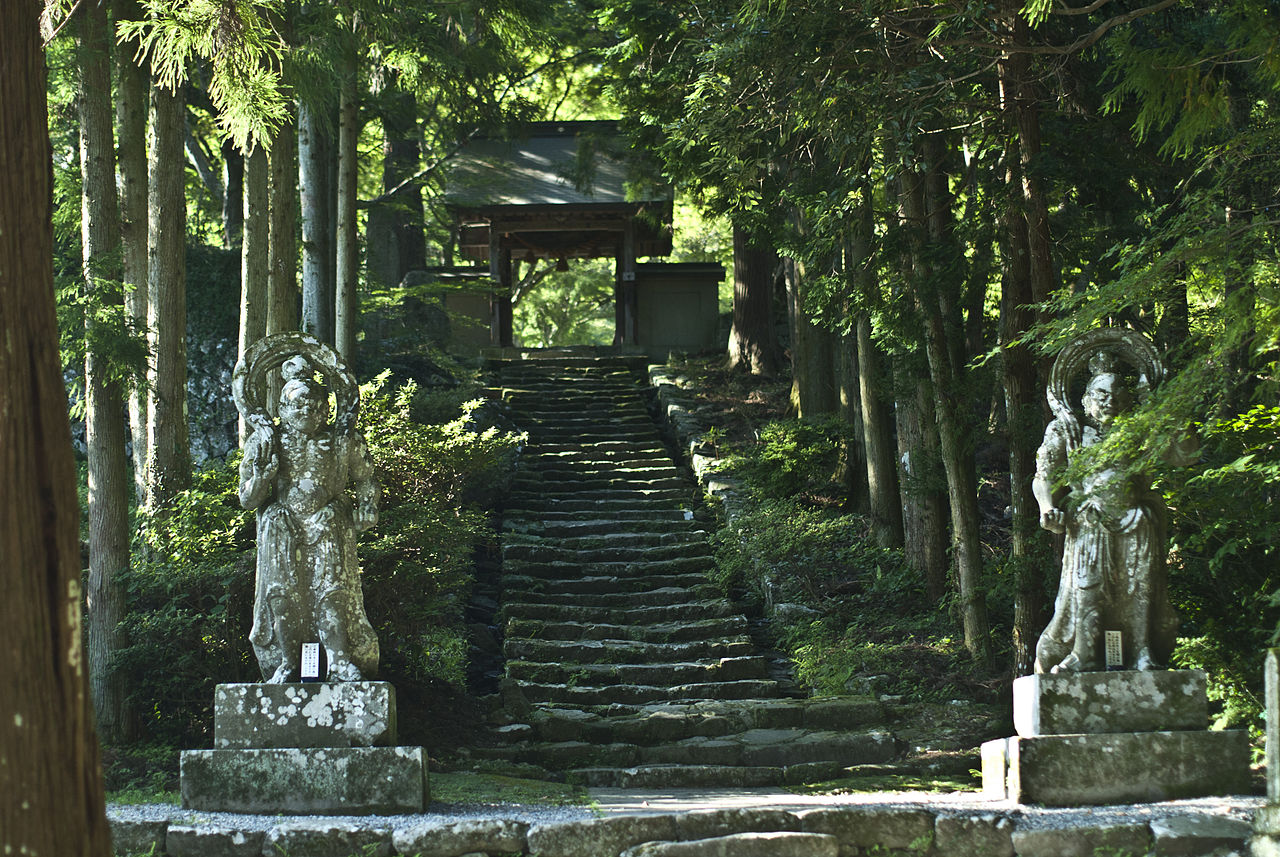
The approach to the shrine is its first gift: a path through dense forest that filters the city noise and light into a green, quiet stillness. The main hall is carefully maintained, and the surrounding forest, streams, and dappled light create a place where the heart naturally settles, long serving as a spiritual anchor for local residents.
- Mannen Bridge: A single-arch stone bridge over the Sawata River at the entrance to the grounds. It was designated a Tangible Cultural Property of Oita Prefecture in 1980.
- The great wisteria: The grounds hold a great wisteria said to be around 450 years old, making the shrine known as a wisteria spot. A wisteria festival is held around mid-April.
- The guardian forest: The approach leading into the dense forest is wrapped in clear air far from the everyday world.
- Annual events: Various rites are held through the year, including the spring grand festival, the wisteria festival, the summer purification, Shichi-Go-San, and the harvest festival.

Best Time to Visit
In spring the cherry blossoms and the great wisteria reach their peak, and the wisteria festival in mid-April draws many visitors. In summer the streamside within the grounds is cool, and worship amid the cries of cicadas has its own charm. Autumn colors the grounds with red leaves, most beautiful from mid to late November. Winter is lively with visits for milestones such as the New Year and Shichi-Go-San.

Access and Basic Information
- Location: 1644 Sawata, Oita City, Oita Prefecture
- From bus stops 3, 4, and 5 in front of Oita Station, take a bus bound for Sawata/Fujigaoka or Mitsuyoshi/Fujigaoka for about 30 minutes, get off at the Fujigaoka-minami stop, and walk about 15 minutes.
- About 10 minutes by car from the Mitsuyoshi interchange on the Oita Expressway, or about 30 minutes by car from Oita Station.
- Visiting: grounds open freely (shrine office reception 9:00 to 16:30).
Practical Travel Notes
- Recommended season and time of day: The wisteria peak in mid-April is the greatest splendor. The festival period is busy, so if you seek quiet, a weekday morning is recommended. Spring, when cherry blossoms and wisteria overlap, is especially worth seeing.
- Time needed: Crossing Mannen Bridge, walking the forest approach, and worshipping at the main hall, a stroll of the grounds takes roughly 30 minutes to an hour. In the wisteria season, allow a little more time for photography.
- Nearby real spots: Close by car from central Oita, it is easy to combine with sightseeing in the city center. As the first shrine of old Bungo province, it also pairs well with other prestigious shrines in the prefecture such as Usa Jingu.
- Budget sense: The grounds can be worshipped at freely, so there are no major costs. It helps to have some coins ready if you wish to receive a goshuin seal or an omamori charm.
A Quick Tip
Though it holds the rank of the first shrine of old Bungo province, its charm lies in a community-rooted atmosphere that has not been over-commercialized. When stopping by along with sightseeing in Oita city, a weekday morning is best to avoid crowds. Simply crossing the stone-arch Mannen Bridge and strolling along the stream within the grounds is refreshing. Aim for the wisteria season and you can meet the splendid flower clusters of the aged great wisteria.
📚 Sources
For information on Nishisowata Shrine, the main references are the official information of Nishisowata Shrine, the first shrine of the former Bungo Province, and the tourism guidance published by the Oita City Tourism Association. The stone single-arch Mannenbashi bridge (a tangible cultural property of Oita Prefecture), the aged great wisteria, and the dates of the mid-April Wisteria Festival can be traced through the shrine's guidance and on-site historical notices. Shrine office hours and festival dates may change, so please confirm the latest details through official sources before you visit. Cultural-property designations can also be checked in public cultural-property records.
Visitor Checklist
- Estimated time: Crossing Mannenbashi, walking the forested approach, and worshiping at the main hall takes about 30 minutes to 1 hour; allow a little more during the wisteria season for photos.
- What to bring: Carry coins in case you wish to receive a goshuin seal or amulet. Since you walk the approach, comfortable shoes are recommended.
- Suggested route: From Mannenbashi at the entrance, proceed along the forested approach to worship at the main hall, then take in the area around the great wisteria on a short loop; pairing it with prestigious shrines such as Usa Jingu is also recommended.
- Crowd tips: The mid-April Wisteria Festival draws crowds, so weekday mornings are best if you seek quiet.
Practical Information for Your Visit
- Worship: The precincts are open for worship at any time
- Reception hours: 9:00-16:30 (shrine office)
- Parking: 80 spaces
- Access: From bus stops 3, 4 and 5 in front of Oita Station, take a bus bound for Soda / Fujigaoka or for Mitsuyoshi / Fujigaoka, about 30 minutes, get off at the Fujigaoka-minami bus stop and walk about 15 minutes / about 30 minutes by car from Oita Station, or about 10 minutes by car from the Mitsuyoshi interchange
- Precincts: The grounds cover 26,506 square metres. A pilgrimage trail of about 6 km leads to the inner shrine on Mount Hongu, and it also serves as a hiking course suitable for families
- Cultural properties: Mannen Bridge (designated a cultural property of Oita Prefecture on 8 April 1980), the shrine treasury (designated a tangible cultural property of Oita City on 9 January 1974) and the wisteria (designated a notable tree of Oita City on 1 February 1974)
- Note when using car navigation: Searching by telephone number may not show the correct location, so search by the address (1644 Soda, Oita City)
Note: The official website does not state any admission fee or parking charge (worship within the precincts is free and unrestricted).
(Sources: official website of Sasamuta Shrine, Ichinomiya of Bungo Province, pages Overview, Access, Guide to the Precincts and About the Wisteria Festival)
📍 Location & Access


Share this article


✍️ About this article
This article is compiled by the Tabitabi JAPAN editorial team from official and primary sources, including facility and shrine/temple websites, tourism information published by municipalities and tourism associations, and cultural-property records released by national and local governments. Prices, opening hours and event dates may change, so please also check the official information of each facility or local government before you visit.