
Oita Food Guide: Tori-ten, Ryukyuu & Shiroshita Karei
Blessed with a generous sea and mountains alike, Oita Prefecture is a treasure house of good eating, where fresh ingredients and local ingenuity have produced a food culture all its own. Tori-ten, the soul food of the prefecture's people; ryukyuu, fresh fish marinated in a savoury sauce; and shiroshita karei, a flatfish famed as a luxury catch — Oita has a full line-up of distinctive specialities that have been loved locally for generations. Oita is known nationwide as a hot-spring destination, but the appeal of its food is every bit as remarkable. A journey to taste the deeply flavoursome food of Oita, nurtured by a land blessed with the bounty of both sea and mountain, is sure to be an unforgettable culinary experience.
Tori-ten, the Soul Food of Oita
The best-known of all Oita dishes is tori-ten, long loved by the people of the prefecture. According to the Ministry of Agriculture, Forestry and Fisheries' "Uchi no Kyodo Ryori" (Our Local Cuisine), it is said to have originated at Toyoken, the prefecture's first restaurant, which stood in Beppu City. In the early Showa era, out of consideration that bone-in fried chicken would be difficult for women to eat, boneless thigh meat was cut into easy-to-eat pieces and prepared tempura-style — and that, the story goes, was the beginning. Seasoned chicken is coated in batter like tempura and deep-fried, giving it its appeal: crisp on the outside, juicy within. Unlike karaage, its defining characteristic is a light, fluffy mouthfeel. It is usually eaten dipped in vinegared soy sauce served with a dab of mustard paste, though ponzu or kabosu are sometimes used instead. From set-meal restaurants and izakaya to the family dinner table, it is a soul food enjoyed everywhere in Oita, and its ease and deliciousness have made it hugely popular with visitors too.
Ryukyuu, the Local Marinated-Fish Dish
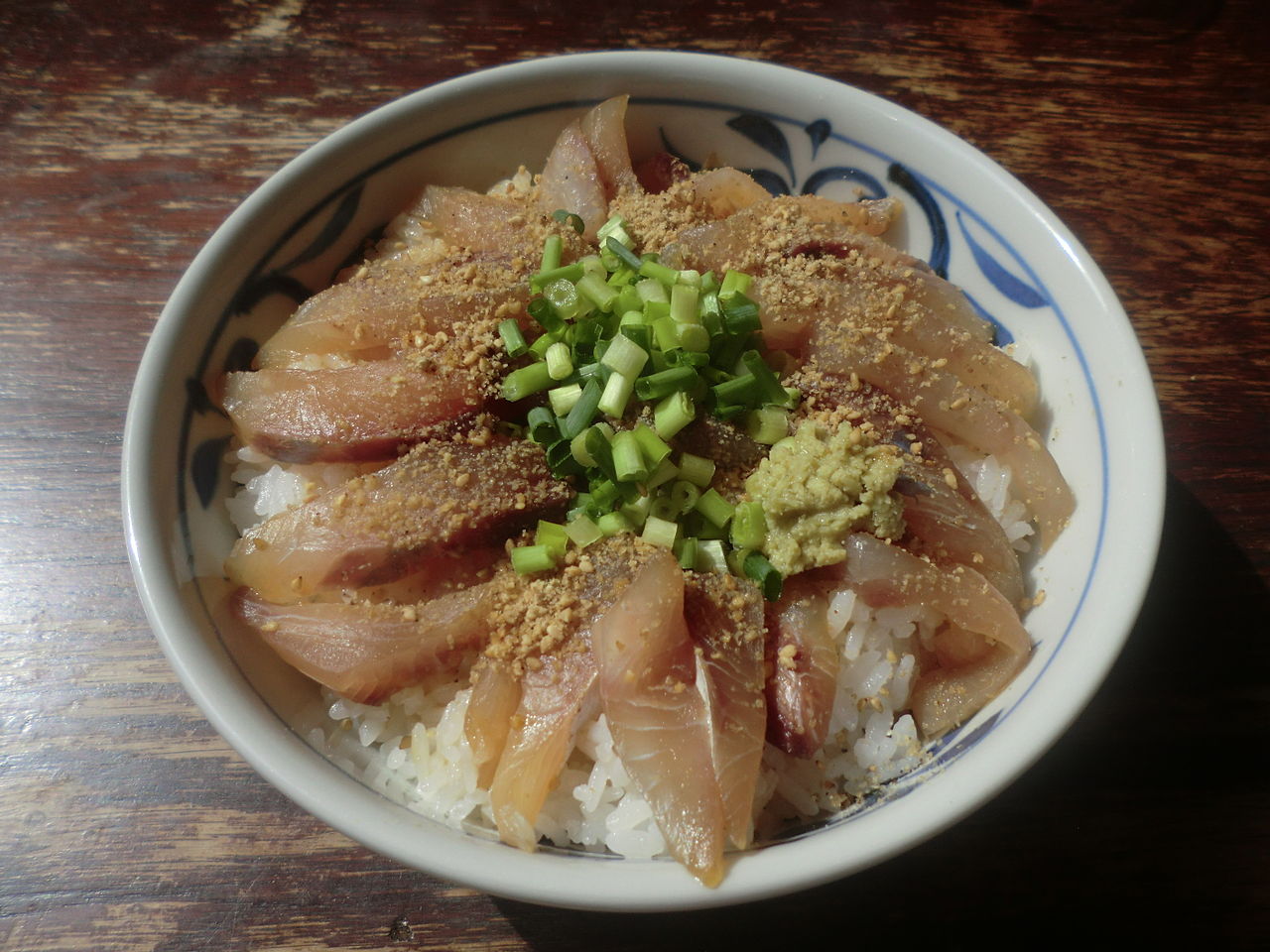
No account of Oita's food culture would be complete without the local dish ryukyuu. Sashimi of fresh fish such as horse mackerel, mackerel or yellowtail is marinated in a sauce combining soy sauce, mirin, sesame and aromatic seasonings. It began as a fishermen's own meal and a way of preserving the catch, spreading from the coastal areas in the south of the prefecture to the whole of Oita. There are several theories about the origin of the name: one holds that Oita fishermen were taught how to make it by fishermen from Ryukyu (Okinawa), and another that it derives from the word "rikyu-ae", a term for sesame-dressed dishes. It is excellent eaten as it is with a drink, of course, but also served over hot rice as a "ryukyuu-don" bowl, or as ochazuke with tea poured over it. The umami of the fresh fish and the marinade harmonise beautifully in a dish that lets you savour the bounty of Oita's sea to the full.
Hiji Town's Speciality: Shiroshita Karei
Shiroshita karei is marbled flounder (makogarei) landed at Hiji Town in Hayami District, which faces Beppu Bay. In the waters below the ruins of Hiji Castle, fresh water wells up from the seabed, and this brackish water nurtures plankton and small shrimp; the flounder that feed on them are said to have none of the muddy taste otherwise associated with the fish, and a refined flavour instead. In the Edo period it was presented to the shogunal household and is said to have been prized very highly — a luxury fish indeed. The season is early summer, and every May Hiji Town holds the Shiroshita Karei Festival, with a release of young marbled flounder into the sea at Hiji Port.
Flavours Born of a Flour-Based Food Culture: Dango-jiru and Yaseuma
Another thing that cannot be left out of any discussion of Oita's food is its flour-based food culture. According to the Ministry of Agriculture, Forestry and Fisheries' "Uchi no Kyodo Ryori", Oita Prefecture has extensive plateau land, much of which is unsuited to growing rice, and so the cultivation of grains such as wheat on upland fields has flourished since ancient times. Almost all of the harvested grain was milled into flour, and so a food culture using wheat flour took root throughout the prefecture.
The foremost example is dango-jiru. Wheat flour is kneaded and drawn out into thin ribbon-shaped dumplings, which are put together with vegetables into a soup made with the barley miso commonly eaten in Kyushu, or with blended miso or white miso. It looks rather like kishimen noodles, but it is said to have come to be called "dango" (dumpling) because the dough is rolled into balls and left to rest for a while; it is drawn out into thin ribbons so that the flavour soaks in more readily when simmered in the soup. Its distinguishing qualities are a firmer bite and chewier texture than udon; the stock is often taken from shiitake mushrooms or dried sardines, both Oita specialities, and the combination with taro is especially favoured. In an age when rice was scarce it was eaten day to day in place of rice, and it remains a soul food of Oita, with the method of making it handed down from grandmother to mother and from mother to child. In Fukuoka and Kumamoto prefectures it is called "dago-jiru".
For something sweet, try yaseuma. Kneaded wheat flour is drawn out flat, boiled, and coated in kinako (roasted soybean flour) and sugar — an old-fashioned snack in which there is a knack to stretching the dough, with the most skilled able to draw it out thinner and longer. Its birthplace is said to be Furuno in Yufu City. In the Heian period, a deeply devout wet nurse named Yase was accompanying a young nobleman on a pilgrimage to Myoren-ji Temple, and each time the hungry young lord pleaded "Yase, uma" ("uma" being a small child's word for food), she gave him wheat flour drawn out thin and coated with kinako — and that, tradition holds, is the origin of the name. At Myoren-ji, yaseuma is still made today as an Obon observance, and in the Furuno district the Furuno Yaseuma Preservation Society has been formed, working to spread the dish through events and instruction for children at the local elementary school. Served in school lunches and at sweet shops alike, it is a local flavour that lives on in everyday life in Oita.
Kabosu Cuisine
Oita grows 95% of Japan's kabosu citrus. The tart juice is used on tori-ten, sashimi, drinks and more.
Onsen Yudofu
Tofu gently simmered in Beppu's alkaline hot spring water until silky soft. A simple dish that showcases the quality of Oita's water and tofu.
Best Season and Access
Oita's food can be enjoyed all year round, but if you are visiting the seaside towns where fresh seafood is on the menu, or hot-spring destinations such as Beppu and Yufuin, it is best to go when each ingredient is at its seasonal peak. Dango-jiru, which warms the body and fills the stomach, appears often on the table from early autumn through winter; shiroshita karei is at its best in early summer; and ryukyuu is made year-round with whatever fish is in season — so the flavours of Oita change their expression with the seasons. Oita City and Beppu have many restaurants, and shiroshita karei is served at high-end ryokan in Hiji Town. For access, Oita Airport and JR Oita Station serve as bases for sightseeing within the prefecture, and you can reach food destinations around the region by rail or by car. Oita is celebrated for its hot springs, but the distinctive local dishes — tori-ten, ryukyuu and shiroshita karei — should not be missed either. Combine the hot springs with fine food and enjoy a trip that makes the most of the culinary appeal that only Oita can offer.
Practical Information
- Tori-ten: According to the Ministry of Agriculture, Forestry and Fisheries' "Uchi no Kyodo Ryori", it is said to have originated at Toyoken in Beppu City, and today it is eaten as an everyday dish throughout the prefecture. It is usually eaten with vinegared soy sauce accompanied by mustard paste, though some households and restaurants use ponzu or kabosu.
- Ryukyuu: Seasonal fish such as yellowtail, horse mackerel, young yellowtail (hamachi), sea bream, cutlassfish, sardine and mackerel are used. Restaurants serve it as "ryukyuu-don" year-round, and supermarkets in the prefecture also sell the dedicated marinade and ready-prepared versions.
- Shiroshita karei: The season is early summer. Every May, Hiji Town holds the Shiroshita Karei Festival, with a release of young marbled flounder at Hiji Port.
- Note (raw fish): Ryukyuu and sashimi are raw fish. As countermeasures against Anisakis, the Ministry of Health, Labour and Welfare lists removal by visual inspection, heating to 70°C or above right through to the centre (or 60°C for one minute or more), and freezing at -20°C for 24 hours or more; it states that the vinegar, salting, soy sauce or wasabi used in ordinary cooking will not kill the parasite. If you are taking food away with you, keep it chilled and eat it within its use-by date.
- Note (chicken): Eat tori-ten only when it has been thoroughly cooked through to the centre. Raw or undercooked chicken can cause food poisoning from Campylobacter.
*Opening hours and prices at individual shops vary from establishment to establishment.*
*(Sources: Ministry of Agriculture, Forestry and Fisheries "Uchi no Kyodo Ryori" Oita Prefecture
📍 Location & Access




Share this article


✍️ About this article
This article is compiled by the Tabitabi JAPAN editorial team from official and primary sources, including facility and shrine/temple websites, tourism information published by municipalities and tourism associations, and cultural-property records released by national and local governments. Prices, opening hours and event dates may change, so please also check the official information of each facility or local government before you visit.