
Kegon Falls: One of Japan's Three Great Waterfalls
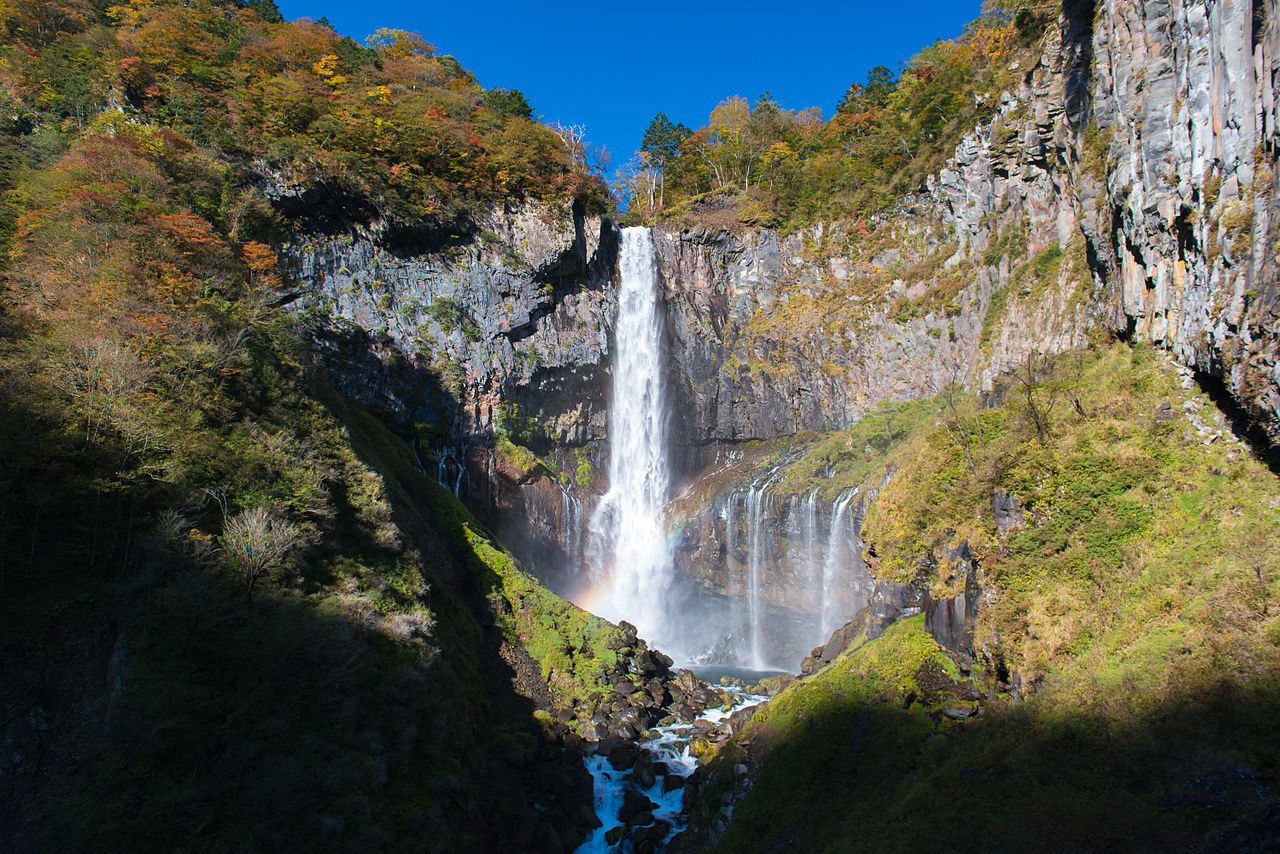
A great cascade plunging about 97 meters down a sheer cliff in a single drop, spray leaping up with a thunderous roar, and the colors of the four seasons all around Kegon Falls in Nikko City, Tochigi Prefecture, is a powerful waterfall counted among the three great waterfalls of Japan. The force with which the water of Lake Chuzenji slides down the great rock wall is overwhelming, a highlight of any Nikko trip. Descending by elevator to near the plunge pool lets you feel the power of the great cascade up close, making it an outstanding sight.
Highlights
Kegon Falls, in Nikko City, Tochigi Prefecture, is counted as one of the three great waterfalls of Japan, alongside Nachi Falls in Wakayama and Fukuroda Falls in Ibaraki. Its greatest appeal is the powerful sight of water plunging all at once from a cliff about 97 meters high. The way the great volume of water flowing out of Lake Chuzenji slides down the sheer wall is truly a work of natural beauty. The scale and force of the water falling with a roar overwhelm visitors, and it is loved as a leading scenic spot of Nikko. Because it lies at the outlet of Lake Chuzenji, the lake and the falls can be enjoyed as one continuous flow of water.
Seasonal Highlights
Kegon Falls shows a different beauty in each season. Early summer wrapped in fresh green, autumn colored with fiery foliage, and in winter the thin streams on the surrounding rock walls freeze, spreading a fantastical world of ice. In the foliage season especially, the contrast between the falls and the colored trees is splendid, and it bustles with many visitors. The power of spring, when snowmelt increases the volume of water, is also a sight. Throughout the year, its appeal is that you meet a different spectacle each time you visit.

Access and Essential Information
- Location: Chugushi, Nikko City, Tochigi Prefecture
- Getting there: by bus from JR or Tobu Nikko Station, get off at Chuzenji Onsen, a short walk away. It lies beyond the Irohazaka road
- Observation decks: the deck viewing the whole falls from above is free. There is also a paid observation deck reached by an elevator descending about 100 meters to near the plunge pool
- Nearby: it can be toured together with Lake Chuzenji, Nikko Toshogu, and the various sights of Oku-Nikko
Practical Travel Notes
The greatest highlight of Kegon Falls is looking up at the great cascade from the observation deck reached by elevator. A paid elevator ticket is required, so check the fare and operating hours on site or through official information. The area near the plunge pool can get wet from spray and temperatures are cooler, so a layer to put on is reassuring. Because Irohazaka becomes heavily congested in the foliage season, an early-morning start is essential if visiting in autumn. The volume of the falls changes with season and weather, becoming more powerful after rain or during the snowmelt. The view from the free deck is well worth seeing on its own, so you can choose how to enjoy it according to your time and budget.
A Word of Advice
Because Kegon Falls lies at the outlet of Lake Chuzenji, touring from the lakeshore to the falls as one continuous flow of water makes the geography of Oku-Nikko much easier to grasp. The free deck and the deck below the elevator show entirely different faces of the falls, so if you have time, viewing from both is recommended.
📚 Sources
This article is based on sightseeing guidance published by the Nikko City Tourism Association and public information on the observation decks and elevator at Kegon Falls. Notes on its standing among Japan three great waterfalls, its drop, and its link to Lake Chuzenji refer to on-site signage and public materials. The elevator ticket price and operating hours may change, so please confirm with the official guidance before your visit.
Visitor Checklist
- Estimated time: Around one hour to view both the free observation deck and the lower deck reached by elevator.
- What to bring: A layer, as the area near the basin can get wet from spray and stays cool.
- Route tips: The Irohazaka road jams badly in the foliage season, so an early start is essential in autumn.
- Tickets: The elevator observation deck is paid; check the fee and hours on site or officially.
- Nearby plan: Combine with Lake Chuzenji and other sights of inner Nikko for an efficient route.
Practical Information for Your Visit
Kegon Falls Elevator (2479-2 Chugushi, Nikko City, Tochigi Prefecture)
- Operating hours: 1 March to 30 November, 8:00-17:00 / 1 December to 28 February, 9:00-16:30
- Fares (return): 600 yen for adults, 400 yen for elementary school children, free of charge for pre-school children. Groups of 30 or more pay 550 yen for adults and 350 yen for elementary school children (for school groups, 500 yen for high school students, 400 yen for junior high school students and 350 yen for elementary school children)
- Reservations: Not required. Entry is on a first-come, first-served basis
- The elevator: It descends 100 metres, takes about 1 minute, and holds 30 people. The underground passage stays at around 15 degrees even in midsummer
- Parking: Kegon Car Park No. 1 and Kegon Car Park No. 2 (500 yen per visit for ordinary cars, 2,000 yen per visit for microbuses and large vehicles). From either car park it is a 2-3 minute walk to the elevator entrance
- Access: From Tobu "Tobu-Nikko Station" or JR "Nikko Station", take a Tobu Bus bound for "Chuzenji Onsen / Yumoto Onsen", get off at "Chuzenji Onsen" and walk 5 minutes / by car, take the Nikko-Utsunomiya Road from Utsunomiya IC on the Tohoku Expressway and continue via Kiyotaki IC and the Irohazaka slopes, about 50 minutes
- Telephone: 0288-55-0030
- Note: Pets are not allowed, and food and drink may not be taken into the elevator
Note: No regular closing days are stated on the official website. Note: The hours of the free observation deck (the viewpoint overlooking the whole waterfall from above) are not officially published.
(Sources: Kegon Falls Elevator official website / Marunuma Co., Ltd., Kegon Falls Elevator Office)
📍 Location & Access


Share this article




✍️ About this article
This article is compiled by the Tabitabi JAPAN editorial team from official and primary sources, including facility and shrine/temple websites, tourism information published by municipalities and tourism associations, and cultural-property records released by national and local governments. Prices, opening hours and event dates may change, so please also check the official information of each facility or local government before you visit.