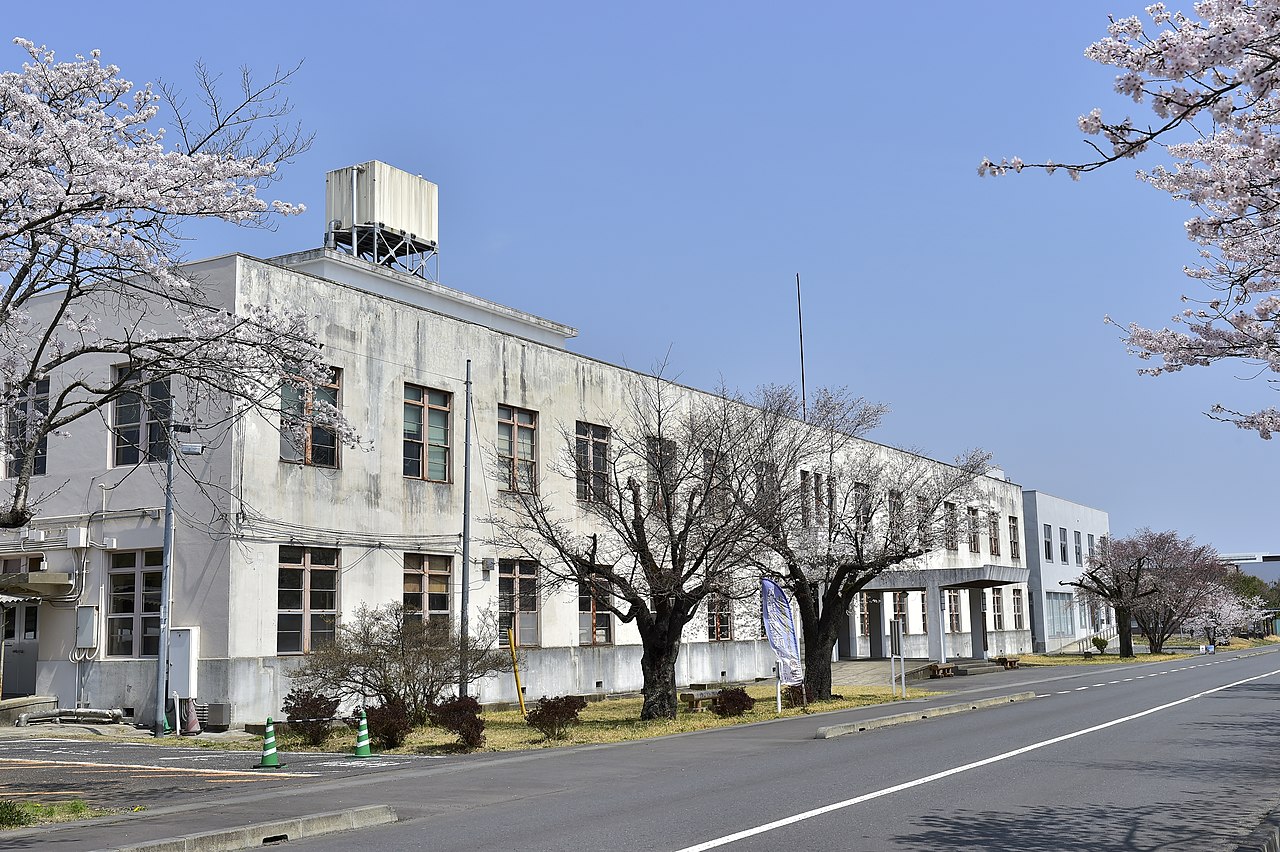
5 Instagram-Worthy Buildings & Streetscapes in Ibaraki
Ibaraki Prefecture, where history and nature intersect, is dotted with outstanding architectural photo spots that will make you reach for your camera. Here are handpicked photogenic places that even many locals don't know about — use them to plan your next trip!
1. Mito Castle Ruins & Kodokan | Imposing Samurai Architecture Steeped in Late Edo History
Kodokan — the largest domain school in Japan — was established in 1841 (Tenpo 12) by Tokugawa Nariaki, the ninth lord of the Mito Domain. It is a National Special Historic Site, and the main gate (seimon), main hall (seicho), and Zizendo are designated National Important Cultural Properties. The contrast between the heavy tiled roof and white walls is breathtaking. In spring, plum blossoms adorn the buildings in a world of pink and white. The best season is mid-February to early March, when the plum blossoms are at their peak. A low-angle shot framing the main gate head-on is the classic composition. Admission: Adults ¥420, elementary and junior high school students ¥210. Open 9:00–17:00 (until 16:30 from October 1 – February 19). Closed December 29–31.
📍 Access: About 10 minutes on foot from JR Mito Station
2. Mitsukaido Fudo Museum — Sakano Family Residence (Joso City) | A Time-Slip to the Edo–Meiji Era
A wealthy farming estate designated as a National Important Cultural Property in Oikono-cho, Joso City. The residence of the Sakano family, who lived on this land since the medieval period, with its yakuimon gate and earthen walls enclosing a vast property of approximately one hectare — it looks like the set of a period drama. In 2023, the Taisho 9 (1920) study annex and document storehouse were additionally designated as Important Cultural Properties. Shooting during the morning, when angled light streams in, captures the sliding doors, lattice windows, and their interplay of light and shadow in a painterly composition. A vertical shot through the lattice into the interior creates a beautiful sense of depth.
📍 Access: About 15 minutes by car from Kanto Tetsudo Joso Line Mitsukaido Station (check the Joso City official website for opening hours, closed days, and admission fees).

3. Kasama Inari Shrine Monzen-machi (Gate Town) | A Retro Stone-Paved Approach Road with Vermilion Accents
The approach road to Kasama Inari Shrine is a picture-perfect space of vermilion torii gates and stone paving. Traditional souvenir shops and teahouses line the surrounding streets in a pleasingly retro townscape. At dusk, walking the approach road turns the vermilion gates a dramatic orange hue. However, many of the souvenir shops and teahouses along the approach close in the evening, so visit during the day if you want to photograph the lively activity of the shops. The classic composition looks from the side of the approach road toward the main hall in the distance (avoid the center of the approach, called seichu, which is considered the path of the deities).
📍 Access: About 20 minutes on foot from JR Mito Line Kasama Station (the Kasama sightseeing loop bus is also convenient).
4. Tsuchiura Castle Ruins (Kamejo Park) | The White Turret Reflected in the Moat
Tsuchiura Castle Ruins, affectionately known as "Kamejo" (Turtle Castle). What survives is a turret gate (taiko yagura-mon) from the early Edo period; the east turret was reconstructed in 1998 and the west turret in 1990. The site is famous for the beautiful reflection of the turrets and gate in the moat. Visiting during the autumn foliage season or on a misty early morning creates a mystical atmosphere. Try a landscape (horizontal) composition with a wide expanse of water, challenging yourself to capture a reflection shot!
📍 Access: About 15 minutes on foot from JR Joban Line Tsuchiura Station. Strolling in the park is free, but viewing the interior of the east turret (Tsuchiura City Museum Annex) requires a combined ticket with the museum: ¥200 for adults, free for high school students and below. Closed on Mondays.
5. Oarai Isosaki Shrine — Kamiiso Torii Gate | Where Sea, Sky, and Vermilion Converge
The Kamiiso Torii gate rising from the rocky reef is one of Ibaraki's most iconic Instagram-worthy spots. However, the rocky reef where the torii stands is a sacred restricted area where the enshrined deity is said to have descended — entry is prohibited. Please photograph from the observation point along the coast or from within the fence. The golden moment is just after sunrise, when the sun rises between the torii. Capturing the wave spray and torii together with a wide-angle lens completes a dynamic shot. Winter is especially recommended for its clear air, but on days with high waves or strong winds, there is a risk of being swept away by waves — never approach the sea side.
📍 Access: About 40 minutes on foot from Kashima Rinkai Railway Oarai Station. The loop bus "Kaiyugo" or rental bicycles are convenient.
Ibaraki Prefecture still has a relatively undiscovered feel compared to major tourist destinations — that is part of its charm. Head out to find your own special shot away from the crowds.
Practical Information for Your Visit
- Best season and time of day: The plum blossoms at Kodokan are usually at their best from mid-February to early March. The Kamiiso no Torii gate is best just after sunrise, and winter, when the air is clearest, is a particularly beautiful season. The ruins of Tsuchiura Castle (Kijo Park) are best in the autumn foliage season and on windless mornings.
- Opening hours / closed days: Kodokan is open 9:00-17:00 (until 16:30 from October 1 to February 19) and closed from December 29 to 31. The Tsuchiura City Museum and the East Turret (its annex exhibition hall) are closed on Mondays. For the opening hours and closed days of the Banno Family Residence (Mitsukaido Folk Museum), please check the official website of Joso City. The precincts of Oarai Isosaki Shrine and the viewing area for the Kamiiso no Torii gate are outdoors, so there are basically no time restrictions, but the reception hours of the shrine office are limited.
- Admission: Kodokan costs 420 yen for adults and 210 yen for elementary and junior high school students. Viewing the interior of the East Turret is covered by a combined ticket with the Tsuchiura City Museum, at 200 yen for general visitors and free of charge for high school students and younger. Worship at Kasama Inari Shrine and Oarai Isosaki Shrine is free of charge.
- Access: Kodokan is about a 10-minute walk from JR Mito Station. The Banno Family Residence is about 15 minutes by car from Mitsukaido Station on the Kanto Railway Joso Line. Kasama Inari Shrine is about a 20-minute walk from Kasama Station on the JR Mito Line (a Kasama sightseeing loop bus is also available). The ruins of Tsuchiura Castle are about a 15-minute walk from Tsuchiura Station on the JR Joban Line. Oarai Isosaki Shrine is about a 40-minute walk from Oarai Station on the Kashima Rinkai Railway, so the "Kaiyu-go" loop bus or a rental bicycle is convenient.
- Parking: Kodokan, Kasama Inari Shrine and Oarai Isosaki Shrine all have parking, but they become extremely crowded during the plum blossom festival, the chrysanthemum festival and the New Year's first sunrise period, when traffic restrictions may also be in place. Please check the latest information.
- Photography rules: The reef on which the Kamiiso no Torii gate of Oarai Isosaki Shrine stands is sacred ground where the enshrined deity is said to have descended, and entry is prohibited. Please take photographs from the viewing area along the coast or from inside the fence. Both Kasama Inari Shrine and Oarai Isosaki Shrine are places of worship, so please be considerate and avoid pointing your lens at worshippers or at prayer ceremonies. Tripods can obstruct other visitors when it is crowded, so follow the on-site signs and the instructions of the shrine office as to whether they may be used.
- Safety notes: Around the Kamiiso no Torii gate there is a danger of being swept away by high waves on days with rough seas or strong winds. Never approach the seaward side. Photographing the sunrise means moving around in the dark, so carry a light, and dress warmly in winter. The stone steps and gravel at the ruins of Tsuchiura Castle and at Kodokan become slippery in the rain.
Note: Admission fees, opening hours and closed days are subject to change. Please check the official website of each facility for the latest information before visiting.
(Sources: Kodokan official website; Mito Tourism and Convention Association; Joso City official website (Mitsukaido Folk Museum, Banno Family Residence); Tsuchiura City official website (Kijo Park, Tsuchiura City Museum); Ibaraki Prefectural Board of Education (Ruins of Tsuchiura Castle and the Turret Gate); Oarai Isosaki Shrine official website; Oarai Tourism Association official website; Tourism Ibaraki official website)

Share this article


✍️ About this article
This article is compiled by the Tabitabi JAPAN editorial team from official and primary sources, including facility and shrine/temple websites, tourism information published by municipalities and tourism associations, and cultural-property records released by national and local governments. Prices, opening hours and event dates may change, so please also check the official information of each facility or local government before you visit.