
Osawa Onsen: Hot Spring Guide & Visitor Access (Iwate)
One of the springs in the Hanamaki South gorge, Osawa Onsen sits quietly beside the Toyosawa River. Its thatched-roof buildings and the breeze drifting across the water create a gentle sense of stepping back in time. Said to have been discovered by Sakanoue no Tamuramaro in the early Heian period, this simple, warm-hearted inn is also said to have been visited often by the poet Kenji Miyazawa.
Highlights
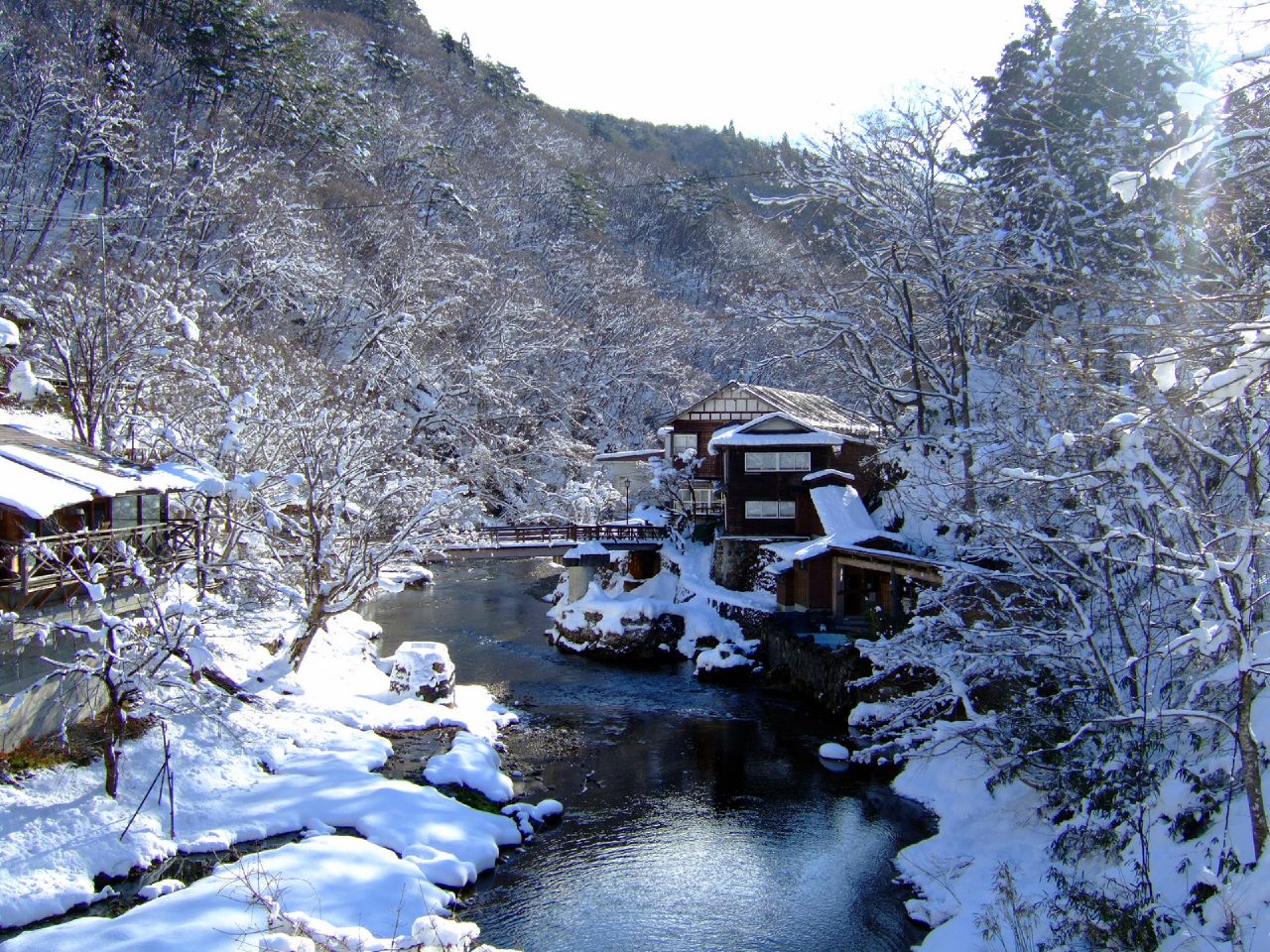
Its signature feature is the riverside mixed open-air bath Osawa no Yu, where you soak to the murmur of the Toyosawa flowing just before you. Within the grounds remain buildings of differing character, including a self-catering healing lodge, the Sansuikaku, and the thatched Kikusuikan, their wooden corridors and carved transoms speaking to a long history. The water is a soft, mildly alkaline simple spring that warms you gently to the core.
Enjoying the Seasons
In spring, fresh greenery mirrors on the water; in summer, a cool river breeze drifts pleasantly through. Autumn colors along the gorge can be admired straight from the bath, and winter offers a quiet dignity as you bathe beneath snow-dusted banks.
Access and Basic Information
The inn lies about twenty minutes by Iwate Kotsu bus from JR Hanamaki Station, within the Hanamaki South gorge. By car it is roughly fifteen minutes from the Hanamaki-Minami interchange on the Tohoku Expressway. True to a healing inn, it has several bathing halls, and there are set hours for day visitors.
Practical Travel Notes
The riverside bath feels wonderfully open, but the footing can grow wet, so tread slowly. Those uneasy with mixed bathing can check the other indoor baths or women-only time slots. Staying in the self-catering healing lodge makes for an even quieter, old-fashioned retreat. Sights linked to Hanamaki, such as the Miyazawa Kenji Memorial Museum, lie nearby, letting you pair a soak with a literary stroll. Budget a few hundred to around a thousand yen for day bathing.
A Quick Tip
With several buildings and bathing halls, touring the grounds with time to spare reveals the charm best. The thatched buildings and old healing wings photograph beautifully, so a stroll is well worth it.
📚 Sources
This article is based on publicly available information from Hanamaki City, Iwate Prefecture, and the local tourism association about Osawa Onsen, publicly released explanations of the founding legend of Sakanoue no Tamuramaro and its link to Kenji Miyazawa, and the inn's public information and on-site guidance. The riverside mixed-bathing open-air "Osawa no Yu" and the wings such as Sansuikaku, the thatched Kikusuikan, and the self-catering bathing lodge are based on such materials, but day-use reception times and women-only hours vary by season and year. Fees, bathing hours, and access are subject to change, so please check the official information from each inn and the tourism association before you set out.
Visitor Checklist
- Estimated time: One to two hours for a day-use bath alone; allow about half a day to tour the several wings and baths to appreciate its charm.
- What to bring / prepare: The riverside open-air bath has wet footing, so step slowly; don't forget a towel, and if uncomfortable with mixed bathing, check other baths or women-only hours first.
- Bathing notes: The famous mixed-bathing open-air "Osawa no Yu" can be enjoyed to the murmur of the river. The building has several baths of differing character, so tour with time to spare.
- Suggested route: Enjoy the river view from the open-air bath facing the Toyosawa River, together with the differing wings such as Sansuikaku and the thatched Kikusuikan and the woodwork of the corridors and transoms; the self-catering bathing lodge offers an old-style stay.
- Combine your visit: Nearby sights linked to Hanamaki, such as the Miyazawa Kenji Memorial Museum, let you pair it with a literary stroll.
📍 Location & Access


Share this article


✍️ About this article
This article is compiled by the Tabitabi JAPAN editorial team from official and primary sources, including facility and shrine/temple websites, tourism information published by municipalities and tourism associations, and cultural-property records released by national and local governments. Prices, opening hours and event dates may change, so please also check the official information of each facility or local government before you visit.