
Spa World: Hot Spring Guide, Prices & Access (Osaka)
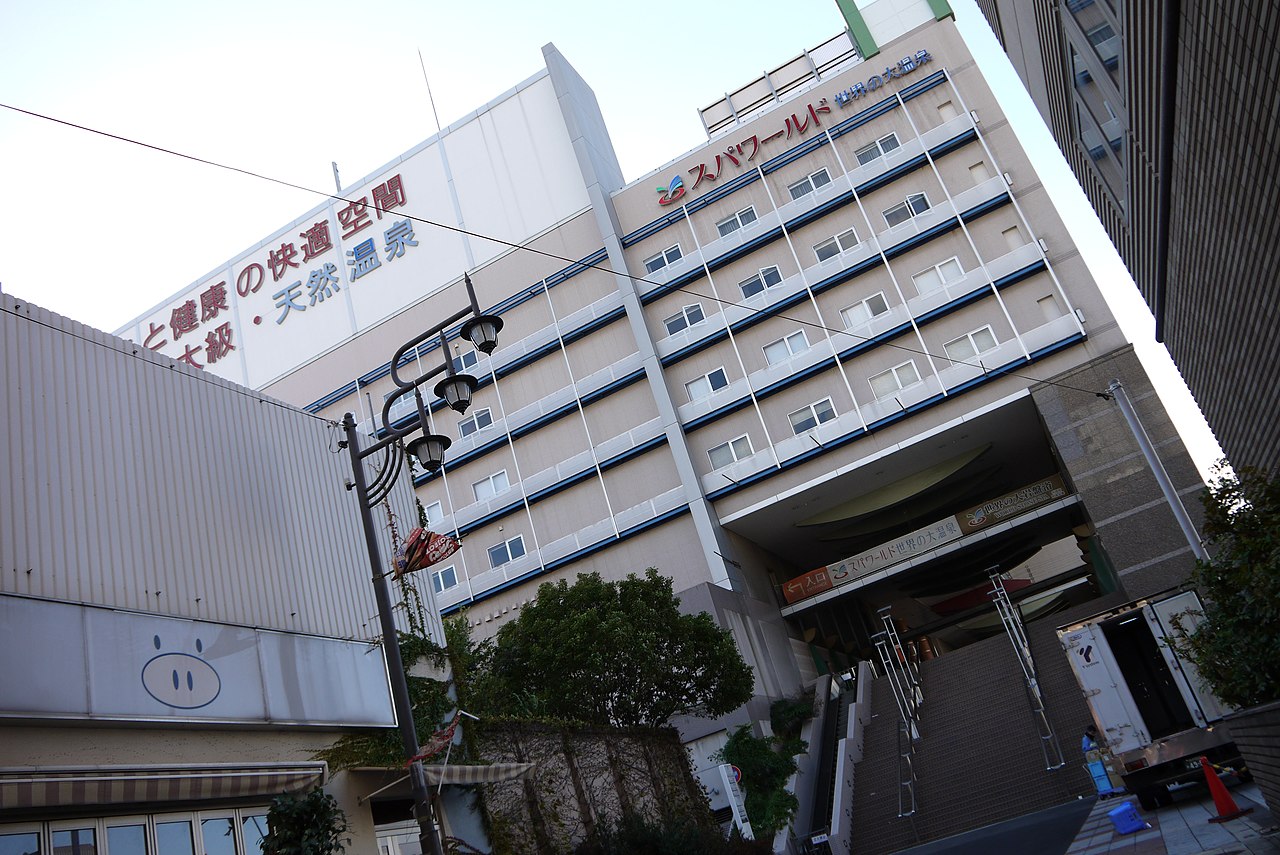
Rising right beside Tsutenkaku, the symbol of Shinsekai in Osaka, Spa World The Great Onsen of the World is a giant hot spring theme park themed on baths from countries around the globe. Divided into a European Zone and an Asian Zone, it gathers varied bathing rooms inspired by ancient Rome, the Mediterranean, and Bali, adding a sense of travel to your soak. With pools, stone-bed saunas, and lodging, it is an urban resort where you can spend an entire day.
Highlights
- Distinctive baths inspired by countries worldwide, enjoyed through an alternating system for men and women. The European Zone and Asian Zone switch between the sexes each month.
- A large bath fed by natural hot spring water and an airy open-air space.
- Indoor pools and water slides to enjoy in any season (some carry an extra fee).
- Outstanding access, just steps from Dobutsuen-mae Station on the Osaka Metro and JR and Nankai Shin-Imamiya Station.
Enjoying the Seasons
Because the indoor facilities are so complete, you can stay comfortable through the fierce heat of summer and the cold of winter. In summer, play in the pool and then rest in the baths; in winter, warm to the core with hot water and stone-bed sauna.
Access and Basic Information
- Address: 3-4-24 Ebisu-Higashi, Naniwa Ward, Osaka City
- Access: Steps from Exit 5 of Dobutsuen-mae Station on the Osaka Metro Midosuji and Sakaisuji lines, and just steps from JR and Nankai Shin-Imamiya Station.
- Hours: basically open 24 hours (with occasional maintenance closures).
- Admission: about 1,500 yen for adults and 1,000 yen for children for bathing only. With the pool included, about 2,000 yen for adults and 1,200 yen for children on weekdays, and 2,700 yen for adults and 1,700 yen for children on weekends and holidays. Between 24:00 and 5:00, a late-night surcharge of 1,300 yen plus a bathing tax is added (subject to change; check the latest information).
- Parking available, convenient to combine with sightseeing.
Practical Travel Notes
- Best time of day: evening into night fills with families and tourists, so late morning to midday is relatively relaxed.
- Avoiding crowds: weekends, holidays, and school breaks are busy all day. For a relaxed visit, weekdays are best, and leaving before 24:00 to avoid the late-night surcharge also keeps costs down.
- Time to set aside: two to three hours for the baths alone, or half a day to a full day with the pool, stone-bed sauna, and a meal.
- Real nearby spots: Tsutenkaku towers right nearby, and the food streets of Shinsekai, famed for kushikatsu, spread out around it. Tennoji Zoo and Abeno Harukas are within walking distance, making this an ideal base for Osaka sightseeing.
- Budget sense: about 1,500 yen for bathing only, or about 3,000 to 5,000 yen once you add the pool and meals.
A Quick Tip
The bathing zones alternate between men and women each month, so if you have a favorite area, check the assignment for the time of your visit before you go. Remember that crossing midnight adds a surcharge and a bathing tax. Pairing it with Tsutenkaku and a food stroll through Shinsekai is a classic plan.
Practical Information for Your Visit
- Opening hours: The baths and saunas are generally open from 10:00 until 8:45 the following morning. Hours vary by facility and outlet, and there are also maintenance closure days
- Admission (hot springs only, no pool): 1,500 yen for junior high school students and above / 1,000 yen for elementary school children and younger
- Admission (including the pool): On weekdays, 2,000 yen for junior high school students and above and 1,200 yen for elementary school children and younger; on weekends and public holidays, 2,700 yen and 1,700 yen
- Late-night charge: Entering, leaving or staying in the building between 24:00 and 5:00 incurs a late-night surcharge of 1,300 yen. A bathing tax of 150 yen also applies (junior high school students and above only)
- Stone sauna (ganbanyoku): Charged separately, at around an extra 800 yen on weekdays and an extra 1,000 yen on weekends and public holidays
- Parking: Available. For facility users it is 300 yen for the first hour (then 150 yen per additional 30 minutes); for non-users it is 600 yen for the first hour (then 300 yen per additional 30 minutes)
- Spring quality and how the water is used: A simple alkaline spring from the facility's own source. Chlorine is used for hygiene management, so the water is not free-flowing straight from the source
- Tattoos: Entry will be refused if a member of staff judges a tattoo, body paint or sticker to be inappropriate. If this may apply to you, it is safest to contact the facility in advance
- Switching of the men's and women's zones: The European Zone and the Asian Zone switch between men and women each month. If there is a particular zone you want to visit, check which side it is assigned to in the month of your visit before you set out
- Time needed: Two to three hours for the hot springs alone; half a day to a full day if you include the pool, the stone sauna and a meal
- What to bring: A swimsuit if you plan to use the pool. Towels and in-house wear are provided and sold on site
- To avoid the crowds: Weekends, public holidays and the long school holidays are busy all day. The calmest time is a weekday morning
- Good in rain or extreme heat: The entire complex is indoors, so it is unaffected by the weather. It also works well as a fallback when the weather turns
- Budget guide: Around 1,500 yen for the hot springs only; roughly 3,000-5,000 yen once you add the pool and a meal
- Access: Right by Exit 5 of Dobutsuen-mae Station on the Osaka Metro Midosuji and Sakaisuji Lines. It is also within walking distance of Shin-Imamiya Station on the JR and Nankai lines
- Address: 3-4-24 Ebisu-higashi, Naniwa-ku, Osaka
- Worth combining with your visit: Tsutenkaku is right nearby, along with Shinsekai, where the celebrated kushikatsu restaurants are lined up. Tennoji Zoo and Abeno Harukas are also within walking distance
Sources of Information
The admission fees, opening hours, parking charges and tattoo policy given in this article are compiled from the fee guide, opening hours and visitor information published on the official website of Spa World: The World's Great Hot Springs. The opening on July 18, 1997, the facility's own spring source and its simple alkaline spring quality, and the fact that chlorine is used for hygiene management so the water is not free-flowing straight from the source, all follow the descriptions in published information summarising the facility. For the surrounding sights, we referred to the tourism guides of Osaka Prefecture and Osaka City. Fees, opening hours and the zone switchover are subject to change, so please check the official information before you set out.
📍 Location & Access


Share this article


✍️ About this article
This article is compiled by the Tabitabi JAPAN editorial team from official and primary sources, including facility and shrine/temple websites, tourism information published by municipalities and tourism associations, and cultural-property records released by national and local governments. Prices, opening hours and event dates may change, so please also check the official information of each facility or local government before you visit.