
Chogakuji and Byakugoji: Ancient Temple Tour Walking Nara's Yamanobe-no-michi
Walking Japan's Oldest Road
Yamanobe-no-michi is regarded as Japan's oldest official road, appearing in the Kojiki and Nihon Shoki, a hiking route running north-south along the eastern edge of the Nara Basin's mountain foot. The route from Sakurai City to Tenri City has many ancient burial mounds, shrines, and temples scattered along it, along with unmanned roadside produce stands.
Chogakuji
Chogakuji in Tenri City is an ancient temple said to have been founded in 824 by Kukai at the imperial request of Emperor Junna. It is known for a wooden Amida triad using the gyokugan crystal-eye technique, cited as the oldest datable example. Counted as the 19th of the twenty-five Kansai Flower Temples, it is famous for irises and azaleas in early summer and beautiful autumn foliage.

Byakugoji
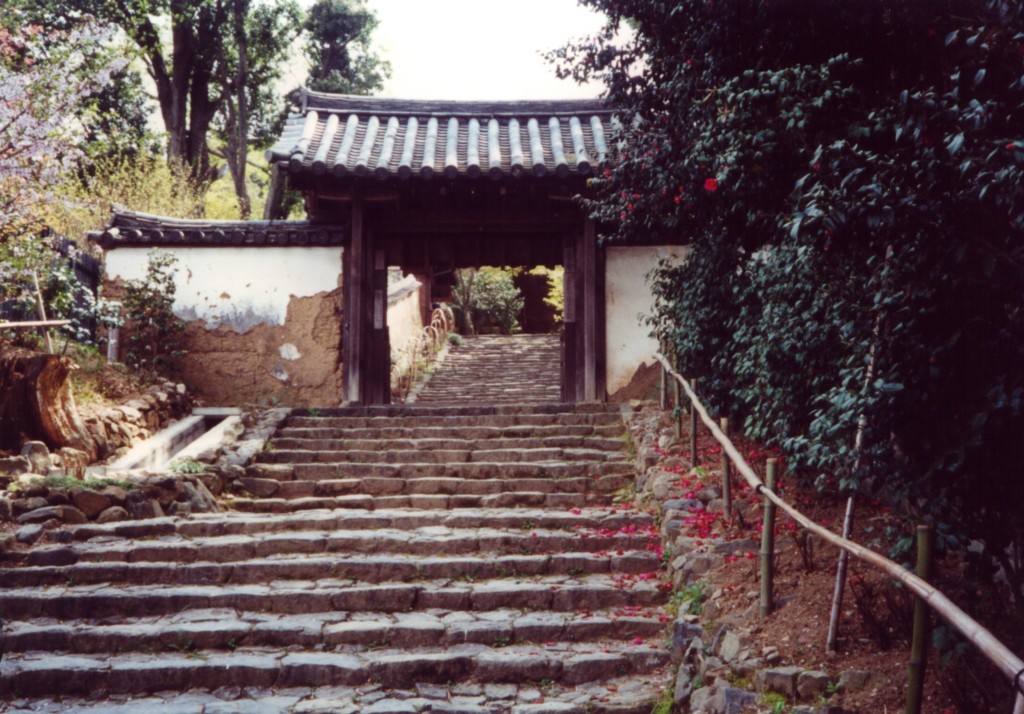
Byakugoji, at the foot of Mount Takamado in eastern Nara City, is said to stand on the site of a mountain villa of Prince Shiki, a son of Emperor Tenji. Along the long stone steps bloom the five-colored camellia (late March to early April), one of Nara's three famous camellias, and bush clover (late September to early October). Located on high ground, its precincts command a view over the Nara Basin, and treasures such as a seated Enma statue can be viewed.
Practical Travel Notes
Yamanobe-no-michi is a hiking route with little elevation change, easy for beginners. Wear comfortable clothing and shoes and bring water and a hat. Byakugoji charges roughly 500 yen for adults, 300 yen for high school and university students, and 200 yen for elementary and junior high students. Reach it by bus from JR or Kintetsu Nara Station, getting off at Takabatake-cho and walking about 20 minutes, or at the Byakugoji stop and walking about 10 minutes (buses are infrequent). Chogakuji is about a 20-minute walk east from JR Yanagimoto Station.
Getting There and Tips
Spring with fresh greenery and flowers, and autumn foliage, are ideal for hiking. Bloom times and opening hours vary by temple and year, so check the latest information before visiting. Combine your walk with roadside sites such as Omiwa Shrine at the foot of Mount Miwa. The view over the Nara Basin from Byakugoji's high ground is especially beautiful at dusk.
📚 Sources
This article is based on public information from Byakugoji, guidance from Nara City and the Nara City Tourism Association, and on-site information boards. Admission fees, hours, and the timing of flowers such as bush clover and the five-color camellia may change or shift, so please confirm with Byakugoji or the Nara City Tourism Association before setting out.
Visitor Checklist
- Estimated time: Allow about an hour for the hillside temple and its views.
- What to prepare: Easy-walking shoes for the stone steps up to the temple.
- When to go: Seasonal flowers are a highlight worth timing a visit to.
- How to tour: Combine it with a walk through the eastern hills of Nara.
- Before you go: Confirm admission fees and hours in advance, as they may change.
📍 Location & Access




Share this article


✍️ About this article
This article is compiled by the Tabitabi JAPAN editorial team from official and primary sources, including facility and shrine/temple websites, tourism information published by municipalities and tourism associations, and cultural-property records released by national and local governments. Prices, opening hours and event dates may change, so please also check the official information of each facility or local government before you visit.