
Saga Food Guide: Saga Beef, Squid Sashimi & Sirloin Rice
Saga Beef
To call it a "work of art in beef" is by no means an exaggeration.
Saga Beef, renowned as a top-class brand of Japanese beef, captures your heart before you even eat it, from the moment you lay eyes on its beautiful marbling. The fine, evenly distributed marbling crumbles apart with body heat alone the instant you bring it to your mouth, and a deep richness spreads along with the sweetness of the fat. The refined aftertaste, never cloying, lingers on. Wonderful enjoyed boldly as a steak, or wonderful with its delicate sweetness drawn out in shabu-shabu. Either way of eating, an emotion so strong that you involuntarily stop your chopsticks awaits, making you think "So this is real wagyu."
As a local way to enjoy, aiming for restaurants directly run by butcher shops in Saga City is the connoisseur's route. Since they skip the wholesaler, freshness is high, and hidden gems where you can enjoy supreme meat reasonably are scattered about. Also, if you want to enjoy Saga Beef reasonably, the limited lunchtime courses are the target. Many shops let you experience the same quality meat as the dinner course at close to half the price.
- Best Season: Enjoyable year-round, but in the cool autumn to winter, offerings of shabu-shabu and sukiyaki increase, letting you savor the meat's umami all the more
- Access: Reach shops around the city on foot or by taxi from JR Saga Station. Famous shops are concentrated around the station, making it easy to drop by as a sightseeing base
- Tip for travelers: Popular shops are often fully booked, mainly on weekends. Reservations are essential, and ideally secure them up to a week in advance. If aiming for lunch, arriving 30 minutes before opening gives peace of mind
Yobuko Live Squid Sashimi
The moment it is carried to your table, you may unintentionally let out a cry.
Squid still wriggling its transparent legs on the dish—that is the shocking first impression of Yobuko's specialty, "live squid sashimi." The kensaki squid raised in the rough waves of the Genkai Sea has firm yet strongly sweet flesh, and one bite of the translucent thin slices spreads a melting sweetness throughout your mouth along with the aroma of the sea. This dish, where freshness is everything, is the ultimate feast that can only be savored in the port town of Yobuko.
As the meal progresses, the remaining tentacles go straight to the kitchen. They come back as crispy tempura—this "one squid, twice delicious" style is also a real thrill unique to Yobuko. Sprinkle salt on the freshly fried tentacle tempura and bite in, and you can enjoy a powerful squid umami different again from the live sashimi.
As a local way to enjoy, please do visit in the morning. The Yobuko Morning Market is counted among the "three great morning markets of Japan," and the lively scene of stalls of dried squid and seafood lined up from early morning is plenty worth seeing as sightseeing too. Strolling through the morning market and then having an early lunch at a squid-cuisine specialty restaurant along the port is the golden route for travelers who want to know the local area.
- Best Season: Spring to autumn is the squid's prime season and especially delicious. The Yobuko Morning Market is held year-round, but some shops close in winter
- Recommended Time: The morning market runs from around 7 a.m. to noon. Squid restaurants are freshest and have the shortest waits right after opening (the 11 a.m. hour)
- Access: From JR Karatsu Station, transfer to a Showa Bus "bound for Yobuko" for about 40 minutes. By car, about 60 minutes from Taku IC or Takeo-Kitakata IC on the Nagasaki Expressway. There are multiple parking lots around the morning market
- Tip for travelers: Lines are inevitable at lunchtime on weekends and holidays. Weekday visits are by far recommended. Since squid catch volumes change with the season, it can rarely sell out. Once you arrive, the iron rule is to enter the shop early
Sicilian Rice
There is a B-grade gourmet dish as bright as the sun that Saga citizens love unconditionally.
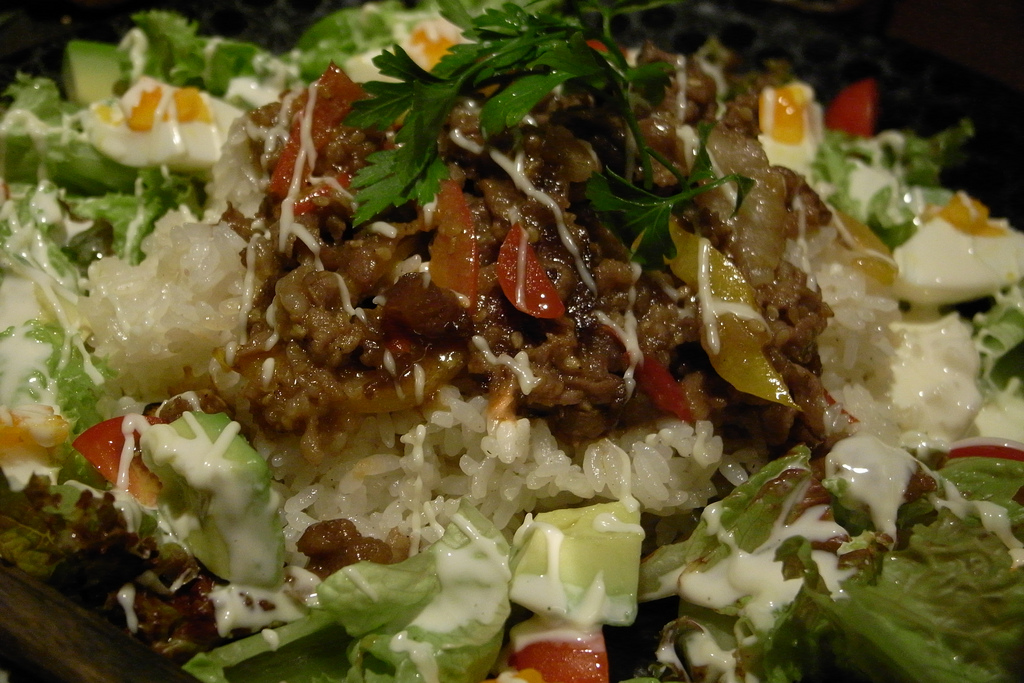
On top of white rice, sweet-savory stir-fried meat and colorful raw vegetables are boldly piled, finished with a generous drizzle of mayonnaise—"Sicilian Rice," with its visual impact and approachable flavor, is a soul food long loved by locals. Said to have originated at a coffee shop in Saga City, with no particular connection to Sicily in Italy, this dish can now be eaten throughout the city as a local menu item representing Saga.
It looks simple, but it is interesting that the meat seasoning, vegetable composition, and way of drizzling mayonnaise differ subtly from shop to shop. Hopping between multiple cafes and eateries in the city as a "taste-comparison journey" is also one way to enjoy the trip. Locally there is also a culture of eating it as an extension of morning service at coffee shops, and the Sicilian Rice you get at an old-fashioned pure coffee shop has a somehow nostalgic warmth.
- Best Season: Year-round. You can casually drop in for lunch or a light meal between travels
- Recommended Time: Lunchtime (11 a.m. to 2 p.m.) is when the most shops offer it
- Access: There are multiple serving shops within walking distance of JR Saga Station. Just walking the shopping streets and arcades around the station, you can find the signs
- Tip for travelers: Its appeal is that you can casually eat it between rounds of sightseeing spots. At around 1,000 yen and reasonable, it is easy to incorporate into your travel plan combined with a main dish like Saga Beef
Arita-yaki Curry
Just by looking at the vessel, the curry somehow feels more delicious—Arita offers that mysterious experience.
"Arita-yaki Curry," served in beautiful Arita-yaki porcelain, is a unique local gourmet born from an idea characteristic of Arita, a porcelain production area. The sight of slowly simmered roux poured into a vessel adorned with delicate blue-and-white painting or vivid colored painting is like edible art. So beautiful that it feels a little wasteful to put your spoon in, but one bite of the umami-rich curry blows away that hesitation.
What is also delightful is that the design lets you take the vessel home as a souvenir after eating. Your travel memories revive as a vessel you can use daily on your home dining table—is there such a chic souvenir as this? A plan to eat curry for lunch while touring Arita's ceramic shops and kilns is a standard Arita sightseeing course we would love even travelers unfamiliar with vessels, as well as pottery fans of course, to experience.
- Best Season: The time of the "Arita Ceramic Fair" held from late April to early May is especially lively. The perfect timing if you want to enjoy it together with ceramics
- Access: About a 15- to 20-minute walk from JR Arita Station, or access while strolling the kiln streets around the station. It is also close to Hasami-Arita IC on the Nishi-Kyushu Expressway
- Tip for travelers: Vessel designs differ by shop and season, so whether you encounter a vessel you like is also one of the real thrills of the trip. The ceramic fair season is extremely crowded, so we strongly recommend acting early in the morning
Ureshino Onsen Hot-Spring Tofu
The power of the hot spring melts the tofu. With just this one sentence, many people will want to try it.
The "hot-spring tofu" of Ureshino Onsen is a special culinary experience found nowhere else in Japan. Ureshino's hot-spring water is an alkaline sodium-bicarbonate spring, and when you simmer tofu in this hot spring, the surface melts away into a soft, silk-like tenderness. This texture, which could never be born from ordinary water, is unforgettable once experienced. Its compatibility with dashi is also superb, and savoring the blessings of the hot spring while warming cozily from the core of your body—it is a dish that gives the tired traveling body the ultimate healing.
It is often offered as dinner at hot-spring inns, but eateries offering hot-spring tofu set meals for day visitors are also scattered about. After leisurely strolling the hot-spring town, you will want to slowly slurp it up at a long-established eatery. Savoring it together with local tea, also famous as Ureshino tea, makes for a luxurious moment of feeling the Ureshino character with your whole body.
- Best Season: Especially recommended in the cold autumn to winter. Hot-spring tofu, which warms you to the core, gives its greatest sense of happiness when eaten in the chilly season
- Recommended Time: At dinnertime after strolling the hot-spring town. For inn guests, it is often included in the dinner plan
- Access: About 30 minutes by bus bound for Ureshino Onsen from JR Takeo-Onsen Station. About 5 minutes by car from Ureshino IC on the Nagasaki Expressway, offering good access
- Tip for travelers: If enjoying hot-spring tofu on a day trip, look up the serving shops in advance before visiting. Some inns offer day plans combining hot-spring bathing, so we recommend checking their official sites. Don't forget Ureshino tea as a souvenir
Access Information
Saga Prefecture is characterized by its culinary highlights being scattered across various parts of the prefecture. Since the areas differ by gourmet destination—Saga City, Yobuko, Arita, Ureshino—the planning of your trip greatly determines the quality of the trip.
Access Guide to Major Areas
| Destination | Main Access Method |
|---|---|
| Saga City (Saga Beef, Sicilian Rice) | About 40 to 50 minutes from Hakata Station by JR limited express "Kamome" or highway bus |
| Yobuko (live squid sashimi, morning market) | About 40 minutes by Showa Bus from Karatsu Station |
| Arita (Arita-yaki Curry) | About 1 hour by JR limited express from Hakata Station, or get off at Arita Station |
| Ureshino (hot-spring tofu) | About 30 minutes by bus from Takeo-Onsen Station |
As a tip for trip planning, an ambitious one-day plan with Saga City as the base—Yobuko Morning Market in the morning, Sicilian Rice for lunch, and Saga Beef at night—is fully achievable. Since Arita and Ureshino are located in the western area, a route combined with the Nagasaki or Kumamoto direction is efficient.
Making use of a rental car makes travel between each area dramatically smoother. The roads within the prefecture are relatively easy to drive, and enjoying Saga's rural scenery and mountain ranges while driving will also make for a luxurious time unique to this trip.
📍 Location & Access



Share this article




✍️ About this article
This article is compiled by the Tabitabi JAPAN editorial team from official and primary sources, including facility and shrine/temple websites, tourism information published by municipalities and tourism associations, and cultural-property records released by national and local governments. Prices, opening hours and event dates may change, so please also check the official information of each facility or local government before you visit.