
Iwate Local Gourmet Guide: Wanko Soba
Wanko Soba
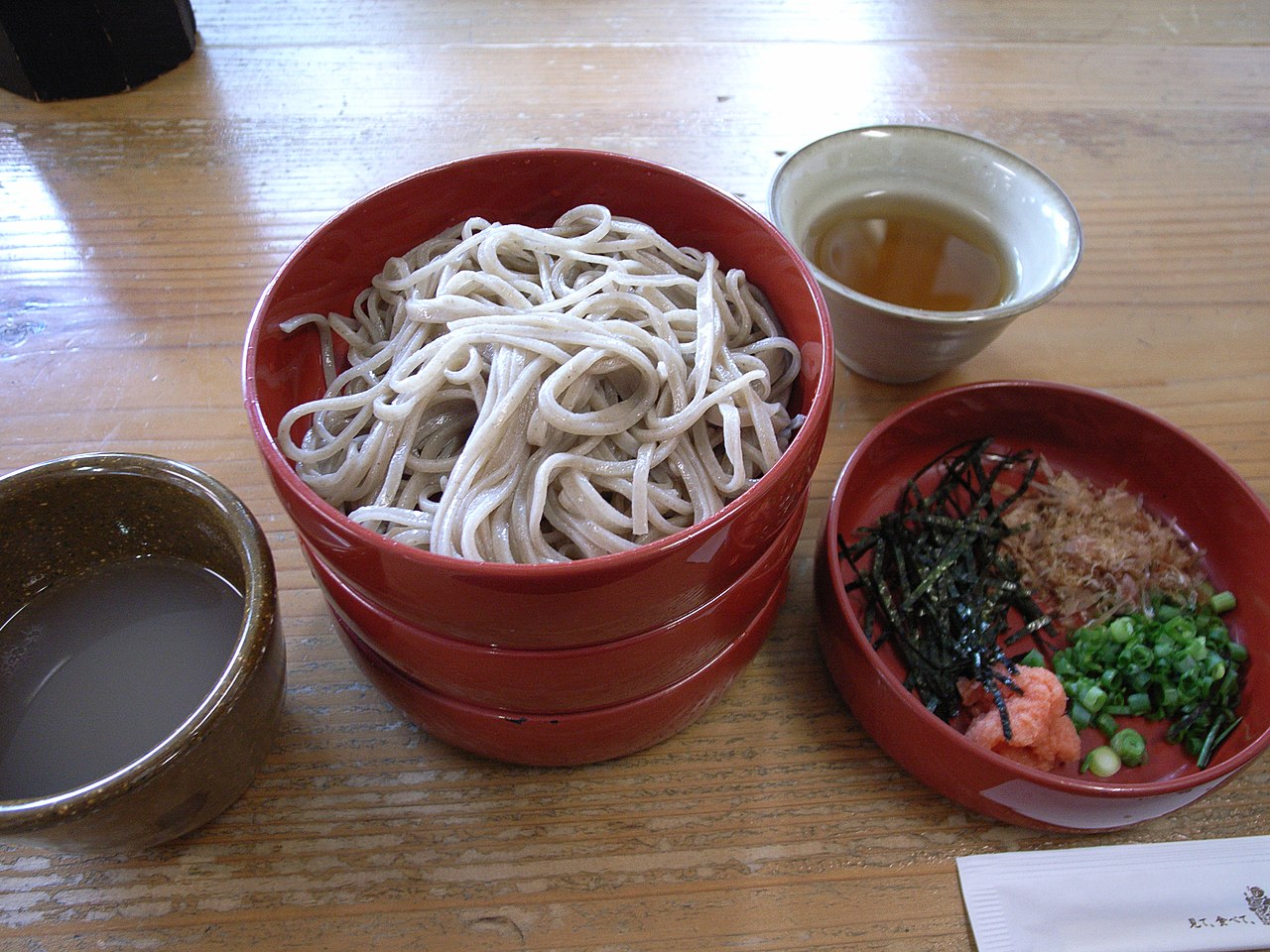
"Yes, keep 'em coming!"—each time the spirited call rings out, a wave of soba is poured into a small bowl. Iwate's proud regional gourmet food "wanko soba" is a one-of-a-kind experience in which eating itself becomes entertainment. So many travelers say in unison, "It was a meal I'll never forget my whole life," that the excitement and sense of accomplishment are the real thing. Try it once and you, too, will surely be captivated by its magic.
Bite-sized portions of soba are heaped into endearing small bowls, and before you finish, the next is poured in one after another—this unique style originates from a hospitality culture long alive in the Nambu region. The soba uses buckwheat flour from Iwate Prefecture. Eating the richly flavored noodles with their outstanding throat-feel while combining them with condiments such as green onion, wasabi, nametake mushroom, and grated yam makes the change of flavors so enjoyable your chopsticks never stop.
Features
The true charm of wanko soba lies in the challenge of setting a record and the sense of accomplishment when you overcome it. The average record is said to be about 50–60 bowls for men and 30–40 for women, but there are not a few strong eaters aiming to top 100 bowls. The "completion certificate" you receive after finishing is a badge of honor unique to Morioka that beats any souvenir from any tourist spot. Post it on social media and reactions from friends are guaranteed (laugh).
In the city of Morioka, where long-established shops are concentrated, "Azumaya" and "Chokurian," which have continued since the Meiji era, are the leading examples. Many shops offer it as a course, and plans set with appetizers and tempura are plentiful, so a nice point is that you can savor the whole of Iwate's food culture, not just wanko soba. For those who think "Since I'm here, I want to taste Iwate-ness with all my might," we recommend the course experience by all means.
Best season and recommended time of day It can be enjoyed year-round, but autumn (September–November), when your appetite naturally heightens, is especially recommended. It is also the season when the air is clear and Iwate's soba is at its most delicious, raising your travel satisfaction sharply. Lunchtime (11 a.m.–1 p.m.) is sure to be crowded, so the wise choice is to aim for around 11 a.m. right after opening, or a late lunch after 2 p.m. Weekends and long holidays are simply packed, so the iron rule is to make a reservation before heading out.
The local way to enjoy it and hidden tips Ask local regulars and you'll hear voices saying, "Rather than going all out, savoring it slowly while changing condiments is the connoisseur's way of eating." In fact, positioning it as a "travel food experience" where you enjoy the change of flavor rather than competing for a record gives rise to a different kind of richness. Also, visiting it combined with a stroll through Morioka Castle Ruins Park kills two birds with one stone, helping your stomach settle after eating. Long-established shops are dotted around the park, so searching for a shop while walking and soaking in the atmosphere is a Morioka-style way to spend time.
Tips for travelers
- If you're challenging the record, keep your previous meal light. Going in hungry is the basic of the contest.
- White clothes and precious garments are at risk of broth splatter. Borrow an apron at the shop or come in clothes you don't mind getting dirty.
- The signal for "I'll stop now" is to put the lid on your bowl. Carelessly forget to close the lid and the soba will keep being poured without mercy (laugh). This "way of ending" is also one of the charms of wanko soba.
- Advance reservations are possible at most shops. It's reassuring to check the official website or call before heading out.
Access About a 15–20-minute walk from JR "Morioka Station," or about 10 minutes by bus. Taking a taxi from in front of the station gets you to the main shops in about 5 minutes. There are also stops for the city loop bus "Den-den Mushi" inside and around the station, so using the bus is convenient if you have a lot of luggage. Long-established shops gather around Morioka Castle Ruins Park, so the most recommended approach is to walk there while enjoying the atmospheric streetscape of the castle town.
Morioka Reimen
Walk through summer Morioka and a rich aroma of soup drifts from somewhere—drawn in by that aroma, pass under the shop curtain and there, waiting quietly, are noodles of outstanding elasticity gleaming in a clear soup. "Morioka reimen" is not merely a cold noodle dish. It is a flavor you can encounter only in this land, in which the history and culture of the city of Morioka are concentrated into a single bowl.
Its firmness has a presence among the very best of Japan's noodle dishes. The noodles, made by a unique method combining wheat flour and starch, are characterized by a chewy texture and astonishing elasticity, and with every bite you find yourself groaning, "So this is Morioka reimen." The clear beef-bone soup is light yet has a deep richness, and colorful toppings such as kimchi, watermelon (summer only), and boiled egg further whet the appetite. Most shops let you choose the spiciness from options like "none, medium-spicy, spicy," so even those who dislike spicy food need not worry.
Tips for Eating Around
The one thing absolutely essential when talking about Morioka reimen is its deep connection to Morioka's unique "yakiniku (grilled meat) culture." These noodles, which have roots said to have been brought to Morioka by a Korean-resident chef, have for many years been loved as the finisher at yakiniku restaurants. That's exactly why the local way to enjoy it is the style of "fully savoring yakiniku, then finishing with reimen at the end." At long-established yakiniku restaurants such as "Seiroukaku" and "Pyon Pyon Sha," this yakiniku-plus-reimen set is beloved by locals as the standard finishing course. If you're visiting for the first time, by all means experience it the "Morioka way." Is there any other scene where a single dish of cold noodles could feel this moving?
Hidden tips Famous long-established shops aren't everything there is to Morioka reimen. Around Chuo-dori and the Sakana-cho shopping district, small reimen specialty shops and diners that locals frequent are dotted about quietly. The joy of pioneering on your own a backstreet gem not listed in guidebooks is also one of the charms of a Morioka gourmet trip. Casually ask a local, "Which reimen do you like?" and you can often be taught about an unexpected gem, which itself becomes a travel memory. Furthermore, those good at early rising should also check out the morning market at the "Morioka Citizens' Market." B-grade gourmet food and prepared dishes using local ingredients line up from early morning, letting you feel the real breakfast culture of the locals firsthand.
Best season and recommended time of day Reimen is a dish you can enjoy year-round, but a bowl in the height of summer (July–August) is exceptional after all. The cold noodles and refreshing soup instantly blow away Iwate's scorching summer heat. On the other hand, reimen enjoyed together with piping-hot yakiniku in the freezing winter is also so delicious it's beyond words. Wanting to return repeatedly across the seasons is the underlying strength of Morioka reimen. Lunchtime (11 a.m.–1 p.m.) is sure to draw lines, so aiming for after 1:30 p.m. or arriving early at dinner time lets you get in smoothly.
Tips for travelers
- The soup is low in salt and easy to drink, gentle enough to drink to the last drop. Drinking it all is, in the true sense, finishing it.
- You can add spiciness later but can't take it away, so on your first try it's wise to start from "none" or "medium-spicy."
- Raw and dried noodles for souvenirs can be easily bought at the station building "Fezan" and city supermarkets. You can reproduce the taste of Morioka at home, so they're appreciated as souvenirs for family, too.
Access Many famous shops are within walking distance of JR "Morioka Station." It's about a 15–20-minute walk from the station to the central city area, a distance that lets you savor the city's atmosphere while moving your body. If your feet get tired, the city loop bus affectionately called "Den-den Mushi" is convenient, letting you efficiently tour the main areas for just 150 yen per ride. The city of Morioka is more compact than you'd think, a castle town where you make new discoveries the more you walk. Strolling about and casually dropping into a shop that catches your eye is the Morioka style.
Jajamen
The distinctive one of the "Morioka three great noodles" that continues to captivate many travelers is "jajamen." On top of flat white noodles resembling udon, you place a secret meat miso, cucumber, and ginger, and mix it all together—the appearance seems simple at a glance, but the richness of the miso and the fragrant aroma of sesame that spread the instant you take a bite are a singular flavor similar to yet utterly different from any other noodle dish. Travelers who are astonished—"I've never eaten a noodle dish like this"—appear one after another; it is a hidden masterpiece gourmet food born in Morioka.
With roots in the "zhajiangmian" of northeastern China, jajamen is said to have been brought to Morioka in the early Showa era. The meat miso each shop prepares from its own recipe handed down over generations shows its individuality more sharply the more you compare them, and before you know it you'll want to keep going back—"Next, that shop." Customizing it to your taste by adding vinegar, chili oil, and garlic is also the local way to enjoy it, and the process of building your own one bowl is fun, too.
Do You Know Jajamen's "Hidden Custom"?
Jajamen has a "full course" known only to those in the know: the culture of "chitantan." Crack a raw egg into the bowl you've finished your noodles in and hand it to the staff, and they'll combine it with the leftover meat miso and broth and return it to you as an exquisite egg soup. This is genuinely delicious. It's a moving bowl so good that many travelers who eat jajamen for the first time say in unison, "The chitantan was the most delicious!"—it's far too much of a waste to go home without knowing it. Right up to the chitantan is jajamen's full course—engrave this in your heart.
The head shop of the long-established "Pairon" (Morioka City, Nakanohashi-dori), known as the birthplace, is like a sacred ground that local fans have frequented for decades. Lines can form at lunchtime, but turnover is fast and the wait is surprisingly short. The portion can be chosen from "kojaja (small), regular, large serving," so it readily accommodates hopping between wanko soba and reimen. Those aiming to conquer the three great noodles should choose "kojaja" without hesitation.
Hidden tips The world of jajamen can't be fully told by Pairon alone. Within the city are dotted gems known only to those in the know, deeply beloved by local regulars, such as "Takami" and "Akiba." Each differs subtly in the seasoning of the meat miso and the thickness of the noodles, and comparison-tasting them makes the differences vivid and very interesting. Ask a local about their favorite shop and a passionate, particular talk begins—the affection for this gourmet food runs so deep that just listening to that passion stays in your travel memory.
Best season and recommended time of day It can be enjoyed regardless of season, but warm noodles that heat you to your core sink in especially in the harsh cold of winter (November–March). Jajamen eaten in snowy Morioka becomes an exceptional dish where travel sentiment and deliciousness overlap. Right after opening (many shops open at 11 a.m.) or aiming for the quieter time slot after 2 p.m. is the trick to avoiding crowds.
Tips for travelers
- When ordering chitantan, the manners are to hand over the bowl just as it is after finishing the noodles. Consciously leaving a little meat miso makes the soup richer.
- The "Pairon" head shop may be cash-only with no cards, so preparing small change in advance is reassuring.
- Retort-pouch jajamen and canned meat miso can be bought at the Morioka Station building and souvenir shops. Reproduce it at home right down to the chitantan and savor the trip's afterglow thoroughly.
- The meat miso splatters easily when you mix, so be careful about taking it on in white clothes or precious garments. Mixing slowly and carefully is also the trick to eating it deliciously.
Access About a 20-minute walk from JR "Morioka Station" to the "Pairon" head shop. Located in the central city area, it's gathered in nearly the same area as the famous wanko soba and Morioka reimen shops. A distance that lets you hop on foot among all three great noodles is a luxury unique to Morioka. In Morioka, known as a "castle town you can tour on foot," you'll naturally encounter historic highlights such as the Iwate Bank Red Brick Building and Morioka Castle Ruins Park along the way as you eat around. The full-day "Morioka three-great-noodles conquest route" is this city's finest travel plan, letting you fully enjoy gourmet food and sightseeing at the same time.
Access and Hours
To conquer Morioka's three great noodles in one day, the base for your trip is JR "Morioka Station." Using the Tohoku Shinkansen, you can reach it from Tokyo in about 2 hours 20 minutes at the fastest, and from Sendai in just about 40 minutes. From the moment you step off the Shinkansen, your Morioka trip has already begun. There's a tourist information center (Morioka City Tourist Information Center) inside and around the station where you can get the latest recommended-shop information and discount coupons, so we strongly recommend stopping by first upon arrival. The real word-of-mouth information from local staff is worth more than any guidebook.
Each shop's hours differ and can vary by closing day and season, so always check in advance on the official website or by phone before visiting. Especially at popular long-established shops, hours may be split into lunch and dinner sessions, and it's not unusual for them to end the day's service once the noodles sell out. Checking in advance so you don't regret "missing out on eating" is the most important mission of a Morioka gourmet trip.
Three-great-noodles conquest model plan (1 day)
- 11:00 Wanko soba for a morning-first showdown (enter right after opening for a smooth experience)
- 14:00 Stroll Morioka Castle Ruins Park and the Iwate Bank Red Brick Building to leisurely rest your stomach
- 15:30 Jajamen plus chitantan for an afternoon-snack feel
- 18:00 Yakiniku plus Morioka reimen for the trip's finishing dinner
With this plan, you can experience the true essence of Morioka gourmet food without missing a thing while keeping the burden on your stomach to a minimum. Combined with sightseeing spots, it's sure to become a fulfilling day beyond just eating.
Tips for travelers (overall summary)
- If you plan to conquer all three great noodles, the key to the strategy is wisely choosing small sizes such as "less" or "kojaja" for each meal.
- Central Morioka is a compact city you can fully tour on foot, by the city loop bus "Den-den Mushi," or by rental bicycle. You can enjoy it with no inconvenience at all even without a car.
- The official website of the "Morioka Tourism Association" is reliable for planning your trip. A detailed map can also be downloaded, so putting it on your smartphone is reassuring on site, too.
📚 Sources
This article is based on publicly available information from Morioka City, Iwate Prefecture, and the Morioka Tourism Association about Morioka's three great noodles (wanko soba, Morioka reimen, and jajamen), publicly released explanations of each dish and shops such as Pairon, Azumaya, and Chokurian, and information available at the Morioka Tourist Information Center. The three noodles can be enjoyed year-round, but each shop's opening hours, holidays, prices, whether wanko soba and yakiniku restaurants require reservations, and payment methods differ. Business information, fees, and access are subject to change, so if you have a particular shop in mind, please check the official information from each shop or the tourism association before you set out.
Visitor Checklist
- Estimated time: Savoring a single dish takes little time; to conquer all three, allow a full day with sightseeing and breaks so you can pace yourself.
- What to bring / prepare: Eat lightly beforehand if you tackle wanko soba; some shops such as Pairon are cash-only, so bring small change, and if splashes worry you, borrow an apron or wear clothes that can get dirty.
- How to savor: Change wanko soba's flavor with condiments and signal the end by placing the lid on the bowl, finish jajamen with the "chiitantan," and pick your reimen spice level; know each style.
- Suggested route: The city center is walkable from Morioka Station, so you can crawl between the three noodles with Morioka Castle Ruins Park and the Iwate Bank Red Brick Building along the way. To conquer them, choose small portions to leave room.
- Beating the crowds: Lunchtime (11:00-13:00) means lines. Aim for right at opening or after 14:00, and confirm reservations at popular shops to be safe.
📍 Location & Access




Share this article


✍️ About this article
This article is compiled by the Tabitabi JAPAN editorial team from official and primary sources, including facility and shrine/temple websites, tourism information published by municipalities and tourism associations, and cultural-property records released by national and local governments. Prices, opening hours and event dates may change, so please also check the official information of each facility or local government before you visit.