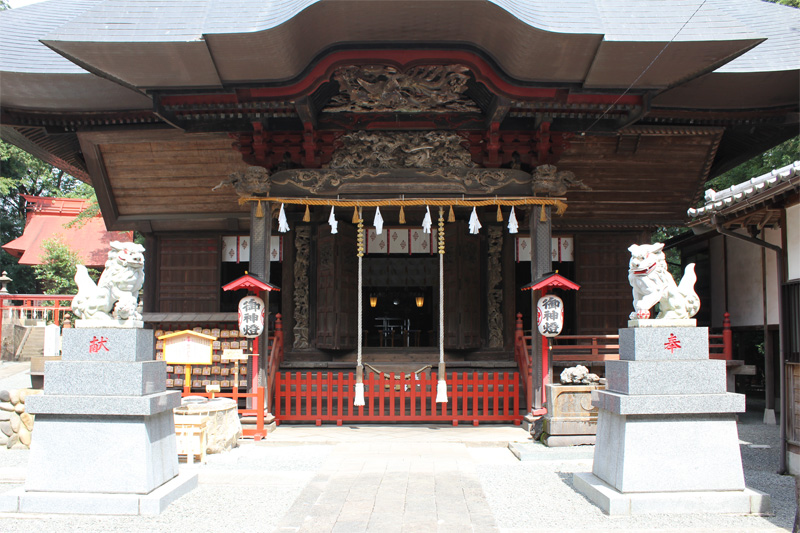
Santai Shrine in Maebashi, Gunma, the Head Shrine of Safe-Childbirth Worship
Located in Shimooya in Maebashi, Gunma, Santai Shrine is said to be the head shrine of the Santai shrines scattered around the country, and it has gathered faith from across the Kanto region since ancient times as a guardian deity of safe childbirth and child rearing. It sits on a small wooded rise amid gentle farmland, wrapped in a quiet and settled atmosphere. Its chief enshrined deity is Konohanasakuya-hime-no-Mikoto, who according to myth gave birth safely amid flames and has thus long been revered as a deity of safe childbirth. Behind the main hall lies a group of great rocks (an iwakura sacred rock formation) connected to Mount Akagi, hinting that faith here traces back to mountain worship of Mount Akagi.
Highlights
- A group of great rocks (iwakura) connected to Mount Akagi, remaining behind the main hall
- The sacred virtue of Konohanasakuya-hime-no-Mikoto, guardian of safe childbirth and child rearing
- Atmospheric halls, including a main hall said to have been built in 1763
- Quiet, settled grounds surrounded by farmland
- An old custom of dedicating a ladle in prayer for safe childbirth
Enjoying the Seasons
In spring a sense of the season spreads across the grounds and the surrounding fields, and at the annual festival on April 18 the daidai kagura sacred dance is dedicated. In autumn the trees turn color for a gentle scene. For those wishing for safe childbirth it is a place to pray sincerely in any season, and on milestone days such as the Day of the Dog many worshippers visit.
Access and Basic Information
- Location: Shimooya, Maebashi City, Gunma Prefecture
- Reached by bus or taxi from JR Maebashi Station
- By car, from an interchange on the Kanetsu Expressway
- The grounds are easy to walk, allowing a calm visit
- Parking available
Practical Travel Notes
- As a shrine known for safe childbirth prayers, it tends to be especially busy on the Day of the Dog. For an unhurried visit, weekdays or mornings are recommended.
- At the amulet office you can receive charms relating to safe childbirth and child rearing. Confirming the hours for prayer rituals in advance is reassuring.
- The iwakura behind the main hall is sacred ground. Clasp your hands quietly, and refrain from entering it or raising your voice.
- Its location makes it easy to fold into a day of city sightseeing, combined with central Maebashi or the Mount Akagi area.
- Surrounded by farmland, it lies a little away from the train station. Confirming bus times first, or visiting by car, is convenient.
A Quick Tip
The sacred rock behind the main hall is a symbol of faith continuing from ancient times, so do clasp your hands quietly when you visit. In the gentle air surrounded by farmland, you can spend a relaxed, unhurried time. As a place to pray at milestones for safe childbirth or a child growth, it is a fitting shrine to visit as a family.
📚 Sources
The content here is organized from public information on Santai Shrine, official tourism information from Maebashi City, and on-site history plaques and signboards. The reception times for childbirth and child-rearing amulets and prayers may change. The Day of the Dog tends to be especially crowded. Because fees, hours, and access can change, please confirm with official sources before you set out.
Visitor Checklist
- Time needed: Thirty minutes to an hour for worship and a precinct stroll, or about a half day with nearby sightseeing.
- What to bring: Having cash for amulets and prayers is reassuring. You walk the precinct, so wear comfortable shoes.
- Suggested route: Worship at the hall known for safe-childbirth prayers, then quietly place your hands together at the sacred rock behind the main hall.
- Timing note: As a shrine known for safe-childbirth prayers, the Day of the Dog tends to be especially crowded. For a relaxed visit, a weekday or the morning is recommended. Confirm the prayer reception times in advance.
- Worship manners: The sacred rock behind the main hall is a sacred area. Place your hands together quietly, and refrain from entering or loud voices. Paired with central Maebashi and the Mt. Akagi area, the location fits into a day of city sightseeing.
📍 Location & Access


Share this article


✍️ About this article
This article is compiled by the Tabitabi JAPAN editorial team from official and primary sources, including facility and shrine/temple websites, tourism information published by municipalities and tourism associations, and cultural-property records released by national and local governments. Prices, opening hours and event dates may change, so please also check the official information of each facility or local government before you visit.