
Hikone Castle: National Treasure Keep and Famous Castle that Was the Stage of the Late Edo Period
National Treasure Keep
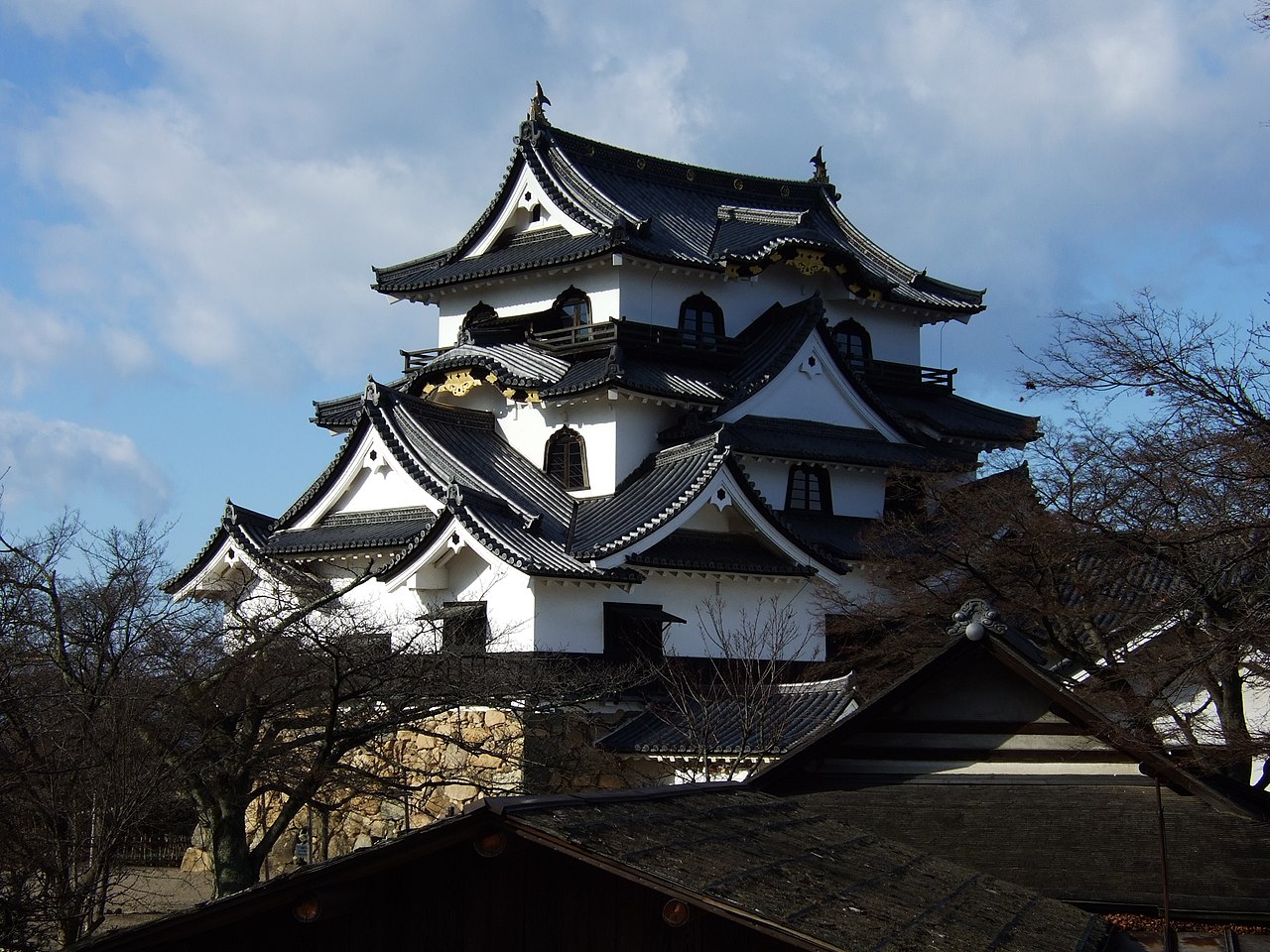
Hikone Castle's keep, completed around 1622 as a three-storey, three-roof structure, is one of Japan's five National Treasure castles alongside Matsumoto, Inuyama, Himeji and Matsue. Modest in scale, it is prized for a highly decorative roofline that skilfully combines gable, hip-and-gable and cusped gables, together with cusped windows on the upper floors and a railed veranda encircling the third storey — a masterwork that prizes outward beauty. Its attached turret and multi-bay turret are also designated National Treasures.

Ii Clan and the Late Edo Period
The Ii clan, lords of Hikone domain with 350,000 koku, was a distinguished house that repeatedly produced grand elders of the Tokugawa shogunate. Ii Naosuke in particular left a lasting mark by concluding the Treaty of Amity and Commerce with the United States and carrying out the Ansei Purge. Below the castle stands Uzumoregi-no-ya, the residence where Naosuke spent his youth from age 17 to 32, named after a poem in which he likened himself to buried driftwood — a window onto that turbulent age.
Genkyuen Garden
Genkyuen, spreading to the castle's northeast, is a feudal-lord garden created in 1677 by Ii Naooki, the fourth lord. This strolling pond garden, modelled on a detached palace of Emperor Xuanzong of Tang China, lets visitors wander among islands and bridges to enjoy each season. The view that borrows the castle keep as a backdrop is superb, and autumn brings evening events such as foliage illuminations and moon-viewing gatherings. Together with the adjacent Rakurakuen it is designated a Place of Scenic Beauty.
Hikonyan
Hikone Castle's mascot Hikonyan is a pioneer among Japan's nationally loved local characters. Endearing in a red-lacquered Ii-clan helmet, it appears daily around the castle. Appearance times are set by day, and a commemorative photo is a must for visitors.
Access & Basic Information
From Hikone Station on the JR Biwako Line, the main gate is about a 15-minute walk; by car it is about 10 minutes from the Hikone interchange on the Meishin Expressway. The castle opens 8:30 to 17:00, with last entry to the castle, Genkyuen and the Hikone Castle Museum at 16:30. A combined ticket for the castle and Genkyuen costs around 1,000 yen for adults and 300 yen for schoolchildren, with a set ticket including the museum also available.
Practical Travel Notes
- Best seasons: Cherry blossoms frame the keep in early April, and autumn colour fills Genkyuen in late November. Blossom and foliage illuminations make evenings rewarding too.
- Time needed: Around 2 to 3 hours to tour the grounds including the keep; allow half a day to add Genkyuen, the museum and Uzumoregi-no-ya.
- Avoiding crowds: Blossom weekends and autumn illuminations are very busy; the morning just after opening is comparatively relaxed.
- Nearby spots: The Yumekyobashi Castle Road and Yonbancho Square shopping streets, Genkyuen and the Hikone Castle Museum, plus Omi beef dining.
- Budget: Around 1,000 yen for the combined ticket plus museum admission; street snacks vary by shop.
A Word of Advice
The keep's stairs are steep and narrow, so comfortable shoes are advisable. Entry to the keep may involve a wait when busy, so leave time to spare. To savour the architecture, look closely at the gables and cusped windows around the roof.
📚 Sources
This article was edited with reference to information published by the city of Hikone and the Hikone Castle management office, the adjacent Hikone Castle Museum, and public materials on the scenic Genkyuen and Rakurakuen gardens. Local guidance was also consulted for castle-town sites such as Umoreginoya, associated with Ii Naosuke. Opening hours, the combined ticket price for the castle and Genkyuen, and the appearance schedule of the mascot Hikonyan may change, so please check official information before you set out.
Visitor Checklist
- Estimated time: Allow around two to three hours to explore the keep and Genkyuen at a relaxed pace.
- Opening hours: The castle opens from 8:30 to 17:00, with last admission to the keep, Genkyuen, and the museum around 16:30, so arrive with time to spare.
- Suggested route: Combine the national-treasure keep, Genkyuen, and the Hikone Castle Museum, and add castle-town sites such as Umoreginoya for a fuller visit.
- What to wear: The keep has steep stairs and the grounds involve a lot of walking, so comfortable shoes are recommended.
- Budget: Prepare for the combined ticket covering the castle and Genkyuen.
- Tip: The mascot Hikonyan appears on a set daily schedule, so check in advance if you hope to take a photo.
📍 Location & Access


Share this article


✍️ About this article
This article is compiled by the Tabitabi JAPAN editorial team from official and primary sources, including facility and shrine/temple websites, tourism information published by municipalities and tourism associations, and cultural-property records released by national and local governments. Prices, opening hours and event dates may change, so please also check the official information of each facility or local government before you visit.