
Taga Taisha: Shiga's Largest Shrine Known for Blessings of Matchmaking and Longevity
Ancient Shrine of Matchmaking and Longevity
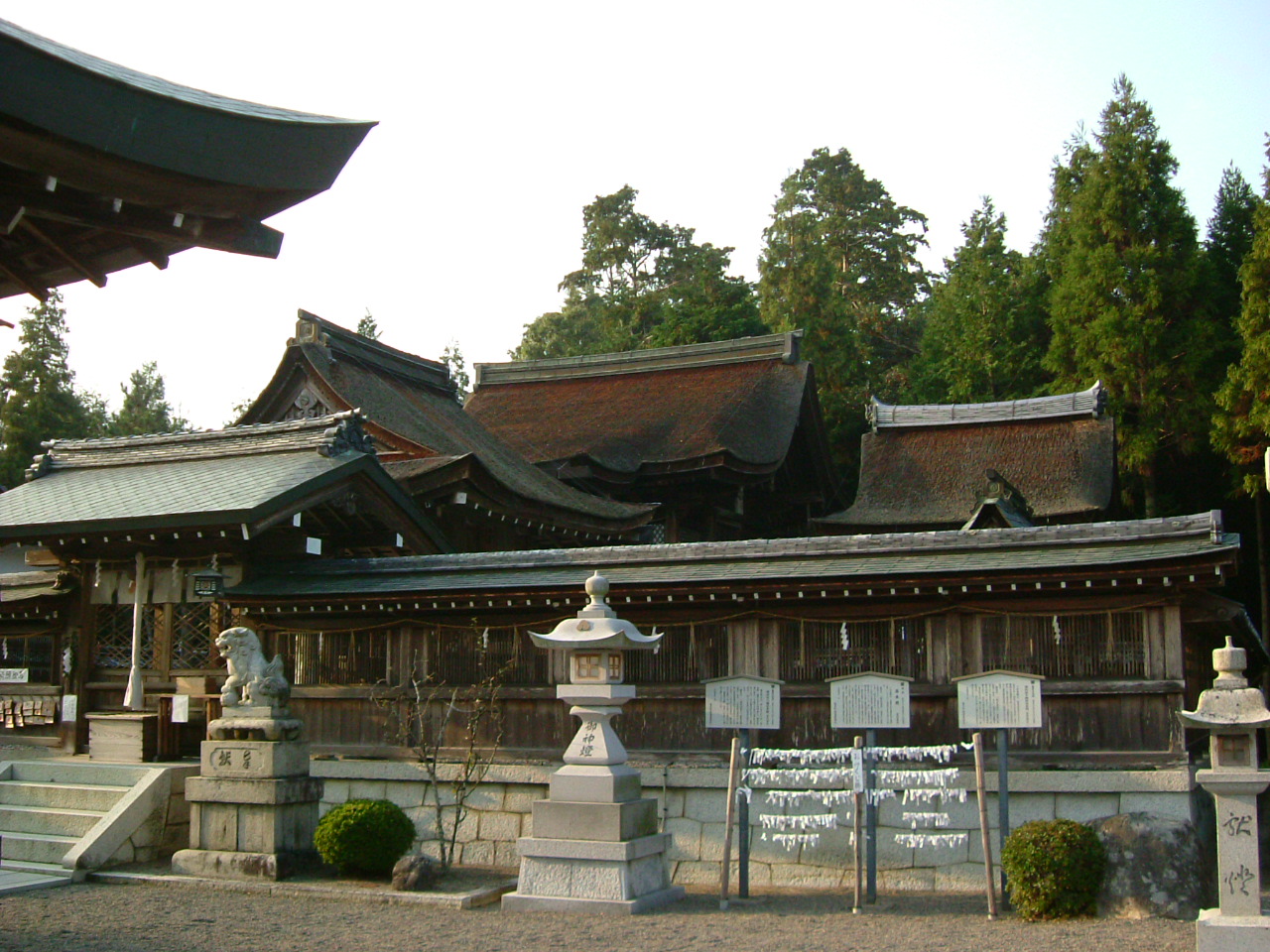
Taga Taisha is a venerable ancient shrine, among the largest in the Omi region, with Izanagi no Mikoto and Izanami no Mikoto as its main deities. As a shrine to the two deities who created the land of Japan and gave birth to many gods, it is known for blessings across all of life, including matchmaking, longevity, warding off misfortune, and childbirth, and it is widely loved by the affectionate name Otaga san.

Connection to Taiko Hideyoshi
Toyotomi Hideyoshi is said to have prayed at Taga Taisha for his mother's recovery from illness. In 1588 he offered a large quantity of rice, which advanced the maintenance of the shrine buildings and led to the Taiko bridge, an arched drum bridge, being raised along the approach. That steeply curved bridge remains on the grounds today, telling of the deep bond between Hideyoshi and the shrine. Through such episodes, the shrine became widely known for longevity prayers.

Itokiri Mochi
Itokiri mochi, a specialty of the approach to Taga Taisha, is a lovely rice cake sweet of pure white mochi marked with three lines in blue and red, wrapping a smooth bean paste. The name comes from the way it is cut not with a knife but with a shamisen string. Available at long established shops along the approach, it is enormously popular as a memento of a visit and a souvenir.
The Grand Festival of Taga Taisha
The Korei Taisai held on April 22 each year, also called the Taga Festival, is the most important rite of the shrine. The day's highlight is the procession of mounted warriors and richly costumed marchers carrying portable shrines, with several dozen horses and a line of some five hundred participants, unfolding a scene both valiant and elegant like a historical scroll.
Best Season
Late April for the grand festival, and rite periods such as the New Year visit and Setsubun, draw crowds. Quiet visits in the seasons of fresh greenery and autumn leaves also have their charm.
Access and Basic Information
- About 10 minutes on foot from Taga Taisha Mae Station on the Ohmi Railway Taga Line. It is common to transfer to the Ohmi Railway at JR Hikone Station.
- By car, about 10 minutes from the Hikone interchange on the Meishin Expressway. Parking is provided for about 300 regular cars and about 30 large vehicles.
- The grounds are open for free visits.
Practical Travel Notes
- Best time of day: Allow one to two hours including the visit, a stroll along the approach, and sampling itokiri mochi. To avoid crowds, weekday mornings are comfortable.
- Avoiding crowds: The New Year visit, Setsubun, and the April 22 grand festival are very busy. For an unhurried visit, it is best to avoid these times.
- Nearby real spots: The approach is lined with long established mochi shops and eateries with the lively feel of a shrine town. Toward Hikone lie sights such as Hikone Castle and the Genkyuen garden.
- Budget sense: The visit is free, and even with itokiri mochi, an amulet, and a meal along the approach, it stays within an easy range.
A Quick Tip
The shrine town along the approach is lined with long established itokiri mochi shops, so a taste comparison before or after your visit is a pleasure in itself. The Taiko bridge is a steeply arched drum bridge, so watch your footing when crossing. As befits an old shrine known for longevity and matchmaking, it rewards an unhurried tour.
📚 Sources
This article was edited with reference to guidance from Taga Taisha in Shiga, which enshrines Izanagi and Izanami, long-established shops selling the specialty itokiri-mochi along the approach, and regional tourism information. Explanations from the shrine and region were consulted for the donation by Toyotomi Hideyoshi, the origin of the Taiko Bridge, and the Korei Taisai festival. Festival dates and the opening of shops along the approach may change, so please check the official information of the shrine and others before you set out.
Visitor Checklist
- Suggested route: Take in the arched Taiko Bridge and the shrine halls, and enjoy the specialty itokiri-mochi at long-established shops along the approach.
- Access: It is about a 10-minute walk from Taga-taisha-mae Station on the Ohmi Railway Taga Line, usually reached by transferring to the Ohmi Railway at JR Hikone Station.
- When to go: The Korei Taisai festival on April 22 and events such as the New Year and Setsubun are lively; for a quiet visit, the greenery and autumn-foliage seasons are atmospheric.
- Souvenirs: The specialty itokiri-mochi along the approach is popular as a keepsake or gift.
- Budget: Allow for a shrine seal, amulets, and itokiri-mochi.
- What to wear: Comfortable shoes are recommended for walking the grounds and approach.
📍 Location & Access



Share this article



✍️ About this article
This article is compiled by the Tabitabi JAPAN editorial team from official and primary sources, including facility and shrine/temple websites, tourism information published by municipalities and tourism associations, and cultural-property records released by national and local governments. Prices, opening hours and event dates may change, so please also check the official information of each facility or local government before you visit.