
Atsuta Shrine — One of Japan's Oldest Grand Shrines Enshrining the Sacred Sword
Atsuta Shrine, located in Atsuta Ward, Nagoya City, Aichi Prefecture, is a grand shrine second in prestige only to Ise Jingu, enshrining as its sacred object the Kusanagi-no-Tsurugi, one of the three Imperial Treasures of Japan. The sword's enshrinement is said to date to the reign of Emperor Keiko, and even today the shrine draws over two million first-visit worshippers each New Year, making it one of Aichi Prefecture's largest power spots. The forest spreading across its vast precinct, known as the Atsuta Grove, is beloved by locals as a sacred world apart within the city.
Highlights
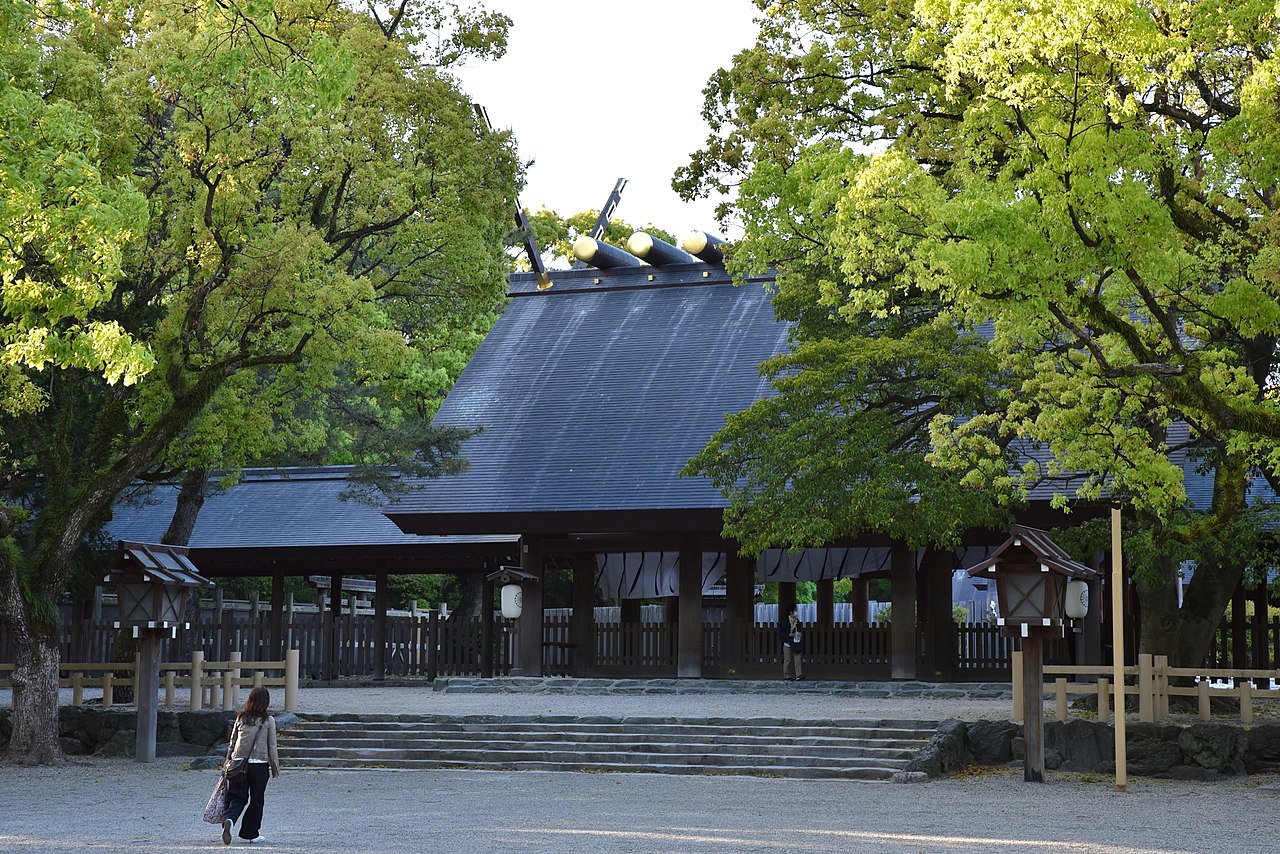
- Main Hall: The main hall enshrining the Kusanagi-no-Tsurugi. Built in the shinmei-zukuri style, like Ise Jingu, it carries an austere, dignified atmosphere.
- Nobunaga Wall: An earthen wall dedicated by Oda Nobunaga in thanks for victory, after he prayed here for success before the Battle of Okehazama in 1560. It is counted among Japan's three great earthen walls.
- Shimizu-sha: A subordinate shrine enshrining Mizuhanome-no-Kami. The spring water in its grounds is said to bless beauty and clear skin, making it popular with female worshippers.
- Treasure Hall and Kusanagi Sword Hall: Home to about 6,000 items including National Treasures and Important Cultural Properties, with the Kusanagi Hall focusing on displays of swords.
- Miya Kishimen: The Nagoya specialty flat noodles served at a shop within the grounds, a classic treat after worship.
Enjoying the Seasons
The New Year first visit in January draws one of the largest crowds in the country, with over two million people in the first three days alone. In spring, from April to May, the fresh greenery of the grounds is beautiful and worship is refreshing. In summer, on June 5, the Atsuta Festival, or Shobu-sai, is the shrine's largest rite, a grand event featuring dedicated fireworks. In autumn, from October to November, the great camphor trees take on color, and worship amid the solemn air is exceptional.

Access and Basic Information
- Location: 1-1-1 Jingu, Atsuta Ward, Nagoya City, Aichi Prefecture
- Transport: About a 3-minute walk from Jingu-mae Station on the Meitetsu Nagoya Main Line, about 7 minutes from Atsuta-Jingu-Denmacho Station on the Meijo Subway Line, or about 8 minutes from Atsuta Station on the JR Tokaido Line.
- Hours: Grounds open freely (always accessible)
- Admission: Free (Treasure Hall costs 500 yen for adults)
- Time needed: About 1 to 1.5 hours
Practical Travel Notes
- Best season and time: For quiet, an early-morning visit is recommended. To avoid crowds, steer clear of the first three days of the New Year period.
- Time needed: About 1 to 1.5 hours to tour the main hall and key spots. Allow around 2 hours if you take your time at the Treasure Hall and Kusanagi Hall.
- Avoiding crowds: The first three days of the New Year and the day of the Atsuta Festival are very busy. For unhurried worship, weekday mornings are the best bet.
- Treasure Hall fees: The Treasure Hall is 500 yen for adults. It is open from 9:00 to 16:30 (last entry 16:10) and closed on the last Wednesday of each month and the following day. A combined ticket with the Kusanagi Sword Hall is also available.
- Nearby spots: Access is easy by subway and Meitetsu from Nagoya Station. Combined with Nagoya Castle or the Osu shopping district, you can enjoy Nagoya sightseeing in a single day.
A Quick Tip
The grounds hold several great camphor trees said to be over a thousand years old, and simply touching their vitality gives a sense of renewed strength. With easy access by subway and Meitetsu from Nagoya Station, this is a spot to be sure to visit when sightseeing in Nagoya. After worship, the Miya Kishimen served at a shop within the grounds is also known as a local specialty.
📚 Sources
The information here is based primarily on the public guidance published by the shrine office of Atsuta Jingu. The notices for the treasure hall and the Kusanagi-kan sword museum within the grounds, along with on-site origin records and information boards, are also helpful references. While the grounds are free to enter, the fees, opening hours, and closed days of the treasure hall (such as the last Wednesday of each month and the following day) may change, so please confirm the latest details on the official Atsuta Jingu information before you visit.
Visitor Checklist
- Estimated time needed: About 1 to 1.5 hours to visit the main sanctuary and key spots; allow around 2 hours if you also view the treasure hall and Kusanagi-kan.
- What to bring: The treasure hall costs 500 yen for adults, so small change or cash for admission is handy. Comfortable walking shoes are recommended for the large grounds.
- Suggested route: Pray at the main sanctuary, see the Nobunaga wall, the Ochomizu spring shrine, and the great camphor tree, then visit the treasure hall or Kusanagi-kan. Rounding off with a bowl of Miya kishimen at the on-site shop is the classic finish.
📍 Location & Access




Share this article


✍️ About this article
This article is compiled by the Tabitabi JAPAN editorial team from official and primary sources, including facility and shrine/temple websites, tourism information published by municipalities and tourism associations, and cultural-property records released by national and local governments. Prices, opening hours and event dates may change, so please also check the official information of each facility or local government before you visit.