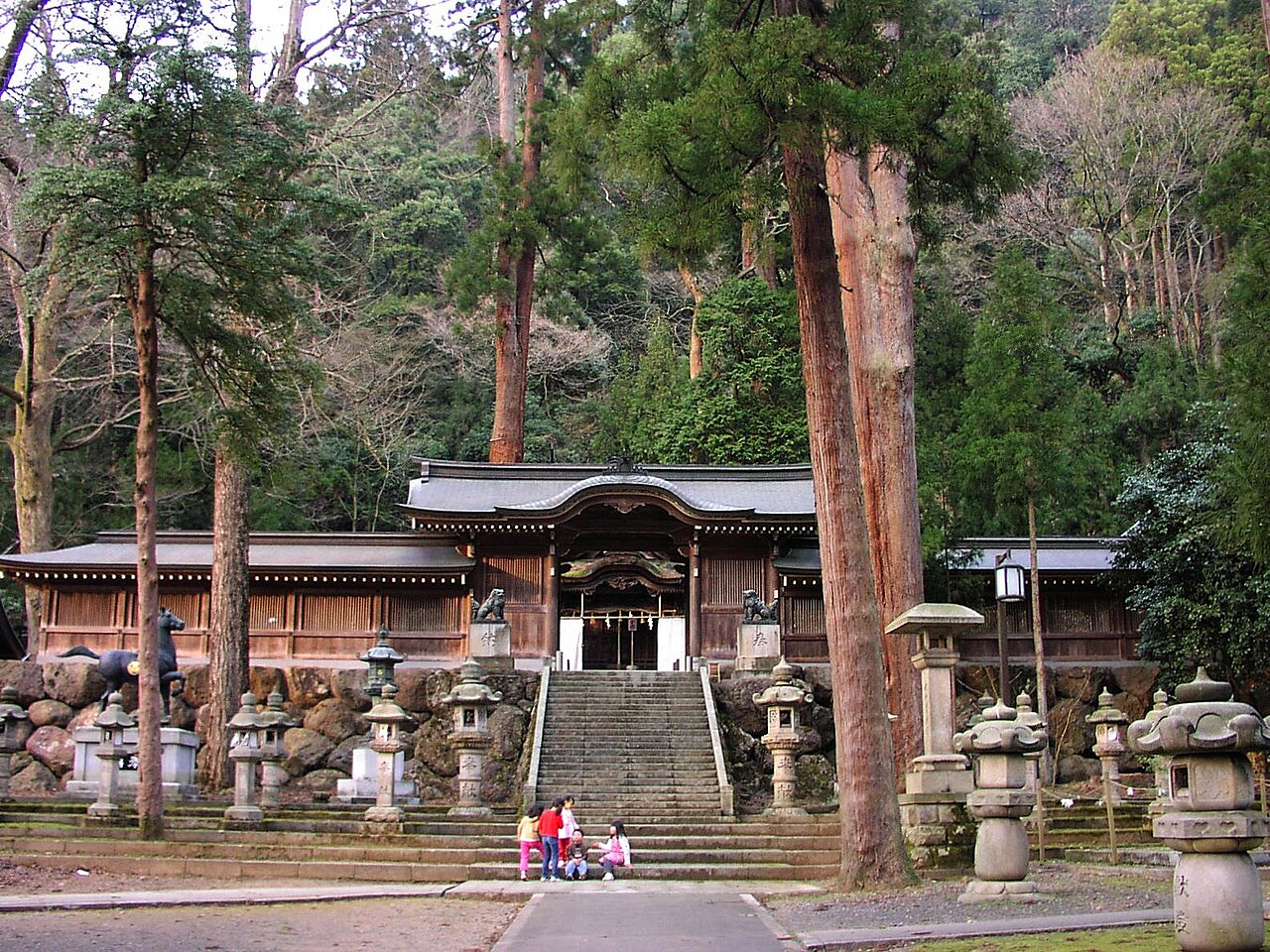
Okamoto and Otaki Shrines: Japan Only Shrine to the Paper God
Located in Echizen City, Fukui Prefecture, Okamoto and Otaki Shrines form the only shrine in Japan that enshrines Kawakami-Gozen, the goddess of paper. About 1,500 years ago, in the time of Emperor Keitai, a beautiful princess is said to have appeared here and taught the villagers the craft of making paper with the pure water, and the shrine began by enshrining her. Resting in the home of Echizen washi paper, it is a lesser-known power spot admired by people who make things. It has a two-in-one structure: Kawakami-Gozen is enshrined at the inner sanctuary on the mountaintop, while Kunitokotachi-no-Mikoto and Izanagi-no-Mikoto are enshrined at the village shrine at the foot.
Highlights
- A sacred shrine, the only one in Japan enshrining Kawakami-Gozen, the goddess of paper
- A village shrine hall with a complex, beautiful roof like waves meeting, a national important cultural property in which the main hall and worship hall are unified
- Refined carvings said to have been created in 1843 by the master carpenter Okubo Kanzaemon
- A historic layout of an inner sanctuary resting atop Mount Gongen and the village shrine at the foot
Enjoying the Seasons
In spring the fresh greenery and in autumn the red leaves set off the halls beautiful roof, popular with photography lovers. At the Echizen washi village you can enjoy papermaking experiences year-round, and many visit it together with the shrine. In the quiet village air, time spent praying with gratitude for craft is something special.
Access and Basic Information
- Location: Otaki-cho, Echizen City, Fukui Prefecture
- About 25 minutes by bus from JR Takefu Station, near the Echizen Washi no Sato stop
- By car: about 15 minutes from Takefu IC on the Hokuriku Expressway
- Adjacent to the Echizen washi paper village; parking available
- Goshuin seals available (viewing may be partly limited during hall preservation work)
Practical Travel Notes
- The best seasons are May for fresh greenery and around November for autumn leaves, when the hall roof and the color of the trees come together for photogenic scenes.
- Allow about 20 to 30 minutes for a visit centered on the village shrine; climbing up to the inner sanctuary takes more than an hour round trip, so dress for walking.
- Combined with the adjacent Echizen Washi no Sato (the Paper Culture Museum and the Papyrus House), it fills a half to full day. Papermaking experiences carry a fee, typically a few hundred to low thousands of yen.
- Public transport is infrequent, so check the timetable; a car makes the area easier to tour.
- Worship itself is free; goshuin seals run about a few hundred yen.
A Quick Tip
This shrine is perfect for those who wish to improve at work or craft. Trying a papermaking experience at the adjacent washi village before praying makes the presence of the paper goddess feel closer. Be sure to look up slowly at the carvings on the roof.
📚 Sources
The information here is based mainly on the public guidance from Echizen city and its tourism association, together with the guidance of the adjoining Echizen Washi no Sato. The history of enshrining the paper goddess Kawakami Gozen, and the guidance on the village shrine hall said to have been crafted by the master Okubo Kanzaemon, a national important cultural property combining the main and worship halls, are also useful references. Because the handling of seal stamps and viewing restrictions during hall preservation works may change, please confirm the latest details on the official Echizen city or Echizen Washi no Sato information before you visit.
Visitor Checklist
- Estimated time needed: About 20 to 30 minutes for a visit centered on the village shrine. Climbing up to the inner sanctuary takes more than an hour round trip.
- What to bring: Wear comfortable clothing and shoes, as the inner sanctuary is reached by a mountain path. Have small cash ready if you receive a seal stamp. Some viewing may be restricted during hall preservation works.
- Suggested route: After looking up at the finely carved roof of the village shrine and paying your respects, try papermaking at the adjoining Echizen Washi no Sato (the Paper Culture Museum and the Papyrus House) to feel the presence of the paper goddess more closely.
📍 Location & Access


Share this article


✍️ About this article
This article is compiled by the Tabitabi JAPAN editorial team from official and primary sources, including facility and shrine/temple websites, tourism information published by municipalities and tourism associations, and cultural-property records released by national and local governments. Prices, opening hours and event dates may change, so please also check the official information of each facility or local government before you visit.