
Gifu Local Gourmet Guide: Hida Beef
Hida Beef
The pinnacle of brand beef that Gifu proudly presents to the world — Hida Beef. Just hearing the name is enough to make your mouth water. An overwhelming presence born from the Hida plateau, the cross-section of its finely marbled fat is nothing short of a work of art. The moment you take a bite, the meat dissolves like unraveling silk, filling your mouth with deep sweetness and rich umami. "Was beef always this delicious?" — that emotion that spreads across the face of someone tasting Hida Beef for the first time never changes, no matter how many times you visit.
Nurtured by the beautiful yet harsh nature of Hida with its views of the Northern Alps, and maintained by a careful philosophy of raising passed down through generations of local farmers — the love and years invested in each individual animal are concentrated in that silky tenderness.
Characteristics
Hida Beef is predominantly A4 and A5 grade, and its finely distributed marbling is considered among the finest in Japan. Beyond the authentic steaks and teppanyaki (iron griddle cooking) that skilled Takayama chefs prepare with expertise, you can also enjoy Hida Beef nigiri sushi and Hida Beef croquettes as casual street food while strolling through the historic townscape. Hida Beef is accessible in many forms, from upscale restaurants to standing stalls — one of its great charms.
Where to Enjoy
- Takayama City center: Many steakhouses and teppanyaki restaurants are concentrated in the area around the old town and Jinya-mae morning market. The Hida Beef nigiri sold at market stalls is an unmissable one-bite experience.
- Shirakawa-go: Some restaurants in the World Heritage village area also serve Hida Beef dishes.
- Price range: Hida Beef lunch sets start from around ¥2,000–3,000. A full steak dinner will typically range from ¥8,000–15,000+.
Keichan (Chicken in Miso Sauce)
Keichan is a soul food deeply embedded in the daily lives of the people of Gero City and the Higashino region — a simple yet powerfully flavorful dish of chicken thigh meat stir-fried with cabbage and other vegetables in a rich seasoning sauce based on miso or soy sauce with garlic and ginger. The sauce caramelizes in the pan, coating each piece of chicken with a deep, complex flavor that makes it impossible to stop eating.
Its origins lie in the postwar era, when it was prepared as an affordable and nourishing home-cooked meal. Despite its humble origins, keichan has grown to become one of Gifu's most beloved regional specialties, with each household and restaurant developing its own signature sauce recipe. The combination of tender, well-seasoned chicken and slightly charred, crispy-edged cabbage is addictive.
How to Enjoy
Keichan is typically served in a cast-iron skillet or earthenware pot, brought to your table still sizzling. The standard pairing is white rice, and the intensely flavored sauce mixed into the rice at the end is considered a particular highlight. Some restaurants offer a set with udon noodles added to the pot.
Where to Enjoy
- Gero City: As the hometown of keichan, Gero has numerous specialty restaurants. Look for shops near Gero Onsen.
- Takayama City: Keichan restaurants are found throughout the city.
- Supermarkets: Pre-seasoned keichan is widely sold in local supermarkets — a great souvenir to take home and cook yourself.
Mitarashi Dango (Skewered Rice Dumplings with Sweet Soy Sauce)
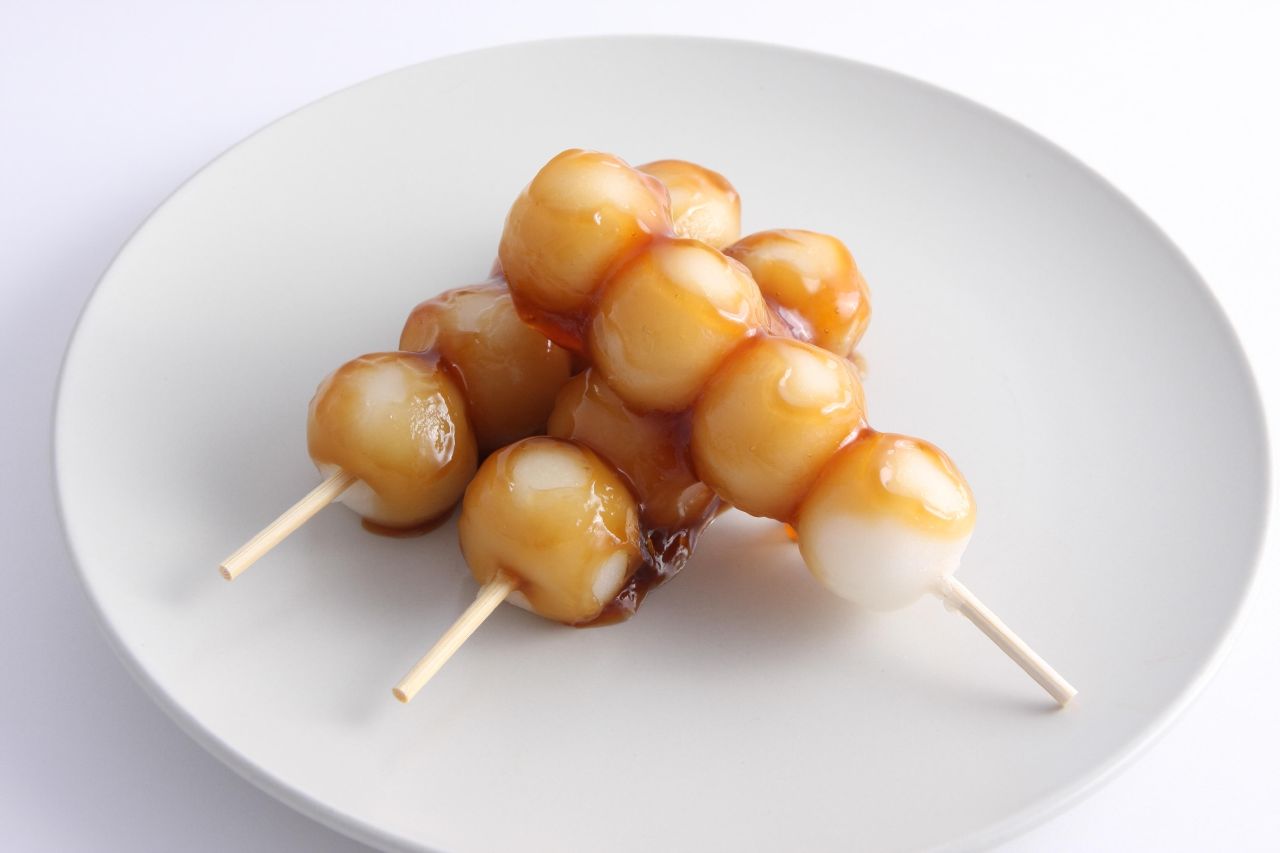
Mitarashi dango — plump rice dumplings skewered and coated with a sweet soy sauce glaze — is one of Japan's most beloved traditional sweets, and the version from Gifu's Takayama has a particularly devoted following. The rice dumplings are lightly grilled over charcoal until the outside is slightly toasted and the inside remains soft and chewy, then brushed generously with a sauce made from soy sauce, mirin, sugar, and starch — sweet-savory and deeply satisfying.
In Takayama's Sanmachi Suji (old town preservation district), you'll find several shops with grills set up outside, filling the street with the irresistible aroma of grilling dango and caramelizing soy sauce. Eating mitarashi dango while wandering the Edo-period preserved streetscape is one of Takayama's quintessential experiences.
Tips
- Best eaten fresh: Mitarashi dango is at its best hot off the grill. Don't wait — eat it while it's warm for the best texture and flavor.
- Variations: Some shops offer "plain" (grilled without sauce) or sesame seed varieties alongside the classic mitarashi.
Hoba Miso (Miso on Magnolia Leaves)
Hoba miso is a traditional Hida region dish in which sweet miso mixed with mushrooms, green onion, and sometimes Hida Beef is placed on a large dried magnolia leaf (hoba) and grilled over a charcoal brazier. The leaf infuses the miso with a distinctive earthy, slightly woody fragrance as it heats — a flavor that is impossible to replicate any other way.
Originally a simple farmhouse dish from Hida's cold mountain winters, hoba miso has evolved into a beloved specialty served at ryokan (traditional inns) and restaurants throughout the region. The theatrical presentation — the leaf placed on a small brazier at your table, gradually charring around the edges as the miso bubbles and caramelizes — makes it as much a visual and sensory experience as a culinary one.
Where to Enjoy
- Ryokan in Takayama and Shirakawa-go: Hoba miso is often included in traditional multi-course kaiseki meals at Hida ryokan
- Specialty restaurants in Takayama City
- Souvenir hoba miso sets: Available at souvenir shops, allowing you to recreate the experience at home
Ayu (Sweetfish)
The clear mountain streams of the Nagara River and its tributaries that flow through Gifu Prefecture are home to some of Japan's finest ayu (sweetfish). These slender, greenish-silver fish have a distinctive sweet, watermelon-like fragrance and delicate flesh — prized by food lovers throughout Japan. The traditional method of catching ayu using trained cormorant birds (ukai fishing) has been practiced on the Nagara River for over 1,300 years and is designated an Important Intangible Folk Cultural Property.
The simplest and most celebrated way to eat ayu is salt-grilled (shioyaki) — skewered on a bamboo stick and grilled over charcoal, the skin crisps up while the flesh inside remains moist and fragrant. The subtle bitterness of the innards (ayu lovers consider this the best part) combined with the sweet flesh is a flavor that devotees travel far to experience.
Where to Enjoy
- Gifu City: Cormorant fishing on the Nagara River runs from mid-May to mid-October. Watching the fishing while eating on a chartered boat (ukai kanran-bune) is a uniquely special experience.
- Restaurants along the Nagara River
- Season: Best from June to August when ayu are at their peak.
Sansai (Wild Mountain Vegetables)
The mountains of Hida and Mino produce an extraordinary variety of sansai (wild mountain vegetables) in spring and early summer — including warabi (bracken fern), zenmai (royal fern), kogomi (ostrich fern), taranome (angelica tree shoots), and mountain wasabi. These are gathered from the forests and valleys of Gifu's mountains and served at local restaurants and ryokan as seasonal specialties.
Sansai are typically prepared simply — blanched and dressed with dashi broth, or tempura-fried — to highlight their distinctive flavors and textures. Each variety has its own unique taste: the slight bitterness of taranome, the tender crunch of kogomi, the earthy depth of zenmai.
When to Enjoy
Spring (April to June) is the prime season. Many ryokan in the Hida region incorporate local sansai into their seasonal menus during this period.
Mitarashi Dango and Takayama Morning Markets
No visit to Takayama is complete without exploring the two morning markets: Jinya-mae Morning Market (in front of the old government house) and Jinya-mae Morning Market (along the Miyagawa River). These markets open daily from dawn and offer local produce, pickles, handmade crafts, and of course, freshly made dango and other local foods. The Jinya-mae market is particularly atmospheric, with vendors in traditional dress selling seasonal vegetables and homemade specialties.
Gifu's food culture is a reflection of the prefecture's diverse landscape — from the mountain high country of Hida to the rivers and valleys of Mino. Come hungry, and let the food tell the story of this extraordinary place.
Practical Information for Your Visit
- Certification standards for Hida beef: Meat certified by the Hida Beef Brand Promotion Council after meeting all four of the following conditions: (1) the longest part of its rearing period was spent in Gifu Prefecture; (2) it was fattened by a farm registered with the Hida Beef Brand Promotion Council; (3) it is Japanese Black cattle fattened for 14 months or more; and (4) it received a meat quality grade of 3, 4 or 5 from the Japan Meat Grading Association
- The taste of mitarashi dango: Takayama's mitarashi dango has a light soy sauce flavour, characterised by the savoury aroma of soy sauce grilled to a golden brown (it is not a sweet sauce)
- Public facility where you can taste it: Hida Takayama Miyagawa Morning Market (Takayama City, along the east bank of the Miyagawa River between Kajibashi and Yayoibashi bridges). It is held daily from 7:00 to 12:00, and from 8:00 to 12:00 in winter, December to March
- Points to note: On some days the Miyagawa Morning Market has fewer stalls, depending on the weather and other factors. The stated hours also include setting-up and packing-away time, so avoid arriving just before closing and allow yourself plenty of time
- Access from the Matsumoto direction: There is no direct rail link between Takayama and Matsumoto. The Takayama, Shin-Hotaka and Hirayu Onsen to Matsumoto highway bus, operated jointly by Nohi Bus and Alpico Kotsu, takes about 2 hours 20 minutes
Note: Opening hours and prices at individual shops vary from establishment to establishment.
(Sources: official website of the Hida Beef Brand Promotion Council; official Gifu Prefecture tourism website Gifu Travel Guide; official website of the Hida Takayama Miyagawa Morning Market; official website of Nohi Bus Co., Ltd.)
📍 Location & Access




Share this article


✍️ About this article
This article is compiled by the Tabitabi JAPAN editorial team from official and primary sources, including facility and shrine/temple websites, tourism information published by municipalities and tourism associations, and cultural-property records released by national and local governments. Prices, opening hours and event dates may change, so please also check the official information of each facility or local government before you visit.