
Gifu Food Guide: Hida Beef, Keichan & Hoba Miso
Gifu offers a remarkable range of distinctive mountain-village flavours, beginning with the branded wagyu known as Hida Beef and extending to dishes such as keichan and mitarashi dango. Blessed with rich nature, clear water and the bounty of the four seasons, Gifu has passed down local tastes rooted in each of its districts. Enjoyed alongside sightseeing in places such as the old streets of Takayama and the village of Shirakawa-go, Gifu's food is one of the great pleasures of a trip here.
Hida Beef, the Branded Wagyu Gifu Is Proud Of
Hida Beef (Hida-gyu) is Gifu Prefecture's branded wagyu, and only meat that meets the standards set by the Hida Beef Brand Promotion Council may carry the name. According to the council, the "Hida Beef" label is issued only to beef that satisfies four conditions: that the period of rearing within Gifu Prefecture is the longest; that it was fattened by a registered producer; that it is Japanese Black cattle fattened for 14 months or more; and that it is graded 3, 4 or 5 for meat quality in the carcass grading of the Japan Meat Grading Association. Its appeal lies in the fine marbling, the melting texture on the tongue and the deep umami. Raised with great care in the Hida region, which is blessed with clear air and pure water, the cattle produce fat with an elegant sweetness. It is superb as steak, yakiniku or shabu-shabu, and it is also well worth trying Hida beef nigiri sushi or grilled skewers as street food while strolling through the old townscape of Takayama — an easy way to enjoy first-class wagyu.
Keichan, a Taste of the Countryside
Keichan (kei-chan) is a local dish handed down in the Hida and Oku-Mino districts of Gifu Prefecture. Bite-sized pieces of chicken are marinated in a miso- or soy-sauce-based tare, then grilled boldly on an iron plate or in a pan together with cabbage and other vegetables. The robust, garlicky seasoning goes perfectly with rice, and the dish is loved both as home cooking and as a standard item on the menus of izakaya and local diners. Every household and every restaurant has its own tare, so comparing miso-flavoured and soy-sauce-flavoured versions is part of the fun.
Mitarashi Dango and Local Sweets
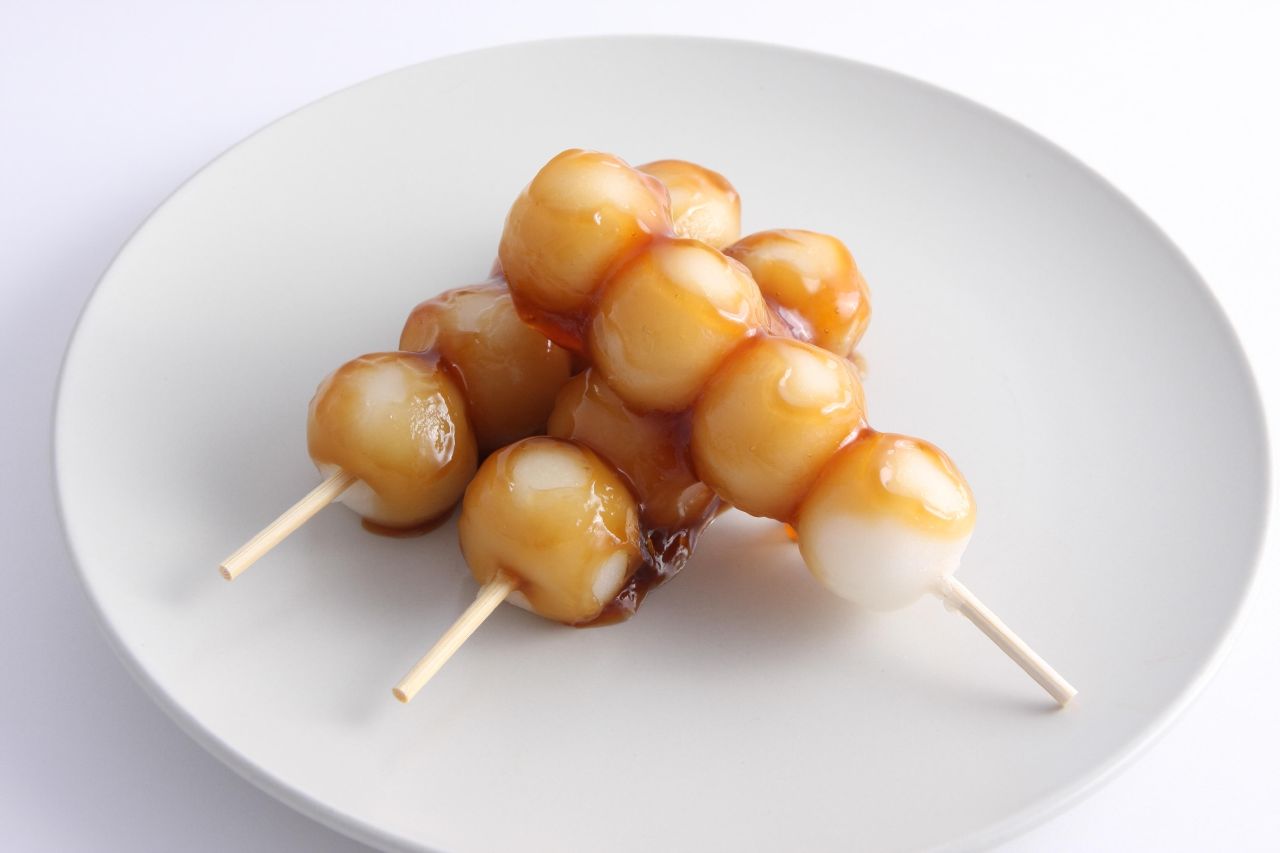
Gifu's mitarashi dango differs from the usual sweet-glazed dumpling: it is a "grilled dumpling" in which the fragrance of soy sauce stands out. The dumplings are brushed with soy-sauce tare and grilled until nicely browned, giving a simple flavour, and the aroma of soy sauce toasted to a golden brown whets the appetite. In Takayama they are also called "midarashi dango" and are cherished as a Hida speciality. Biting into a freshly grilled skewer while walking through the old townscape is a particular pleasure. Gifu also has many other rustic snacks that make the most of the mountains' bounty, such as kuri kinton (chestnut sweets) and gohei mochi.
Best Season and Access
Gifu's food can be enjoyed all year round, but kuri kinton is at its best in autumn and a warm keichan hotpot is even better in winter. For access, take the JR Takayama Main Line towards Takayama, or travel from Nagoya to the various districts by train or car. Hida beef and mitarashi dango are best sampled around Takayama's old townscape, while keichan can be enjoyed in its home districts of Hida and Oku-Mino. Combine your meals with visits to Gifu's famous sights such as Shirakawa-go and Gero Onsen, and enjoy a journey through the rich flavours nurtured by these mountain villages.
Hoba Miso: The Scent of the Hearth
The dish that best represents the Hida and Takayama area is hoba miso. According to the Ministry of Agriculture, Forestry and Fisheries' "Our Local Cuisine" project, it is made by placing home-made koji miso on a large magnolia (ho) leaf and grilling it; it goes very well with rice and also suits sake. The magnolia is a broad-leaved deciduous tree with large leaves, and the leaves are said to have an antibacterial effect, so food wrapped in them keeps longer and takes on a pleasant fragrance.
There are various accounts of its origin, but it is said to have begun with the somabito — the woodsmen who made their living from forestry in Hida, where the industry flourished — grilling miso on magnolia leaves used as plates out in the mountains. Because the winters here were so severe that food would freeze, people would lay magnolia leaves on the fire of the hearth and warm pickles and miso as they ate. The leaves used are those that have fallen and turned brown in autumn, gathered and stored before winter arrives.
When the miso begins to bubble on the leaf, the aroma of scorched miso and magnolia leaf rises all at once. Charcoal is said to be best for grilling, but a hotplate or frying pan will also bring out the fragrance of the leaf. In recent years versions topped not only with miso but also with Hida beef, mushrooms and spring onions have appeared. Hoba miso is sold at souvenir shops and local-product outlets throughout the prefecture, and it is certified under Takayama City's "Made by Hida Takayama" scheme.
Gohei Mochi: Born from Work in the Mountains
Gohei mochi has long been enjoyed in the Tono and Hida areas. Mashed rice is wrapped around a skewer, coated with tare and grilled; the dish is eaten across a belt running from the Kiso and Ina districts of Nagano Prefecture through the eastern part of Gifu's Tono district and into the Mikawa district of Aichi Prefecture.
Its beginnings are traced to the middle of the Edo period, when woodcutters in and around the Kiso area pressed cooked rice onto offcuts left from felling timber, grilled it over a bonfire and ate it with miso. In time it came to be offered to the gods in prayer for safety in mountain work, and it was also eaten at celebrations of the new rice harvest and at festivals. It is commonly said that the name comes from its resemblance to the gohei, the wand of paper streamers offered to the gods, though another theory holds that it began when a man from Mino called Gohei served it to soldiers at the Battle of Kawanakajima.
The shape varies by region and household — a straw-sandal shape, a flat dumpling shape or a round dumpling shape. The tare also comes in three families: miso, soy sauce, and a blend of the two; it is said that north of the Nakasendo highway soy-sauce flavour predominates, and south of it miso. Walnuts or peanuts are often used as a secret ingredient, and comparing the individuality of each shop is part of the fun. The fragrant steam rising from a freshly grilled skewer is autumn in the mountain villages itself. Gohei mochi is widely sold at service areas, roadside stations (michi-no-eki) and snack stands at sightseeing spots around the prefecture.
Kuri Kinton: An Autumn Sweet That Began in Nakatsugawa
Many people think of osechi New Year food when they hear "kuri kinton," but the kuri kinton of Gifu, centred on the Tono district, is something entirely different. It is a simple wagashi made by steaming chestnuts, cooking the flesh with sugar and then shaping it into the form of a chestnut using a cloth — nothing more — so you can enjoy the flavour of the chestnut itself to the full.
Nakatsugawa City, regarded as the birthplace of the sweet, is one of the prefecture's leading chestnut-producing areas, and in the Edo period it developed as an important post town on the Nakasendo, the shogunate's directly controlled trunk road. Along with its own distinctive culture, the tea ceremony also flourished there; sweets that suited tea were in demand, confectioners competed with one another, and sweets made with the local chestnuts appeared one after another. Kuri kinton is said to be one of them.
The ninth of September is the Choyo Festival, also known as the "Chestnut Festival," a day on which people have long eaten chestnut dishes and chestnut sweets in prayer for long life. Even today, from early September to early December, kuri kinton lines the shelves of wagashi shops in the producing districts centred on Tono, and many people visit Nakatsugawa from within and beyond the prefecture. Because each shop has its own commitment to flavour and texture, products designed for tasting and comparing have also been developed.
Ayu Raised by Clear Streams, and 1,300 Years of Ukai
Gifu Prefecture has many clear streams, including the Kiso, Nagara and Ibi rivers, and ayu (sweetfish) fishing is carried out actively in many areas from around June to around October each year. The best known of these is ukai, cormorant fishing, which boasts 1,300 years of history; the ayu caught in the imperial goryo ukai are offered to the Imperial Household and to Ise Jingu. Another traditional fishing method is the yana, in which the flow of the river is dammed and river fish are guided into a trap built of wooden stakes and bamboo. In summer, "sightseeing yana" such as the Miyama Kanko Yana and the Itadorigawa Horado Hachiman Yana are set up in various places, where visitors can try catching ayu by hand and enjoy ayu dishes.
The classic way to eat ayu is shioyaki, salt-grilled. The fish is skewered lengthwise and grilled slowly over charcoal, which drives off excess moisture, concentrates the umami and sends up the aroma characteristic of ayu. Mature fish from July to August, when they are at their fattest, are said to be best for shioyaki, but the roe-laden komochi ayu from August onwards are also said to be delicious. Sitting at a riverside restaurant and biting into a skewered fish starting from the head — if you want to experience Gifu's summer with your whole body, there is no better dish than this.
Practical Information
- Hida Beef certification standards: According to the Hida Beef Brand Promotion Council, the "Hida Beef" label is issued only to beef that satisfies all four of the following conditions: (1) the period of rearing within Gifu Prefecture is the longest; (2) it was fattened by a producer certified and registered under the council's registered-farmer system; (3) it is Japanese Black cattle fattened for 14 months or more; and (4) it is graded 3, 4 or 5 for meat quality in the carcass grading of the Japan Meat Grading Association.
- Mitarashi dango: According to Gifu Prefecture's official tourism website, the mitarashi dango of Hida has a light soy-sauce flavour, and its defining feature is the fragrant aroma of soy sauce scorched to a golden brown. The taste differs from the sweet-glazed style found elsewhere in Japan.
- Main areas to find them: Hida beef street food and mitarashi dango are found around Takayama's old townscape; keichan in the Hida and Oku-Mino districts.
- Best season: Chestnut sweets such as kuri kinton are an autumn speciality.
- Access: Use the JR Takayama Main Line for the Takayama area.
- Note on raw meat: Serving raw beef liver at restaurants and similar establishments is prohibited under the standards of the Food Sanitation Act. Liver provided for cooking must be heated thoroughly all the way to the centre before eating.
- Note on chicken: Eating chicken raw or insufficiently cooked can cause food poisoning from Campylobacter. Make sure keichan is cooked through to the centre, and keep the chopsticks used for raw meat separate from those you eat with.
*Opening hours and prices at individual shops vary from establishment to establishment.*
*(Sources: Hida Beef Brand Promotion Council official website; Gifu Prefecture official tourism website "Gifu Travel Guide"; Ministry of Health, Labour and Welfare)*
📍 Location & Access




Share this article


✍️ About this article
This article is compiled by the Tabitabi JAPAN editorial team from official and primary sources, including facility and shrine/temple websites, tourism information published by municipalities and tourism associations, and cultural-property records released by national and local governments. Prices, opening hours and event dates may change, so please also check the official information of each facility or local government before you visit.