
Mitsumine Shrine: The Most Powerful Mountain Power Spot in the Kanto Region
Mitsumine Shrine sits deep in the mountains of Chichibu City, Saitama, on Mount Mitsumine at about 1,100 meters, and is renowned as one of the Kanto region's foremost power spots. Said to have been founded by Yamato Takeru no Mikoto, its halls that seem to float on a sea of clouds and its grounds filled with spiritual air leave a deep impression on visitors. Cradled by the mountains, this sacred precinct truly deserves to be called a holy place in the sky.
An Ancient Shrine Tied to Yamato Takeru
The founding of Mitsumine Shrine is ancient, said to begin when Yamato Takeru visited this land during his eastern campaign and enshrined Izanagi no Mikoto and Izanami no Mikoto. In time it flourished as a training ground of the mountain ascetic tradition and became a center of mountain worship. In the Edo period, a faith spread that treated wolves, known as the honorable dogs, as the messengers of the gods, and commoners revered them deeply as guardians against fire and theft. Even today, wolf statues rather than the usual guardian lion dogs greet those who visit.
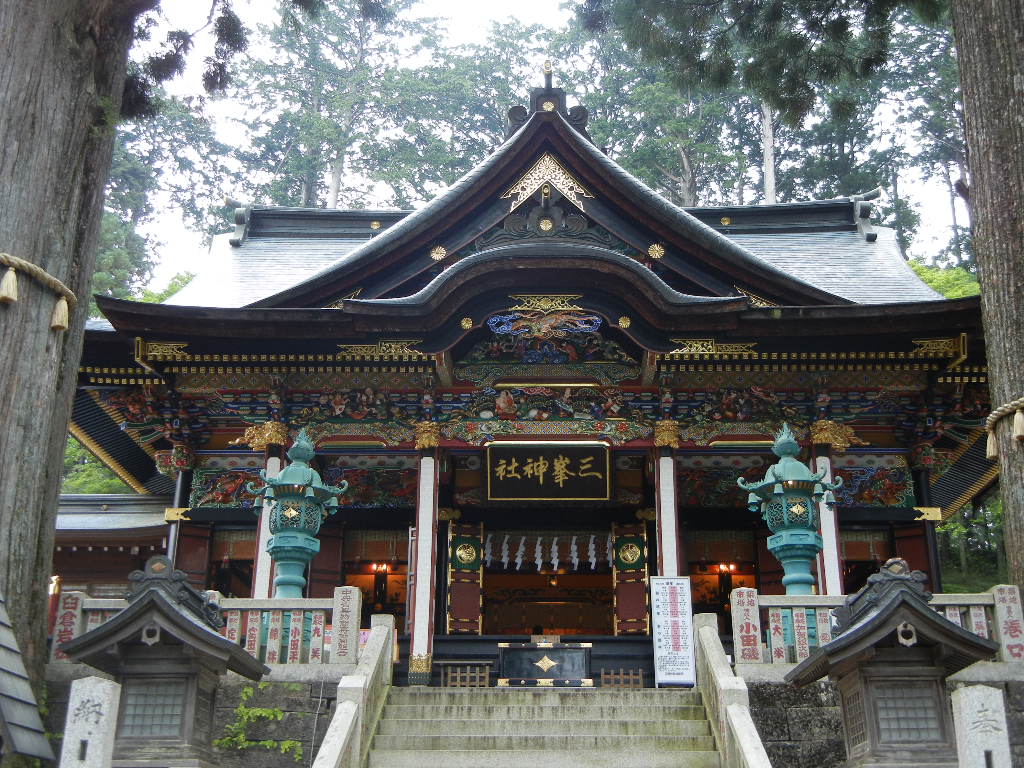
The Triple Torii and Solemn Halls
At the entrance to Mitsumine Shrine stands a triple torii, a rare arrangement of three combined gates found in few places in the country, solemnly marking the entrance to the sacred precinct. The worship hall, adorned with vividly colored carvings, has a splendor that seems out of place in the mountains and overwhelms those who visit. From a sacred tree said to be over 800 years old flows a sense of vital energy, and you can see worshippers placing their hands on it to receive its power. With points of interest scattered throughout the grounds, it is a shrine to explore at a leisurely pace.

The Sea of Clouds and the Climb to the Inner Shrine
A signature sight of Mitsumine Shrine is the sea of clouds seen on early mornings when conditions align. The scene of the halls floating on a sea of clouds filling the mountain valleys is mystical, and many people come in search of this spectacular view. Those confident in their stamina can also take on the climb to the inner shrine on the summit of Mount Myohogatake. Beyond a mountain trail of about an hour and a half each way stands the inner shrine, from which you can survey the ranges of Chichibu, with a freshness that only those who reach the top can savor.
Best Season and Access
Each season has its own charm at Mitsumine Shrine, but the early mornings of spring and autumn when the sea of clouds is likely, along with the seasons of fresh green and autumn leaves, are especially popular. In winter you can see its solemn form dressed in snow. For access, take a Seibu Kanko bus from Seibu Chichibu Station for about an hour and a quarter, or drive up mountain roads such as National Route 140 from the Chichibu town area. The municipal Mihane parking lot, with a fee for standard cars, is available. Because it is cold on the mountain, it is reassuring to bring something to layer on regardless of the season. This is a sacred place to worship quietly while feeling the clear air unique to such a high sacred ground.
Practical Travel Notes
- Allow about an hour and a half to two hours to explore the grounds at a relaxed pace. If you add the climb to the inner shrine, plan for roughly another three hours round trip
- Note that the white ki amulet, once distributed only on the first day of each month, has been suspended since June 2018 due to reasons including severe traffic congestion on the surrounding roads. Ordinary ki amulets are still available, so it is best to check the official website for the latest information
- To avoid crowds, weekday mornings are a good bet. If you are after the sea of clouds, the early morning around sunrise is the time to aim for, but keep in mind it appears only when weather conditions align
- The summit is colder than the town and the weather changes easily, so bringing warm clothing and rain gear is reassuring
- As for cost, amulets and shrine seals run from a few hundred to a little over a thousand yen, with parking and bus fares charged separately
A Quick Tip
Because it is on a mountain, weather can change suddenly, so protection against cold and rain is essential. Buses are limited in number, so check the times for your outbound and return trips in advance. Parking and roads tend to be crowded on weekends and long holidays, so an early time slot makes for a more relaxed visit.
📚 Sources
This article is based on the history and precinct guidance of Mitsumine Shrine and on tourism information for Chichibu City and the Chichibu area. It also draws on the shrine's guidance about its founding tradition by Yamato Takeru, the Mitsutorii triple torii, the sacred tree, the climb to the inner shrine, and the suspension of the white Kimamori amulet. Bus timetables, parking and offerings may change, so please confirm with official sources before you go.
Visitor Checklist
- Estimated time: About 1.5 to 2 hours for the precincts; add roughly 3 hours round trip for the climb to the inner shrine.
- How to get around: About 1 hour 15 minutes by Seibu bus from Seibu-Chichibu Station, or by car up mountain roads such as Route 140 from central Chichibu.
- What to bring: Warm clothing and rain gear, as the mountain is cold and the weather changes.
- Transport check: Buses are limited, so confirm departure times both ways in advance.
- Avoiding crowds: Weekends and holidays crowd the parking and roads, so an early visit is safer.
- Budget guide: A few hundred to around a thousand yen for amulets and goshuin, with parking or bus fare extra.
📍 Location & Access


Share this article


✍️ About this article
This article is compiled by the Tabitabi JAPAN editorial team from official and primary sources, including facility and shrine/temple websites, tourism information published by municipalities and tourism associations, and cultural-property records released by national and local governments. Prices, opening hours and event dates may change, so please also check the official information of each facility or local government before you visit.