
Shitennoji Temple — The Oldest Government Temple in Japan, Founded by Prince Shotoku
Founded in 593 by Prince Shotoku, Shitennoji in central Osaka holds the distinction of being the oldest officially established Buddhist temple in Japan. Named after the Four Heavenly Kings who guard Buddhist law and enshrining Guze Kannon as its principal image, it is the head temple of the Wa sect, which became independent from the Tendai sect in 1946. Fourteen centuries later, Shitennoji remains a living temple — its precincts filled daily with worshippers, its festivals drawing crowds, and its ancient architectural layout preserved in a form that archaeologists believe closely resembles the original.
Highlights
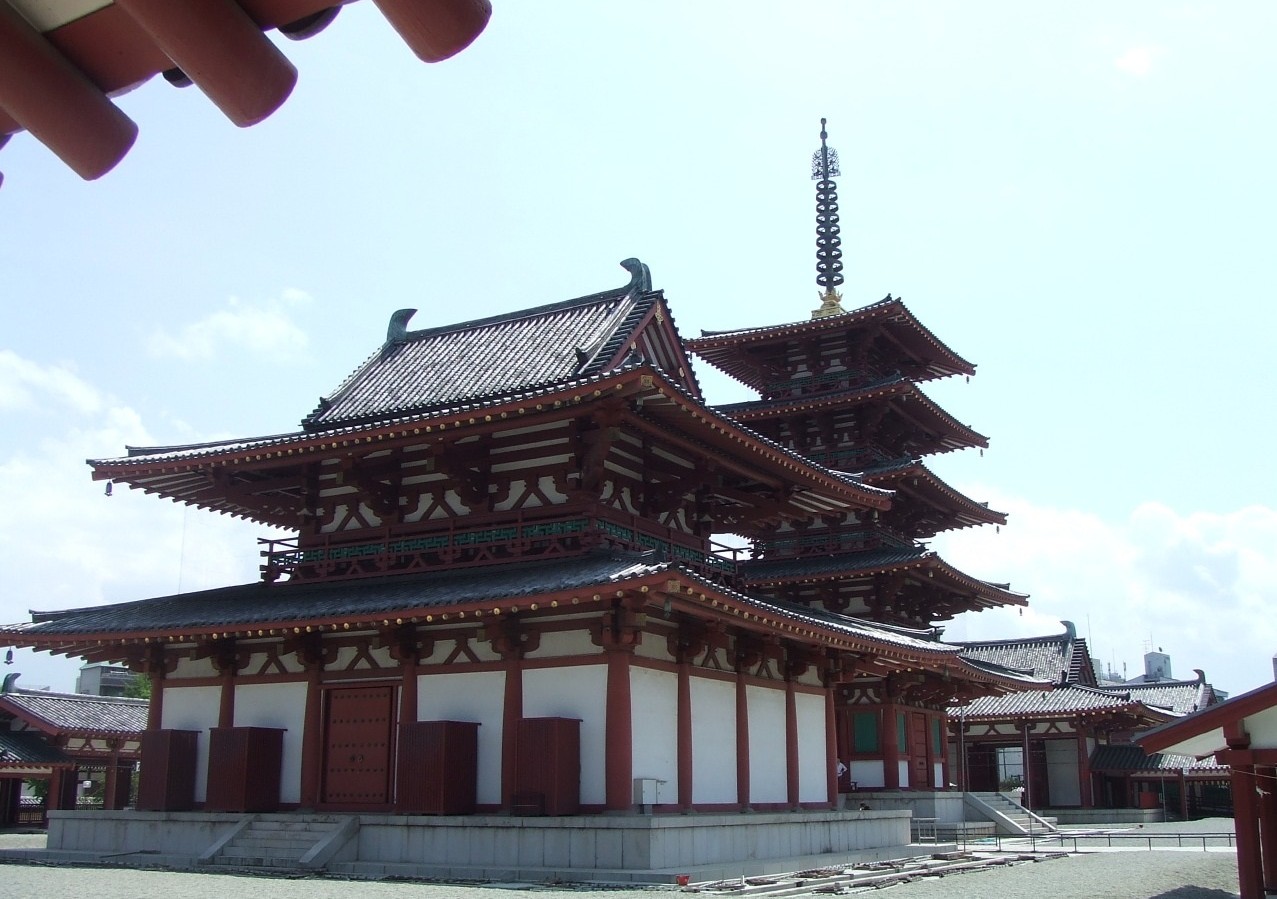
The central temple complex follows a strict axial plan — middle gate, five-storey pagoda, main hall, and lecture hall arranged in a straight north-south line — a layout conveying the form of ancient temple architecture. The current buildings are modern reconstructions, but they adhere faithfully to the ancient design. The five-storey pagoda, vivid in its contrast of white and vermilion, is the visual focal point and one of the defining images of Osaka's historical townscape.
The stone torii marking the entrance is a symbol of Shitennoji. An Important Cultural Property changed from wood to stone in 1294, it is regarded as a sacred place for worshipping the sun setting into the western sea, and on the spring and autumn equinoxes a dreamlike scene can be seen as the setting sun sinks through the center of the torii.
The Gokuraku-jodo Garden, a paradise garden attached to the temple and open for a fee, is a place for a calm stroll. Walking while gazing at the pond and greenery settles the mind.
Enjoying the Seasons
On the spring and autumn equinoxes, the sight of the setting sun passing through the stone torii is a must-see, drawing many photographers. On the 21st and 22nd of each month, the fair for the Daishi memorial (21st) and the Prince Shotoku memorial (22nd) fills the precincts with antique dealers and food stalls; on these days the central complex is opened free of charge.

Access and Basic Information
- Location: 1-11-18 Shitennoji, Tennoji Ward, Osaka City, Osaka Prefecture
- Access: About a 5-minute walk from Shitennoji-mae-Yuhigaoka Station on the Tanimachi subway line, or about a 12-minute walk from Tennoji Station (JR, subway)
- Hours: Outer grounds open freely (central complex and garden: April to September 8:30 to 16:30, October to March 8:30 to 16:00; extended on the 21st of each month). Worship from outside the halls is possible 24 hours
- Admission: Central complex: adults 500 yen, high schoolers 300 yen, elementary and junior high free / Garden: adults 300 yen, high schoolers 200 yen, elementary and junior high free
- Time to allow: 1 to 2 hours
Practical Travel Notes
- Time to allow: About one to two hours for touring the central complex and strolling the grounds. Combined with the garden and treasure house, allow an even more relaxed schedule.
- Admission guide: The outer grounds can be visited freely, while the central complex, garden, and treasure house each charge admission (elementary and junior high students are free for both the complex and garden). For a thorough visit, consider a combined ticket.
- Aim for the fair: The fairs on the 21st and 22nd of each month bustle with antique stalls and vendors, and are special days when the central complex opens free of charge. Recommended for those who want to feel the lively atmosphere.
- Combining with nearby spots: Tennoji Park, Abeno Harukas, Chausuyama, and Horikoshi Shrine are within walking distance. Touring together with Tennoji-area sightseeing is efficient.
A Quick Tip
Visiting on the evening of the spring or autumn equinox lets you see the dreamlike scene of the sun setting within the stone torii. The monthly fairs on the 21st and 22nd are lively and fun, and hunting for old tools and antiques is enjoyable. Close to Tennoji Park and Abeno Harukas, visiting them as a set is efficient.
📚 Sources
This article is based on the history and precinct guidance of Shitennoji and on tourism information for Osaka City. It also draws on the temple's guidance about its founding tradition by Prince Shotoku, the Shitennoji-style garan layout, the stone torii (an Important Cultural Property), the Gokuraku-jodo garden, and the 21st and 22nd monthly fairs. Visiting hours and fees vary by season and by fair days, so please confirm with official sources before you go.
Visitor Checklist
- Estimated time: About 1 to 2 hours for the central garan and precinct walk; allow more for the garden and treasure hall.
- Fee guide: The outer grounds are free, while the central garan, the Honbo garden and the treasure hall each charge admission (free for elementary and junior high students at the garan and garden).
- Aim for the fair: The 21st and 22nd of each month bring antique stalls and free entry to the central garan.
- Timing for highlights: On the spring and autumn equinox, the setting sun aligns within the stone torii at dusk.
- How to get around: About a 5 minute walk from Shitennoji-mae Yuhigaoka Station; efficient to combine with Tennoji Park and Abeno Harukas.
📍 Location & Access


Share this article


✍️ About this article
This article is compiled by the Tabitabi JAPAN editorial team from official and primary sources, including facility and shrine/temple websites, tourism information published by municipalities and tourism associations, and cultural-property records released by national and local governments. Prices, opening hours and event dates may change, so please also check the official information of each facility or local government before you visit.